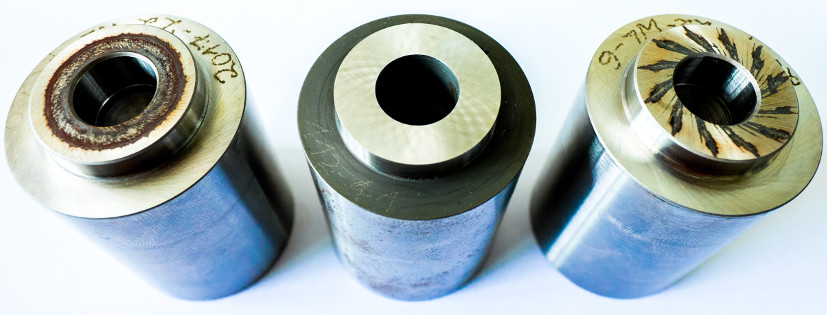
Friction coefficient determination
Investigations of static/dynamic friction coefficient behavior using standardized model test methods on laboratory specimens
1 General description
Using the test methods available at the research facility for friction coefficient determination, various metallic bare or coated technical surfaces can be characterized with regard to their transmission behavior. Furthermore, friction-enhancing applications or intermediate elements as well as various intermediate media (lubricants, assembly pastes, … including adhesives) can be evaluated. In addition, behavior under dynamic loads can also be investigated.
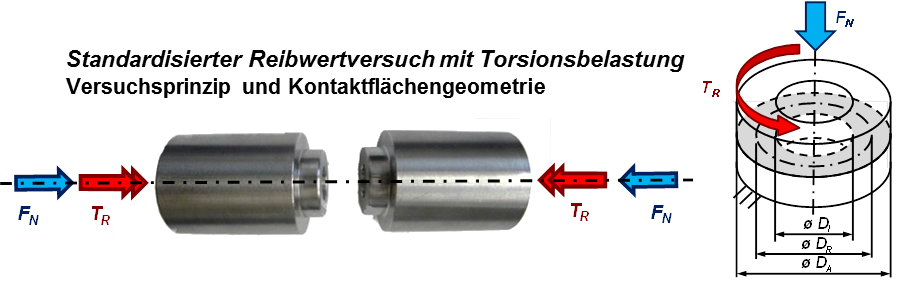
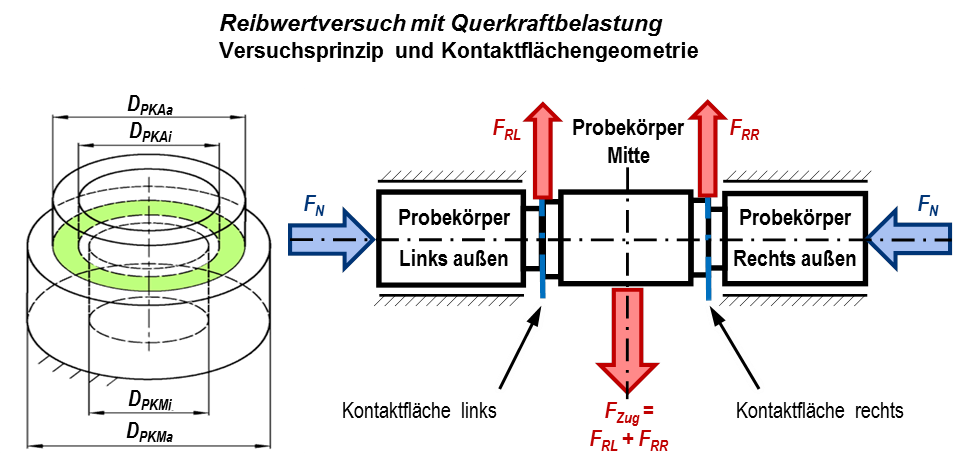
There are two test rigs on which static and sliding friction coefficients (also friction coefficient or friction number) can be determined. The laboratory test rigs differ in their loading direction (transverse force and torsion) in the friction joint to be examined. The investigations are generally based on the assumption of Coulomb's law of friction (FR=µ·FN).
2 Friction coefficient test specimens
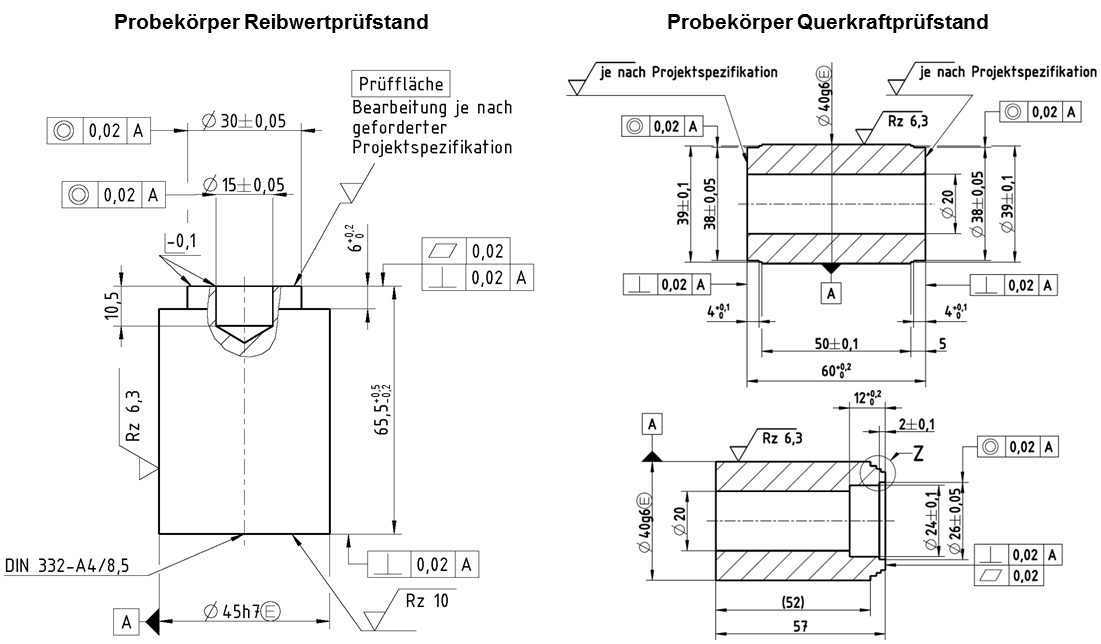
The geometries of the specimens are optimized for uniform distribution of surface pressure in the contact area. The planar annular contact leads, with the standardized friction coefficient test rig with torsional loading with the inner diameter (Di = 15 mm) and outer diameter (Da = 30 mm) to the nominal contact area AnomT ≈ 530 mm².
For the friction coefficient test rig with transverse force loading, the contact is defined by the outer specimens (DPKAi = 24 mm) and outer diameter (DPKAa = 35 mm) and has a nominal contact area of AnomQ ≈ 509 mm². The middle specimens are designed so that complete contact is ensured throughout the entire test. To achieve higher surface pressures, the diameters on the outer specimen can be further reduced.
3 Friction coefficient determination on real components
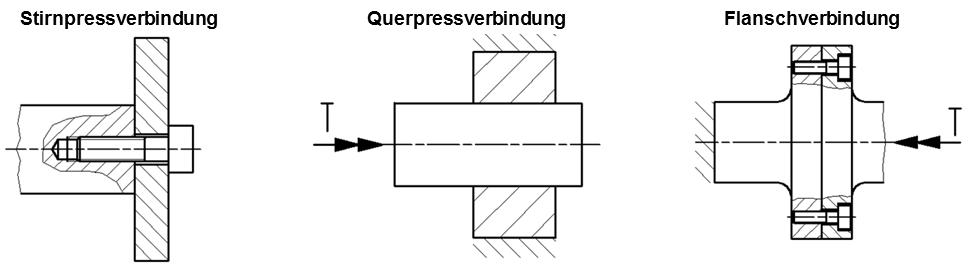
To validate the model investigations if necessary with torsion-loaded real component tests, tests can also be carried out on the universal rotary cylinder test rig. Results have already been successfully validated on radial press connections, flange and face press connections.
4 Results of friction coefficient determination
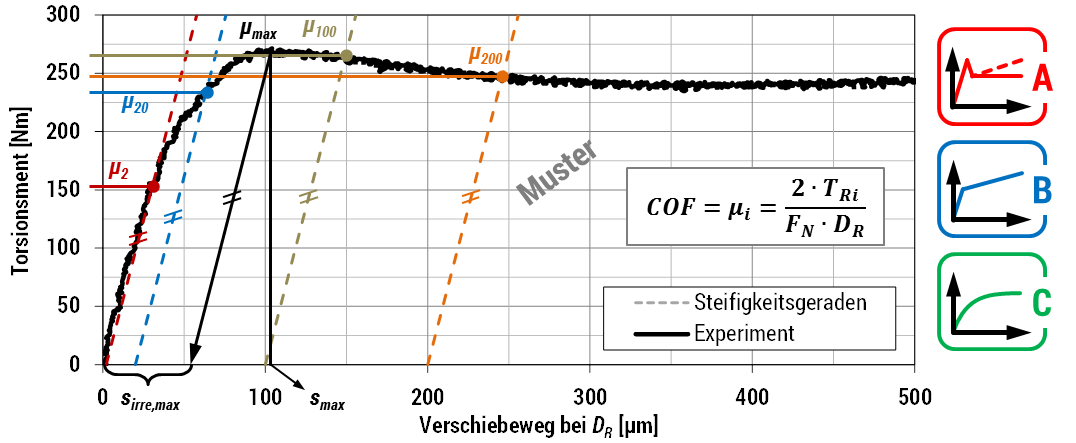
Assuming the validity of Coulomb's law of friction, the static friction coefficient characterizes the transition point from static to sliding friction. This is therefore the maximum limit value at which there is still no (significant) relative displacement of the two contact surfaces. The transition and the behavior in the sliding range is generally referred to as friction coefficient characteristic and is distinguished according to the tribological system into three types (A, B and C). The transition point often cannot be uniquely identified for the static friction coefficient. Therefore, in the result presentation, the friction coefficient or friction number is given as a function of an irreversible relative displacement (in µm) between the contact surfaces and is indicated in the index of the friction coefficient.
5 Test rigs
6 Contact

| Jonathan Schanner, M.Sc. | |
| Email: | jonathan.schanner@… |
| Phone: | +49 371 531 36828 |
| Room: | C21.306 (alt: 2/A306) |
| Office hours: | by arrangement |
| 8 publications | |