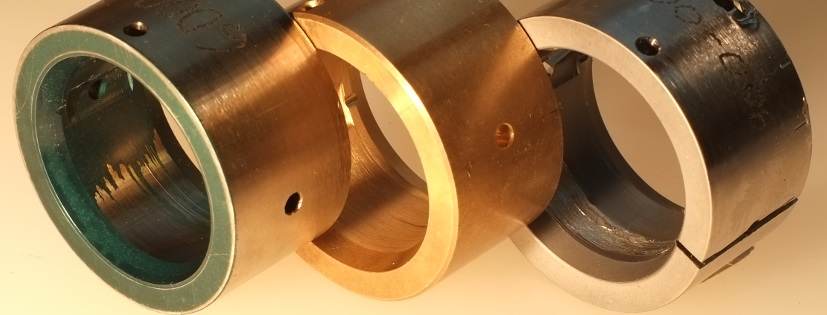
Journal bearing investigation
Evaluation of tribological properties of journal bearings in the hydrodynamic range and in the mixed-friction regime
1 General description
Due to the complex tribological loading, the processes in journal bearings cannot be completely simulated in their entirety. This is especially true for wear processes, form deviations and contamination. To ensure operational safety, experimental investigations are therefore indispensable.
The research facility has two test rigs of different sizes available for the tribological evaluation of journal bearing systems. Due to the very different requirements of the research field, a very broad experimental spectrum is offered. This extends over the entire range of the Stribeck curve and ranges from investigations in the mixed-friction regime with partial slip at a relative velocity of approximately 0.002 m/s to high-speed turbomachines at 100 m/s surface speed.
In addition to the type of motion, the most diverse intermediate media can also be tested:
- Pressure lubrication up to 8 bar
- Wetted surfaces
- Hydrostatic up to 250 bar
- Dry running
- Supply temperature from 10°C to 120°C
- Contamination of oil with foreign particles according to defined ISO class
2 Specimens
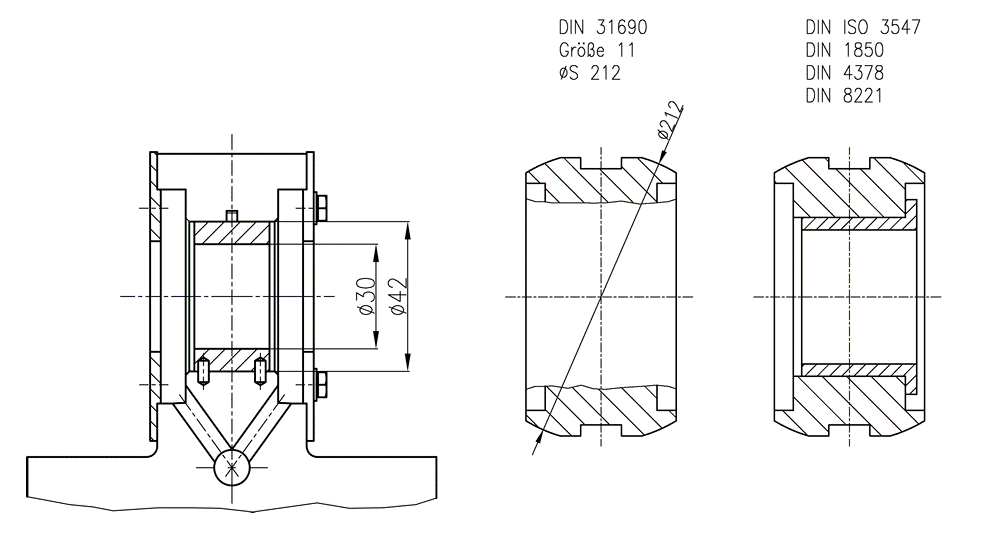
The very flexible design of the test rigs enables a broad spectrum of investigations on bearing designs (radial bearings). Any radial bearing can be investigated regardless of design (circular cylindrical solid materials, bushes, MFL, tilting pad segment bearings, etc.) within the given size range. Series bearings are usually integrated into the test rig via an adapter. The maximum outer diameter is approximately 180 mm. Depending on the test rig used, the shaft diameter is 30-110 mm.
3 Results
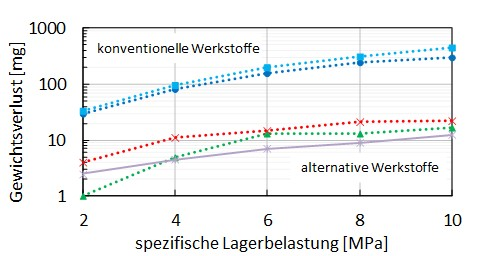
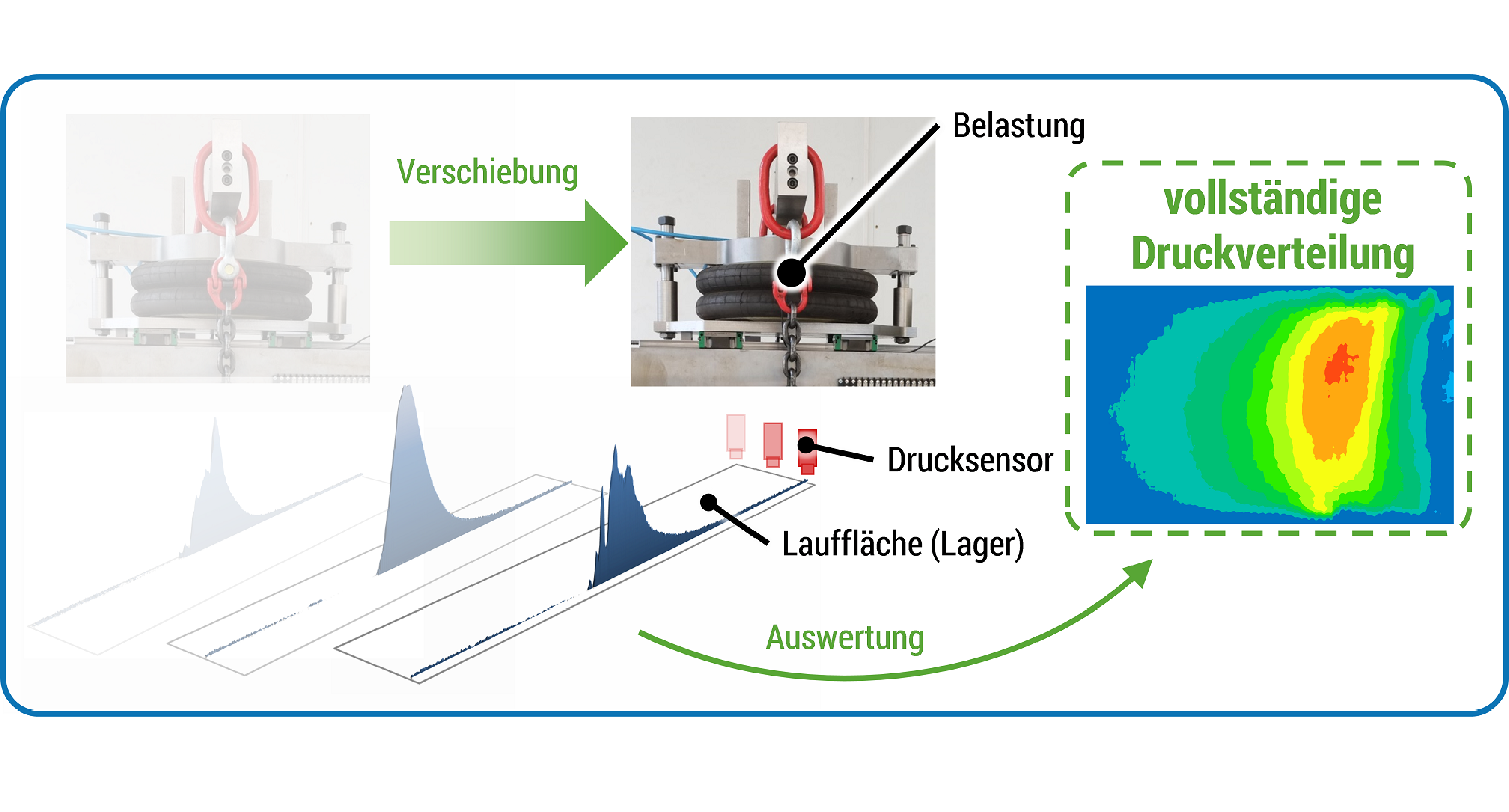
The evaluation criteria of the individual tests are adapted to the respective objective. They range from the determination of linear wear in start-stop operation to energy dissipation, the embedding capability of particles in the bearing surface, to the evaluation of the influence of form deviation on the hydrodynamic pressure distribution.
4 Test rigs
5 Contact

| Dipl.-Ing. Björn Prase | |
| Head of the specialist Research Group "Plain Bearings" | |
| Email: | bjoern.prase@… |
| Phone: | +49 371 531 39643 |
| Room: | C21.325 (alt: 2/A325) |
| Office hours: | by arrangement |
| 13 publications | |