
Do you want to do more than calculate engineering solutions and actually turn them into products?
Then discover Textile Technologies at Chemnitz University of Technology.
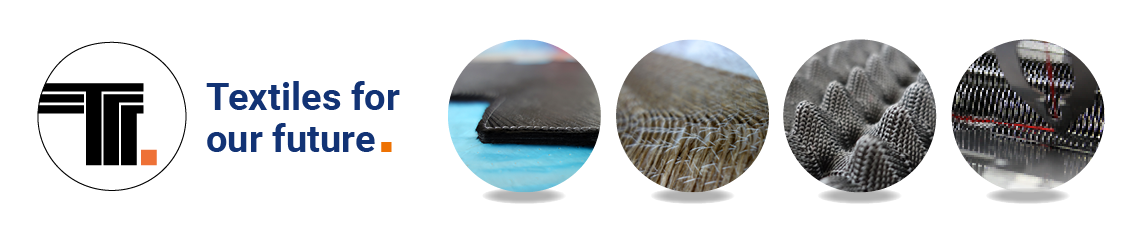
Carbon, composites, natural fibers, technical knitted fabrics, outdoor equipment, recycling, digital manufacturing and AI: Modern textile engineering is about much more than clothing.
In the Master's degree programme “Sustainable Textile Technologies and Outdoor Equipment”, you combine engineering with material development, manufacturing, sustainability and product development.
You will explore the entire development chain – from fibers and materials to manufacturing processes, finished products and their recycling.
Textile engineering? Isn't that mainly about fabrics and clothing?
Yes, but there is much more to it.
Textile technologies can be found in composite components, buildings, sports and outdoor products, mobility applications and lightweight engineering structures, for example.
Modern textile engineering combines:
Mechanical Engineering + Materials Science + Lightweight Engineering + Manufacturing + Sustainability + Digitalisation + Product Development
Fibers and textile structures can be transformed into technical components and innovative products.
And you will learn how.
7 Reasons to Discover Textile Technologies
1. Develop Real High-Tech Products
Today, textile technologies are used in far more than clothing.
Textile structures and high-performance fibers are used in composite components, sports equipment, outdoor products, mobility applications, medical devices and construction applications, for example.
At the Professorship of Textile Technologies, the spectrum ranges from conventional textiles to high-performance fibers made of carbon and metallic materials.
But it is not just about selecting a material.
You will learn how to develop, manufacture, analyse and optimise materials and structures for specific applications.
2. Combine Mechanical Engineering, Lightweight Design and Composites
Are you interested in lightweight engineering and want to understand how lightweight yet highly durable components are made?
Textile structures can be specifically designed to reinforce composite components.
For example, you can explore the following technologies and topics:
- Carbon and high-performance fibers
- Natural fiber composites
- Technical 2D and 3D structures
- Tailored Fibre Placement
- Dry Fiber Placement
- Textile reinforcement structures
- Design and testing of composite components
This is how you combine materials, design and manufacturing.
3. Turn Sports and Outdoor Activities into Engineering Challenges
Are you interested in outdoor activities, bikes, winter sports, functional clothing or technical sports products?
Then you can combine these interests with engineering.
Sports and outdoor textiles are among the research areas of the professorship. Outdoor Equipment is also an explicit part of the Master's degree programme.
For example, you will explore questions such as:
Which material do we need?
How do we design the product?
How do we manufacture it?
How do we test and optimise it?
And how can we make it more sustainable?
Outdoor activities and sports thus become genuine engineering challenges.
4. Develop Sustainable Solutions Instead of Just Talking About Them
How can we manufacture products using fewer resources? Which raw materials can we source regionally? How can fibers be reused and recycled?
For us, sustainability becomes a concrete technical development challenge.
For example, you can explore the following topics:
- Natural fibers and locally sourced wool
- Recycling and the circular economy
- Sustainable composite materials
- Fiber and material analysis
- Resource-efficient production processes
- Life cycle assessments
- New washing, dyeing and processing methods
The goal is not just to assess sustainability, but to improve materials, processes and products.
5. Use Digitalisation, Automation and AI
Modern textile production is digital.
During your studies, you will explore Industry 4.0, sensor technology, image processing, data exchange, digital production chains and AI in textile engineering, among other topics.
At the professorship, we also combine digitalisation with new approaches to knowledge transfer and digital education. With textil trainer, we develop digital learning solutions for textile education and professional training.
Textile engineering therefore does not simply mean "old-fashioned looms".
It can just as easily involve automation, sensor technology, data analysis, image processing and AI.
6. Gain Hands-On Experience, from Materials to Finished Products
You cannot learn textile technologies solely in front of a screen.
In courses and research projects, you will work with real materials, processes and technologies.
These include, for example:
- Knitting technologies and knitting machines
- Manufacturing of technical textiles
- Textile reinforcement structures
- Composite technologies
- Dry Fiber Placement
- Material characterisation
- Digital manufacturing processes
You can develop, manufacture, analyse and optimise a structure.
This means you will not only learn what works, but also how to turn it into a real product.
7. Study in One of Germany's Major Textile Regions
Saxony is one of Germany's major textile industry locations. Around 500 companies employing approximately 12,000 people generate annual revenue of approximately 1.4 billion euros. More than 60 percent of this comes from technical and functional textiles.
The Professorship of Textile Technologies is connected with important research and educational institutions in the region. These include:
- The Saxon Textile Research Institute (STFI) in Chemnitz
- The Cetex Institute for Textile and Processing Machinery in Chemnitz
- Westsächsische Hochschule Zwickau, University of Applied Sciences (WHZ)
- The Textile Research Institute Thuringia-Vogtland (TITV)
STFI and Cetex are also affiliated institutes of Chemnitz University of Technology. The Fraunhofer Research Center STEX provides additional research expertise in textile structures in Chemnitz.
What does this mean for you?
Close connections between university studies, research and industrial applications.
This environment creates opportunities for:
Research Projects · Internships · Working Student Positions · Bachelor's and Master's Theses · Industry Contacts · Future Career Opportunities
These connections begin during your studies: The fundamentals of textile technology are taught in the Master's programme in cooperation with Westsächsische Hochschule Zwickau, University of Applied Sciences.
Build Your Own Specialised Skill Set
With the Master's degree programme “Sustainable Textile Technologies and Outdoor Equipment”, you can build on your engineering background and develop a specialised profile.
You combine:
Mechanical engineering with
- Materials Science
- Textile Engineering
- Lightweight Engineering
- Manufacturing
- Sustainability
- Digitalisation
- Product Development**
This allows you to specialise in areas where different technical disciplines intersect.
Your Path from Mechanical Engineering to a Specialised Master's Degree
Bachelor's Degree in Mechanical Engineering
↓
Master's Degree in Sustainable Textile Technologies and Outdoor Equipment
↓
Develop High-Tech Materials, Processes and Products
The Bachelor's degree in Mechanical Engineering at Chemnitz University of Technology meets the admission requirements for the Master's programme.
Graduates of other relevant Bachelor's degree programmes may also be eligible for admission. You can find the official admission requirements on the degree programme's website.
[View Admission Requirements and Master's Programme →]
What Would You Like to Develop?
Perhaps you have not yet realised that textile technologies could match your interests.
Outdoor & Sports?
→ Sports and outdoor textiles, equipment and functional materials
Lightweight Engineering?
→ Composites, carbon and textile reinforcement structures
Sustainability?
→ Natural fibers, wool, recycling and the circular economy
Product Development?
→ From materials and manufacturing to finished products
Digitalisation & AI?
→ Automation, sensor technology, image processing and digital processes
Research?
→ Research projects, student research assignments, and Bachelor's and Master's theses
Find Your Area of Specialisation.
Explore the Master's Degree in Sustainable Textile Technologies and Outdoor Equipment →
Discover Study Opportunities and Research Areas →
Explore Current Bachelor's and Master's Thesis Topics →


