
News
News from Research, Teaching and Transfer
2026
Chemnitz Researcher Receives Best Paper Award at International Conference in Catania
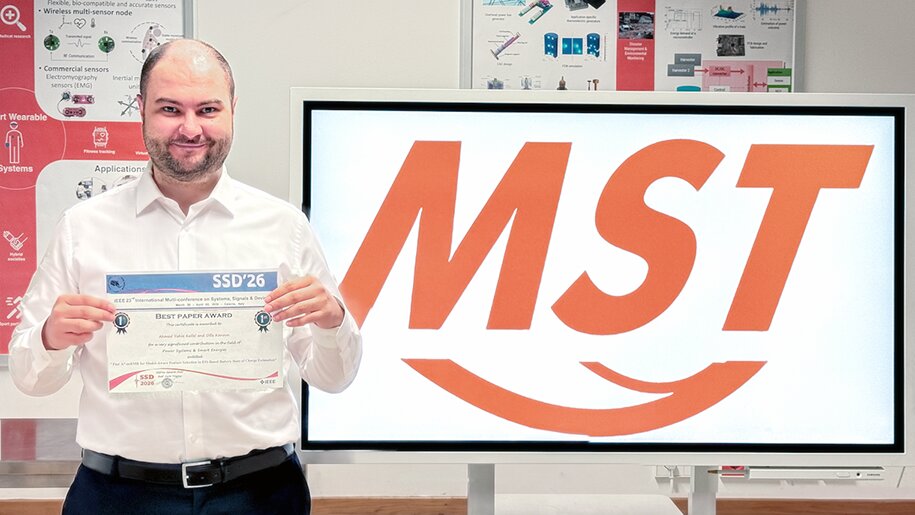
At the 23rd International Multi-Conference on Systems, Signals and Devices (SSD’26), held March 30 to April 2, 2026, in Catania, Italy, Dr. Ahmed Yahia Kallel, research associate and group leader for Impedance Spectroscopy and Measurement Systems at the Chair of Measurement and Sensor Technology (headed by Prof. Dr. Olfa Kanoun) at Chemnitz University of Technology, received the Best Paper Award.
Lithium-ion batteries are the backbone of electric mobility and stationary energy storage. To reliably determine their state of charge, researchers use Electrochemical Impedance Spectroscopy (EIS), a method that measures a battery’s electrical behavior across different frequencies and generates up to 480 data points per measurement – far too many for the small microcontrollers in battery management systems to process in real time. The award-winning paper “Fast A*-mRMR for Model-Aware Feature Selection in EIS-Based Battery State of Charge Estimation” addresses this challenge through intelligent pre-selection of the most informative data points. The method transfers the A* algorithm – a proven tool in robotics and game development for efficiently finding optimal paths through complex environments – to the domain of feature selection. Rather than exhaustively testing every possible feature combination, the algorithm identifies the best selection directly and efficiently, much like a navigation system finds the shortest route without driving down every road. Two criteria are considered simultaneously: how informative a data point is for predicting the state of charge, and how much it overlaps with already-selected points (Minimum Redundancy Maximum Relevance, mRMR).
Tested on physics-based digital twin data from four battery cells across 17 state-of-charge levels and three temperatures (756 measurement points in total), Fast A*-mRMR achieves a prediction accuracy of 3.62 to 3.93 % error with a computation time of just 1.27 seconds – more than 500 times faster than comparable methods while matching or exceeding their accuracy. The work also yields a counterintuitive insight: allowing a controlled degree of similarity between selected data points can actually improve predictions, contrary to the prevailing assumption that redundancy should always be minimized. “Our method enables the practical use of high-dimensional impedance data in resource-constrained embedded systems, laying an important foundation for more efficient and reliable battery management systems,” explains Dr. Ahmed Yahia Kallel. “The Best Paper Award is a gratifying recognition that our work in intelligent sensor systems and sustainable energy technologies is resonating with the international research community,” adds Prof. Dr. Olfa Kanoun.
The SSD is an established IEEE international multi-conference founded in 2001, bringing together research in the fields of systems, signal processing, and devices, with an H-index of 35. The award was presented at the sub-conference Power Systems & Smart Energies (PSE). The proceedings are published in IEEEXplore and indexed in Scopus and Web of Science.
Contact: Prof. Dr. Olfa Kanoun, Chair of Measurement and Sensor Technology, email olfa.kanoun@etit.tu-chemnitz.de
Citation: Kallel, A.Y., Kanoun, O.: “Fast A*-mRMR for Model-Aware Feature Selection in EIS-Based Battery State of Charge Estimation.” Proc. 23rd Int. Multi-Conf. on Systems, Signals and Devices (SSD’26), Catania, Italy, 2026. Best Paper Award.
(Author: Prof. Dr. Olfa Kanoun)
2025
Auszeichnung für herausragende Dissertation in der Messtechnik
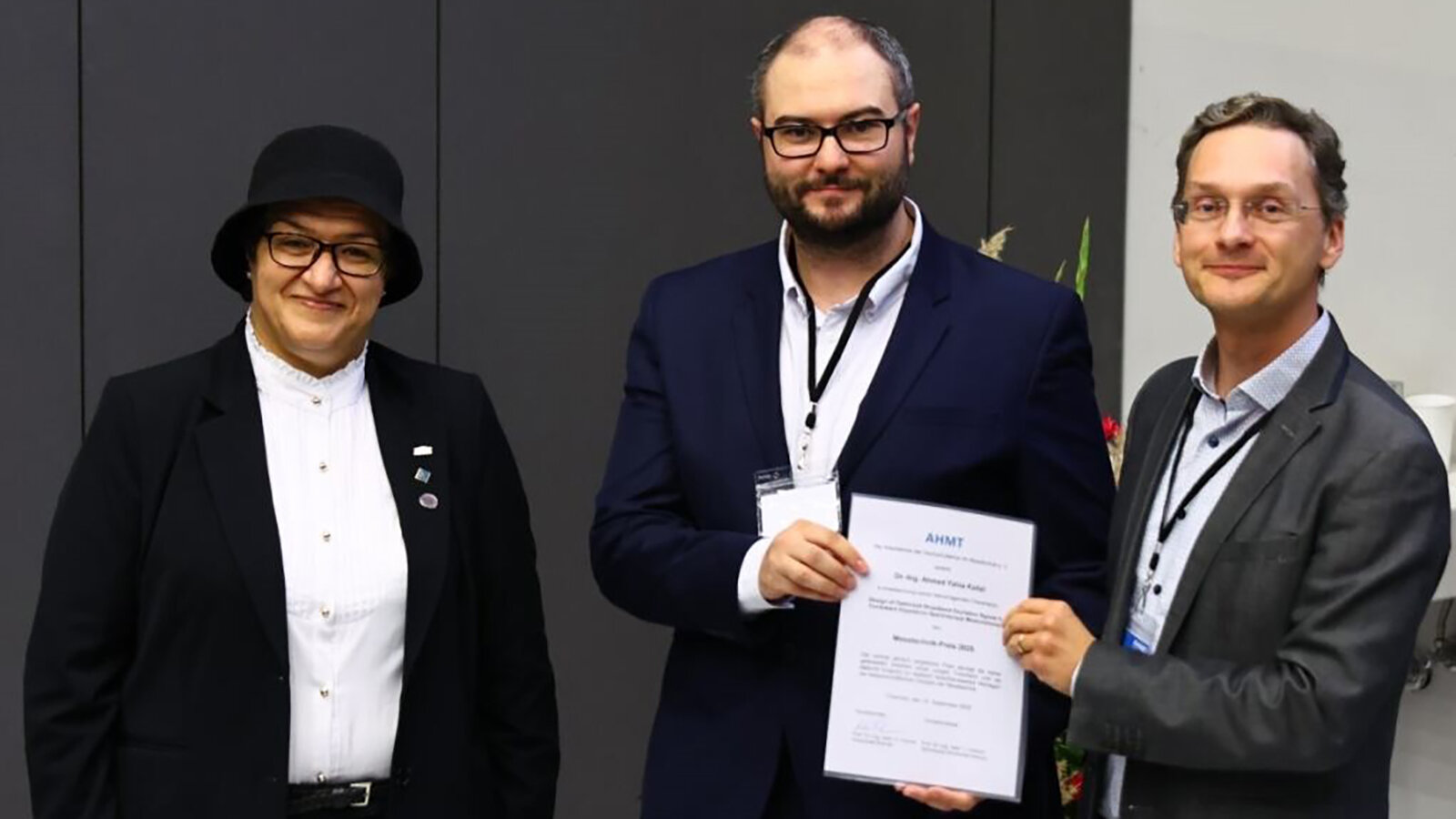
Dr. Ahmed Yahia Kallel, head of the Impedance Spectroscopy Research Group at the Chair of Measurement and Sensor Technology at Chemnitz University of Technology, has been awarded the prestigious “2024 Measurement Technology Prize” by the Association of University Professors of Measurement Technology (AHMT). The award recognizes his outstanding dissertation on the topic “Design of Optimized Broadband Excitation Signals for Consistent Impedance Spectroscopy Measurements,” which has ushered in a paradigm shift in impedance spectroscopy. The award was presented during the XXXIXth Metrology Symposium, which took place on September 17 and 18, 2025, at Chemnitz University of Technology.
Scientific breakthrough in impedance spectroscopy
“This research, which received a summa cum laude rating, revolutionizes impedance spectroscopy through the systematic optimization of multi-frequency excitation signals,” says Prof. Dr. Olfa Kanoun, holder of the Chair of Measurement and Sensor Technology. Dr. Kallel succeeded in optimizing these signals in terms of their amplitude, frequency, and phase composition, thereby achieving a level of measurement accuracy previously unattainable. “At the same time, he drastically reduced measurement times—a scientific breakthrough with a lasting impact on the entire field,” says Kanoun. The impressive results speak for themselves: a tenfold improvement in measurement accuracy, signal processing up to 19 times faster, and optimized implementation on resource-constrained microcontrollers. In addition, Dr. Kallel developed an innovative method for testing the consistency of impedance spectra, enabling automatic quality control.
From valedictorian to internationally recognized researcher
Born in Tunisia, he began his scientific career in 2016 as the valedictorian of his class upon receiving his engineering degree in electrical engineering from the École Nationale d'Ingénieurs de Sfax. After completing a master’s degree in embedded systems—also with top grades—he moved to Chemnitz in 2017, where he initially developed innovative approaches for cable diagnostics as part of an IGF project. His scientific productivity is exceptional: with over 60 publications, 15 of which are in Q1 journals, an H-index of 12, and more than 470 citations (Source: Google Scholar), Dr. Kallel ranks among the world’s most influential researchers in the field of excitation signals. He holds third place worldwide in the number of scientific publications on the topic of “Excitation Signals in Impedance Spectroscopy” and has received multiple Best Paper Awards as well as the Outstanding Reviewer Award from IEEE Transactions on Instrumentation and Measurement.
New Fields of Application and Supporting the Next Generation
Dr. Kallel’s research opens up new fields of application for impedance spectroscopy—from real-time battery condition diagnostics to medical applications. Since 2024, he has led the Impedance Spectroscopy research group at the Chair of Measurement and Sensor Technology, which includes nine doctoral students, and is thus already shaping the next generation of scientists. His teaching is characterized by enthusiasm and expertise. Numerous lectures, labs, and project seminars, as well as the supervision of more than 25 theses, attest to his exceptional commitment to fostering the next generation of researchers.
Chemnitz researchers rank among the top 2 percent worldwide
A ranking of the world’s most-cited researchers, compiled in 2025 by Stanford University and the academic publisher Elsevier, includes several members and affiliates of Chemnitz University of Technology. “The ten highest-ranked researchers from Chemnitz University of Technology among the top 2 percent in their field are Prof. Dr. Olfa Kanoun, Dr. Minshen Zhu, Prof. Dr. Rudolf Holze, Prof. Dr. Günter Daniel Rey, Prof. Dr. Oliver G. Schmidt, Prof. Dr. Marc Armbrüster, Prof. Dr. Tony Klein, Prof. Dr. Joseph Lutz, Prof. Dr. Michael Schreiber, and Prof. Dr. Peter Sedlmeier,” reports bibliometrics expert Carolin Zapke from the University Library at Chemnitz University of Technology. Inclusion in this list also grants the listed Chemnitz researchers worldwide recognition for their contribution to the advancement of knowledge.
Additional scientists working at Chemnitz University of Technology can be found in the Top 2 Percent ranking (listed from A to Z): Prof. Dr. Martin Breugst, Prof. Dr. Carsten Deibel, Prof. Dr. Wolfgang Einhäuser-Treyer, Prof. Dr. Fred H. Hamker, Prof. Dr. Jonas Hensel, Prof. Dr. Karl Heinz Hoffmann, Prof. Dr. Josef Krems, Prof. Dr. Heinrich Lang, Prof. Dr. Thomas Lampke, Dr. Thomas Mehner, Prof. Dr. Michael Mehring, Prof. Dr. Thomas Seyller, Prof. Dr. Janet Siegmund, Prof. Dr. Michael Sommer, Prof. Dr. Jan-Philipp Stein, Prof. Dr. Christoph Tegenkamp, Prof. Dr. Johannes F. Teichert, Prof. Dr. Matthias Thürer, Prof. Dr. Martin F.-X. Wagner, and Prof. Dr. Dietrich R. T. Zahn.
Regarding the ranking methodology: The number of citations measures the recognition researchers receive within their community. They thus also reflect the influence of scientists within their respective fields. The data included in the analysis is based on the SCOPUS literature database. The analysis distinguished between 22 fields of study comprising 174 disciplines. The ranking table of the more than 100,000 most successful authors from SCOPUS was compiled using special metrics adjusted for self-citations.
Translated with DeepL.com (free version)
Focus on Impedance Spectroscopy for Energy Technologies and Biomedical Applications
For the 18th time, international experts will gather in Chemnitz from September 23 to 26, 2025, for the “International Workshop on Impedance Spectroscopy.” With over 90 participants from twelve countries, the conference will focus on the further development of existing measurement approaches and the creation of novel measurement techniques through the introduction of multi-frequency measurement methods and AI-supported analysis methods. The interdisciplinary event addresses topics ranging from fundamentals and measurement techniques to the application-relevant use of technologies in the field of impedance spectroscopy, from the laboratory to practical applications.
Measurement and analysis methods for energy technologies and biomedical applications are particularly well represented this year. Current research topics in the energy sector include the development of self-calibrating impedance measurement systems for batteries and the characterization of thin-film platinum cathodes in PEM water electrolysers. Other key areas based on impedance spectroscopy include electronic analysis measurement systems, so-called tongue systems, compensation methods for impedance spectroscopy of brain tissue, and the latest results in the field of time-domain electrical impedance tomography (EIT). Another focus is on the analysis and fabrication of flexible supercapacitors based on laser-induced graphene electrodes, as well as the application of machine learning methods in the context of oral cancer diagnostics.
The tutorials as part of the “Advanced School on Impedance Spectroscopy (ASIS)” will take place prior to the technical presentations. With their diverse range of fundamental topics, they provide a better introduction and allow for deeper exploration. “She International Women in Science (SheIWIS)” is taking place once again and offers female scientists and students a suitable platform for discussion and networking. This year, the “Insights” sessions continue a proven format: Here, scientists can present their published work to the community for discussion and thus raise its profile.
This year, the “Science Hackathon” competition is taking place in cooperation with the “IEEE Student Branch” at Chemnitz University of Technology to promote young scientists. Students and early-career researchers will present their projects here and must convince an international jury of their innovative potential. The focus is on projects in the fields of energy and medicine, as well as AI-supported measurement systems.
Prof. Dr. Olfa Kanoun, holder of the Chair of Measurement and Sensor Technology at Chemnitz University of Technology, and Prof. Pasquale Arpaia (Università di Napoli Federico II, Italy), who are jointly organizing the workshop, are enthusiastic: “It is impressive to see how the community regularly gathers in Chemnitz and how the conference has grown into the world’s leading platform for impedance spectroscopy. Particularly gratifying is the international participation of representatives from 48 renowned institutions, which underscores the special significance of IWIS as a place for exchange and inspiration in our field.” The Chair of Measurement and Sensor Technology is itself represented with several presentations, including on the topics of developing novel electronic analytical measurement systems, so-called tongue systems, laser-induced graphene electrodes for energy storage, and AI-supported multifrequency impedance measurements.
A special highlight for guests is the third edition of the international light art festival “Light our Vision,” which will take place concurrently from September 24 to 27, 2025. The festival is part of the official program for Chemnitz as European Capital of Culture 2025 and brings international light artists from seven countries to the city. Under the motto “C the Unseen,” nine central locations in downtown Chemnitz, including the University Library, will be illuminated to reveal the hidden potential of urban development through artistic intervention.
Homepage of the “International Workshop on Impedance Spectroscopy” (IWIS): https://www.tu-chemnitz.de/etit/messtech/iwis/
(Source: Chair of Measurement and Sensor Technology)
International Award for Professor Olfa Kanoun
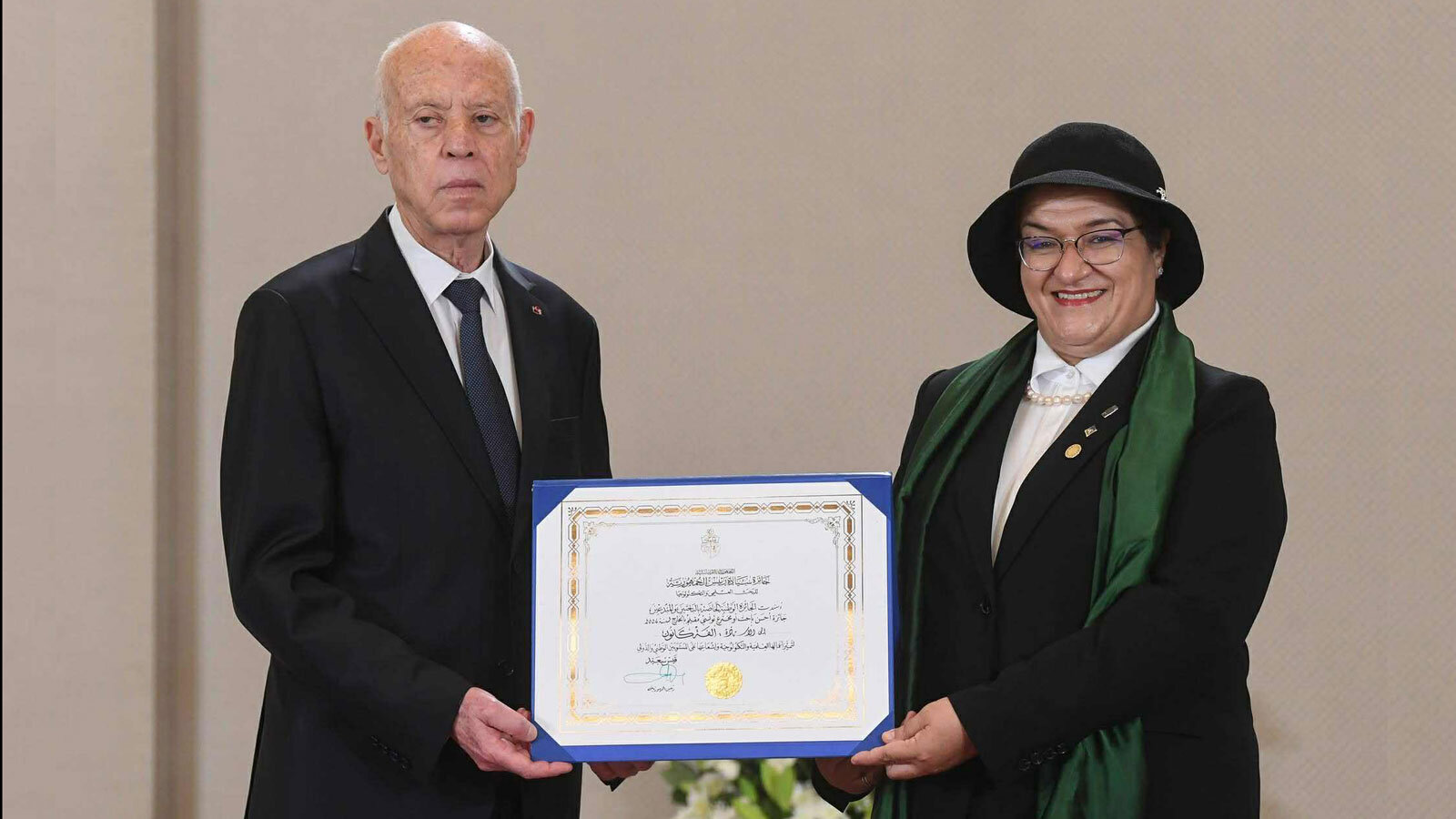
Prof. Dr. Olfa Kanoun, holder of the Chair of Measurement and Sensor Technology at Chemnitz University of Technology, was awarded the President of the Republic of Tunisia’s Prize for the best Tunisian researcher living abroad on August 28, 2025, during a ceremony in Tunis.
The National Prize for Science and Technology is awarded by the Tunisian Ministry of Higher Education and Scientific Research (MESRS). It honors Tunisian researchers and inventors living in Tunisia or abroad who have distinguished themselves through outstanding scientific achievements or technological innovations.
“This award represents an important milestone in my academic and scientific career. I view it as recognition of many years of intensive research and the dedicated commitment of our entire department. At the same time, it serves as a strong motivation for us to continue on our chosen path with determination and dedication and to further advance our scientific work,” emphasizes Prof. Dr. Kanoun.
“We warmly congratulate Professor Kanoun on this prestigious award and are delighted by the recognition our colleague has received. The award once again underscores the excellence of the scientific achievements and technological innovations that Professor Kanoun and her team have produced in the core area of materials and intelligent systems,” says Prof. Dr. Anja Strobel, representative of the Rector and Vice Rector for Research and University Development at Chemnitz University of Technology.
Although Prof. Dr. Kanoun works in Germany, she has always maintained close ties to Tunisia. She has supervised more than 100 theses by Tunisian engineering and master’s students, as well as over 20 doctoral and postdoctoral candidates. In addition, she has organized more than 15 international summer schools in Tunisia and developed over 30 research and mobility projects with Tunisian institutions, funded by the German Academic Exchange Service (DAAD) and the European Union.
As a (co-)holder of seven patents in the field of sensor technology and nanomaterials, Kanoun is also deeply committed to innovation. She supported the founding of NanoSen GmbH, a startup specializing in innovative force sensors. In addition, she coordinates numerous major international projects at the EU level and within the context of collaborative projects funded by the German Research Foundation (DFG).
Prof. Dr. Kanoun has also founded and chaired several renowned international conferences, including the “International Workshop on Impedance Spectroscopy” (IWIS) and the “Multi-Conference on Systems, Signals and Devices” (SSD). She has been elected “IEEE Distinguished Lecturer” twice (2016 and 2022).
Born and raised in Sfax, Prof. Dr. Olfa Kanoun studied in Germany and established herself internationally as a leading expert in the fields of sensor technology, impedance spectroscopy, and nanomaterials.
Prof. Dr. Kanoun earned her Ph.D. in 2001 from the University of the German Armed Forces in Munich and received the dissertation award from the Working Group of University Professors for Measurement Technology (AHMT e. V., Germany). That same year, she founded the “Impedance Spectroscopy” research group at the Institute for Sensor Technology and Measurement Systems at the University of the German Armed Forces in Munich (Prof. Dr. Hans-Rolf Tränkler). In 2006, she was appointed acting professor and head of the Measurement Technology Department at the University of Kassel. Since 2007, she has been a full professor at Chemnitz University of Technology, where she heads the Chair of Measurement and Sensor Technology. After founding the “International Workshop on Impedance Spectroscopy” (IWIS) in 2008 and the “Advanced School on Impedance Spectroscopy” in 2017, she established the “Technical Committee on Impedance Spectroscopy (TC2)” in 2018. Prof. Dr. Kanoun is today a leading and internationally recognized scientist in the field of sensors and sensor systems.
In the SCOPUS literature database, she tops the list of authors on the topic of impedance spectroscopy in Germany and, globally, the list of authors in the field of sensor systems for impedance spectroscopy. She has published over 700 peer-reviewed scientific papers, which have been cited more than 8,000 times. Her work has led to decisive advances in the development of novel intelligent sensors, self-powered systems, and new diagnostic methods for batteries, health, the environment, and industry. For her pioneering achievements, she was honored in 2022 with the Technical Award from the IEEE Instrumentation and Measurement Society.
Intelligent Fiber-reinforced Ceramics with Integrated Carbon-based Sensors

An interdisciplinary team of researchers at Chemnitz University of Technology has succeeded in developing a groundbreaking ceramic composite material that can monitor its own structural integrity. The research work, led by Prof. Dr. Olfa Kanoun from the Chair of Measurement and Sensor Technology in collaboration with Prof. Dr. Daisy Nestler from the TKV research area of the Chair of Lightweight Structures and Polymer Processing, shows how carbon nanotubes can be integrated into oxide ceramic composite materials (OCMC) to create reliable self-sensing materials.
Revolutionary approach overcomes conventional monitoring limitations
Conventional monitoring of the structural condition of ceramic composites in extreme environments faces major challenges. Conventional methods, such as acoustic emission monitoring, thermal stress analysis and surface-mounted flexible sensors, often fail under flexible temperature conditions, including thermal shock, or suffer from low sensitivity due to insufficient load transfer between the structure and the sensing elements. “The key innovation is to embed multi-walled carbon nanotubes directly into the ceramic matrix instead of mounting the sensors on the surface,” explains Kanoun. “This creates a truly integrated sensor system where the ceramic structure itself becomes the sensor, eliminating the problems of sensor detachment and poor load transfer that occur with surface-mounted solutions.”
Advanced manufacturing process ensures homogeneous integration
The research team used a sophisticated solution mixing approach in combination with ceramic injection molding to achieve a uniform distribution of the carbon nanotubes in the ceramic matrix. The multi-walled carbon nanotubes (MWCNTs), which make up only 0.5 percent by weight of the total composition, form an electrically conductive network within the oxide ceramic composite. The realized manufacturing process offers key advantages, including uniform distribution of the carbon nanotubes for improved material performance, enhanced mechanical properties, precise and cost-effective shaping through the mass production of the injection molding process, and preservation of the nanotubes' integrity through controlled thermal treatment in an inert atmosphere. "Our microstructural analysis using scanning electron microscopy confirms that the carbon nanotubes remain in close contact with the ceramic matrix and form a network even after sintering at 1200°C," says Nestler. "This is crucial for maintaining the electrical conductivity that enables the strain measurement function. At the same time, the reinforcement by Al2O3 fibers in an Al2O3 matrix realizes better fracture toughness and thermal shock resistance compared to a monolithic ceramic."
Exceptional sensor properties with high reproducibility
The MWCNT/OCMC sensors developed have remarkable performance characteristics. In four-point bending tests, strain factors of 7.99 in the low strain range (0-160 μ-strain) and 2.12 in the higher strain range (160-380 μ-strain) were determined. Importantly, the sensors have excellent reproducibility, with deviations of less than 2.7% between independently manufactured specimens. "The resistance changes exponentially with the applied strain due to the tunneling effect between the carbon nanotubes," explains M.Sc. Dhivakar Rajendran, the lead author of the paper. "When the ceramic is stretched, the nanotubes move closer together, creating new conductive paths and drastically changing the electrical resistance of the material. This provides a highly sensitive method for detecting even the smallest structural deformations, which is essential for deducing the damage behavior," adds Sarra Missaoui, the first co-author.
European collaboration advances ceramic matrix composites and robust industrial applications
This research was carried out as part of an M-ERA.net project under the European Union's Horizon 2020 research framework program "Ceramics with sensing capabilities for high temperature applications (Centaur)". The work addresses critical requirements in the aerospace, automotive and industrial sectors, where ceramic components must perform reliably in extreme environments up to 1650°C, which can only be realized with composite materials. Spectroscopic analysis using FTIR and Raman spectroscopy confirmed that the carbon nanotubes maintain their structural integrity and properties throughout the manufacturing process, with no signs of oxidation or degradation. This is critical for maintaining long-term sensor performance under harsh operating conditions.
Future applications and impact on industry
The technology opens up new possibilities for monitoring the condition of structures in real time in areas where conventional sensors cannot cope. Potential applications include turbine blades, thermal barrier coatings and other structural components in aerospace and energy systems. "This truly integrated approach represents a paradigm shift in structural health monitoring," says Kanoun. "Instead of attaching ready-made sensors to a structure, we are making the structure itself intelligent. This could revolutionize the way we monitor and maintain critical components in extreme environments."
The research team is now working on optimizing the concentration of carbon nanotubes and exploring applications in temperature sensing based on this breakthrough in strain sensing.
Publication: Dhivakar Rajendran, Sarra Missaoui, Jonas Stiller, Rajarajan Ramalingame, Uwe Zschenderlein, Bernhard Wunderle, Daisy Nestler, Olfa Kanoun. "Truly integrated carbon nanotubes (CNT) in oxide ceramics for micro-strain sensing applications." Ceramics International, June 2025. DOI: https://doi.org/10.1016/j.ceramint.2025.05.219
Further Information: Prof. Dr. Olfa Kanoun, phone +49 (0)371 531-36931, email olfa.kanoun@etit.tu-chemnitz.de
Chemnitz to Host the World's Leading IEEE Measurement Conference in 2025

In 2025 Chemnitz will be in the international spotlight of measurement technology: The IEEE International Instrumentation and Measurement Technology Conference (I2MTC), one of the world's leading conferences for measurement technology and instrumentation, will be held in Germany for the first time from 19 to 22 May 2025 - with Chemnitz University of Technology as host. The Chair of Measurement and Sensor Technology, headed by Prof. Dr. Olfa Kanoun, is responsible for the organisation.
Every year, the I2MTC brings together leading scientists, industry experts and other specialists to present the latest research findings, innovative applications and current trends in measurement science and technology. In Chemnitz, the conference will once again provide a platform for interdisciplinary dialogue on a wide range of topics - from biomedical to industrial and environmental metrology - in addition to high-calibre keynote lectures, technical sessions and workshops. This year, more than 500 papers were submitted from 47 countries. The majority of submissions came from China, Italy, Germany, the UK, the USA, Taiwan and Canada. More than 50% of the authors are from Europe. Following a rigorous review process, around 350 papers will be presented. In total, more than 400 participants are expected in Chemnitz.
A special highlight of this year's edition is the 75th anniversary of the IEEE Instrumentation and Measurement Society (IMS). To mark the occasion, attendees can look forward to a series of exclusive celebrations and professional events. Many distinguished guests from the IEEE's specialist areas will be travelling to Chemnitz to celebrate this anniversary with the IMS. In addition, an international student competition will be held to promote young talent and provide innovative impetus for the future of metrology.
The conference organization team has succeeded in attracting excellent scientists for the plenary lectures. One of them is Prof. Dr. Oliver G. Schmidt, head of the Centre for Materials, Architectures and Integration of Nanomembranes (MAIN) at Chemnitz University of Technology, who is one of the ‘Highly Cited Scientists’ and will speak on ‘Micro-Origami-Robots: From Single Agents to Microelectronic Morphogenesis’. Another outstanding lecture will be given by Prof. Dr. Stephan Schlamminger from the National Institute of Standards, USA, who will talk about ‘Chasing Precision: How Fundamental Constants Are Determined’.
A special highlight of the Chemnitz edition is an industry panel that will shed light on the central role of measurement technology in industry, particularly in the semiconductor industry. The panel will be chaired by Prof. Dr. Harald Kuhn, Director of the Fraunhofer Institute for Electronic Nano Systems (ENAS) in Chemnitz.
The organisation of this prestigious conference in Chemnitz reflects the growing international recognition of our location. It is a joint success that not only underlines the quality of our research, but also impressively confirms the increasing international visibility and excellence of our location. At the same time, we are delighted to be able to present TU Chemnitz and the city of Chemnitz to a global community of experts in this high-calibre setting," emphasises Kanoun.
The conference will be chaired by Prof. Dr. Olfa Kanoun (Chemnitz University of Technology), Prof. Faouzi Derbel (Leipzig University of Applied Sciences) and Prof. Carlo Trigona (University of Catania, Italy). Several members of the Chair of Measurement and Sensor Technology are happy to be part of the organising team.
Dr Thomas Keutel, member of the international organisation team, says: "It is a special pleasure to contribute to the promotion of measurement technology and at the same time show that Chemnitz is an outstanding science location."
The choice of Chemnitz as the venue is made all the more attractive by the fact that the city will also be the European Capital of Culture in 2025. "This unique combination opens up fascinating perspectives for interdisciplinary dialogue and global networking. In addition to top-class scientific discussions, conference participants will experience an inspiring cultural programme - a symbiosis that presents Chemnitz as a vibrant metropolis where innovation and cultural life go hand in hand", says Kanoun.
The Chair of Measurement and Sensor Technology alone is enriching the conference with a portfolio of ten scientific papers and an exclusive tutorial on 'Impedance Spectroscopy: From Fundamentals to Advanced Applications and Signal Processing, led by Prof. Kanoun and Dr. Ahmed Yahia Kallel. "This international stage provides us with an ideal opportunity to demonstrate our research excellence and at the same time reinforce the importance of our location in the scientific community," emphasises Kanoun.
The Chair of Measurement and Sensor Technology's many years of experience in organising prestigious conferences is reflected in its impressive track record: since 2008, it has established the International Workshop on Impedance Spectroscopy (IWIS) as a permanent fixture in the professional world. In 2022, the Chair will bring the IEEE International Conference on Computational Intelligence and Virtual Environments for Measurement Systems and Applications (CIVEMSA) to Chemnitz, followed by the highly regarded IEEE Conference on Robotic and Sensor Environments (ROSE) in June 2024. With the hosting of I2MTC 2025, Chemnitz is now impressively consolidating its reputation as a beacon of science and technology in the field of electrical engineering and information technology - another milestone in the dynamic development of the location from Kanoun's point of view.
Further information on the Chair of Measurement and Sensor Technology: https://www.tu-chemnitz.de/etit/messtech/
Homepage of the IEEE International Instrumentation and Measurement Technology Conference (I2MTC): https://i2mtc2025.ieee-ims.org/
Website of the IEEE Instrumentation and Measurement Society (IMS): https://ieee-ims.org/
For further information please contact Prof. Dr. Olfa Kanoun, phone +49 (0)371 531-36931, e-mail olfa.kanoun@etit.tu-chemnitz.de.
(Source: Chair of Measurement and Sensor Technology)
2024
OJIM Special Issue on Impedance Spectroscopy

Important Dates:
- Manuscript Submission: December 31, 2024 - May 30, 2025 (Closed)
- First Reviews: June 15, 2025
- Final Decisions: August 15, 2025
- Publication: Volume #4, 2025
Submit your research on impedance spectroscopy methods, applications, and innovations.
IEEE IM Technical Award
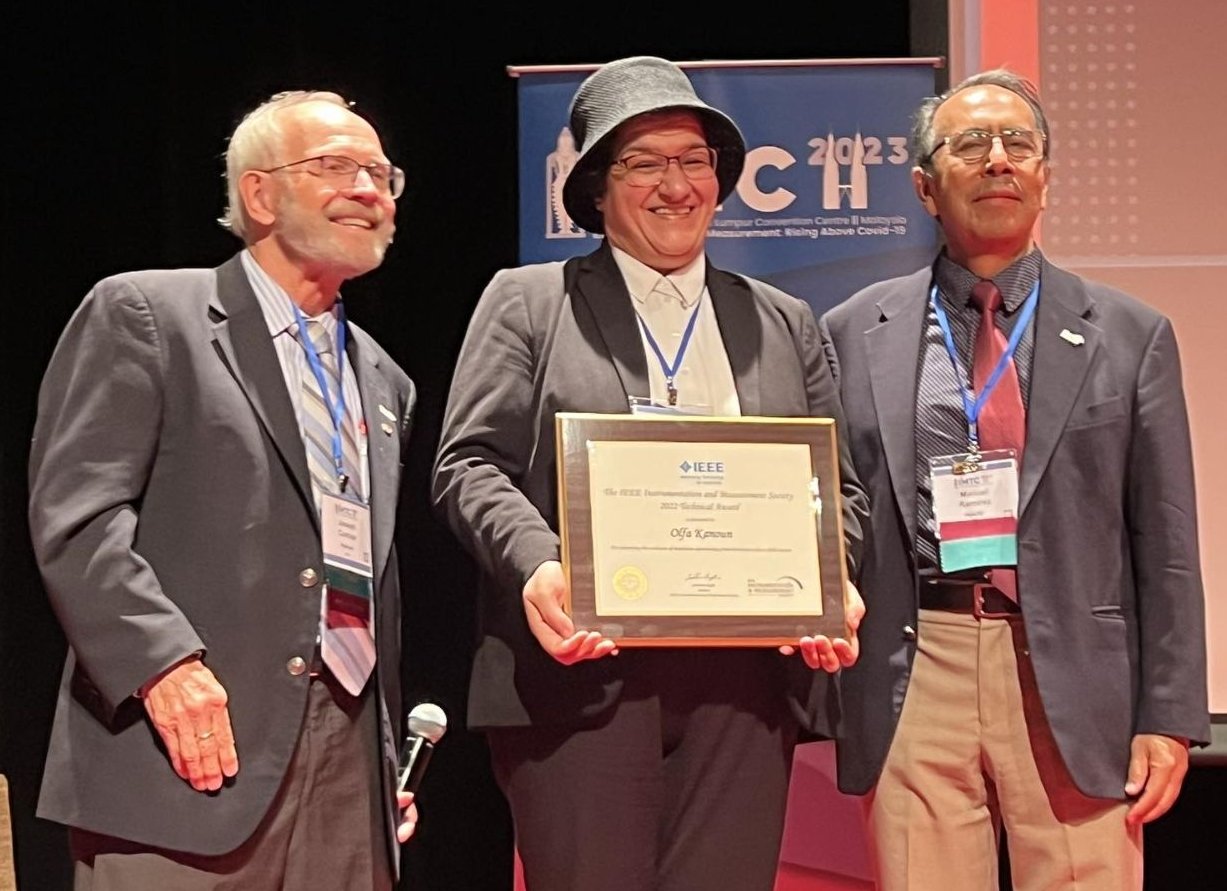
Award for:
- Technical leadership in impedance spectroscopy
- Innovative research in sensor systems
- Contributions to I&M Society
- International research collaboration
The award ceremony took place during the IEEE I&M Society Meeting in January 2024.