Research
2026
Sub-project:
Development of high-quality AMC composite powders using ultrasonic atomisation
Department(s):
Thermal coating
Funding body:
SAB-ERDF
Funding reference number:
100767905
Duration:
2026–2028

Motivation & Objectives
As part of a collaborative project funded by the Sächsische Aufbaubank (SAB) under the ERDF, the Chair of Materials and Surface Engineering at Chemnitz University of Technology, SITEC Industrietechnologie GmbH and CMMC GmbH are developing novel aluminium matrix composite(AMC) materials for laser beam cladding. The aim is to harness the potential of this class of materials – which are lightweight yet highly resistant to wear and corrosion – for additive manufacturing and coating processes.
AMC materials typically consist of aluminium alloys reinforced with 5–30 vol.% SiC particles, thereby exhibiting high mechanical and tribological performance combined with low density. The project aims to establish an end-to-end process chain for the production and processing of suitable AMC materials. This comprises the production of suitable AMC semi-finished products by CMMC GmbH, their conversion into high-quality powders via ultrasonic atomisation at Chemnitz University of Technology, and the processing of the composite powders into wear-and corrosion-resistant coatings by laser beam cladding at SITEC Industrietechnologie GmbH.
Through close collaboration between the project partners, fundamental relationships between material composition, process parameters, microstructure and the resulting properties of the AMC powders and coatings are being systematically investigated. On this basis, high-quality AMC composite powders, optimised for specific processes, are to be produced. The project thus strengthens the innovative capacity of additive manufacturing and coating technologies and contributes to the development of resource-efficient lightweight construction solutions in Saxony.
AMC materials typically consist of aluminium alloys reinforced with 5–30 vol.% SiC particles, thereby exhibiting high mechanical and tribological performance combined with low density. The project aims to establish an end-to-end process chain for the production and processing of suitable AMC materials. This comprises the production of suitable AMC semi-finished products by CMMC GmbH, their conversion into high-quality powders via ultrasonic atomisation at Chemnitz University of Technology, and the processing of the composite powders into wear-and corrosion-resistant coatings by laser beam cladding at SITEC Industrietechnologie GmbH.
Through close collaboration between the project partners, fundamental relationships between material composition, process parameters, microstructure and the resulting properties of the AMC powders and coatings are being systematically investigated. On this basis, high-quality AMC composite powders, optimised for specific processes, are to be produced. The project thus strengthens the innovative capacity of additive manufacturing and coating technologies and contributes to the development of resource-efficient lightweight construction solutions in Saxony.
Contact person
M.Sc.
Sarah J. Hirsch
Department:
Sustainable materials and manufacturing processes
Function:
research associate
Phone:
+49 (0)371 531 –
36306
EMail:
sarah-johanna.hirsch@mb…
Room:
E06.016
Department(s):
Metallic materials and material fatigue
Funding body:
DFG
Funding reference number:
565494670
Duration:
2026–2028

Motivation & Objectives
Electromagnetic forming (EMF) utilises the energy density of pulsed magnetic fields to apply force without contact and to carry out high-speed forming of highly electrically conductive workpieces. The high strain rates inherent to the process result in increased formability for many materials, enabling the forming of complex geometric features. Due to the combination of high mechanical strength and high electrical conductivity, copper alloys such as CuCrZr are now predominantly used as inductor materials in the EMU process. However, the resource-efficient and cost-effective design of the forming process is currently limited by the highly variable service life of the inductor. Despite numerous studies on electromagnetic forming, the mechanisms that lead to damage to the inductor—in some cases after just a few discharges—remain unclear to this day. In order to optimally design the inductor for the process and ensure the stability of its operational properties for a long service life, an understanding of the underlying process-structure-property relationships is necessary. As part of this project, the causal relationships between the inductor’s material microstructure—which directly influences its mechanical and electrical properties—its geometry and surface condition, as well as between the process parameters and the associated electro-thermo--mechanical stresses on the inductor, in order to gain a fundamental understanding of the damage processes and mechanisms occurring during EMU. Through the qualitative and quantitative evaluation of these influencing factors, conclusions can be drawn regarding the potential extension of the service life of the inductors, thereby ensuring a resource-efficient and cost-effective design of the forming process.
Contact person

M.Sc.
Lukas Böttger
Department:
Metallic materials and material fatigue
Function:
research associate
Phone:
+49 (0)371 531 –
34425
EMail:
lukas.boettger@…
Room:
E06.004
Sub-project:
Development of optimised HVOF coating parameters for aluminium-based powder materials using an adapted HVOF torch prototype
Department(s):
Thermal coating
Funding body:
AIF ZIM
Funding reference number:
KK6021204SH5
Duration:
2026


Motivation & Objectives
Increased environmental requirements for internal combustion engines and economic pressures within the automotive supply industry call for technologically and economically superior components, such as bearing shells, and a solution that is free from toxic lead, offers higher strength and utilises alternative process routes to the current state of the art. The aim of the project is to develop a holistic manufacturing route for bearing shells using powder processing via thermal spraying, as the requirements for bearing shells make a composite material essential. In this project, aluminium-based alloys are being developed and processed into powders via gas atomisation for application using HVOF. A new burner and nozzle geometry, along with optimised processing parameters, are being developed to enable the coating of such low-melting-point alloy systems. A comprehensive analysis of the coating process, the parameters and the resulting coatings enhances technological understanding and ensures quality. Finally, coated bearing shells will be tested under realistic operating conditions in internal combustion engines, thereby achieving TRL6. Within the scope of this project, Chemnitz University of Technology is responsible for coating development and the associated determination of optimal spraying parameters, and is therefore closely integrated with the sub-projects (powder production, burner prototype design, component post-processing and analysis) of the participating project partners.
Contact person

M.Sc.
Lukas Tegelkamp
Department:
Thermal coating
Function:
research associate
Phone:
+49 (0)371 531 –
32242
EMail:
lukas.tegelkamp@mb…
Room:
E06.120
Department(s):
Metallic materials and material fatigue
Funding body:
BMWE IGF
Funding reference number:
01IF24804N
Duration:
2026–2028


Motivation & Objectives
The project investigates the potential applications of microwave plasma torches in thermal processing systems and compares them with conventional hydrogen and natural gas burners. To this end, a wide range of process parameters – such as feed gases, temperatures and mixtures – are systematically varied in order to investigate in detail the effect of microwave plasma torches on furnace lining materials. Based on these findings regarding plasma properties, the integrity of the burner components and process safety, recommendations can then be derived for the use of microwave plasma torches in existing and new thermal processing plants.
Contact person

M.Sc.
Franz Gläser
Department:
Metallic materials and material fatigue
Function:
research associate
Phone:
+49 (0)371 531 –
39798
EMail:
franz.glaeser@mb…
Room:
E06.004
Sub-project:
Recycling approaches for AMC, controlled particle distribution in castings, microstructural characterisation and optimisation
Department(s):
Sustainable materials and manufacturing processes
Funding body:
SAB
Funding reference number:
100768182
Duration:
2026–2028


Motivation & Objectives
The aim is to develop an electrically driven refrigerant compressor (eKMV) with increased energy efficiency, reduced weight and improved resource efficiency. To this end, a novel 9-kW compressor is being designed which, thanks to design simplifications, offers more cost-effective manufacturing and increased operational reliability. To extend the operating range and improve thermodynamic efficiency, a medium-pressure feed is being integrated into the compression process. This involves introducing refrigerant at an additional pressure level, thereby reducing the final compression temperature and increasing process stability. Another key focus of development is the replacement of conventional grey cast iron components with SiC-particle-reinforced aluminium matrix composites (AMC) for the cylinder housing.
As part of the collaborative project, a functional prototype and a technically optimised eKMV with integrated medium-pressure injection are being developed and tested. In addition, fundamental issues relating to materials and process development are being investigated. Furthermore, the reintroduction of machining swarf into the initial forming process is being investigated in order to develop recycling strategies for AMC materials and to assess their impact on the mechanical properties of the components. In addition, a sustainability assessment is being carried out using a cradle-to-cradle analysis.
As part of the collaborative project, a functional prototype and a technically optimised eKMV with integrated medium-pressure injection are being developed and tested. In addition, fundamental issues relating to materials and process development are being investigated. Furthermore, the reintroduction of machining swarf into the initial forming process is being investigated in order to develop recycling strategies for AMC materials and to assess their impact on the mechanical properties of the components. In addition, a sustainability assessment is being carried out using a cradle-to-cradle analysis.
Contact person
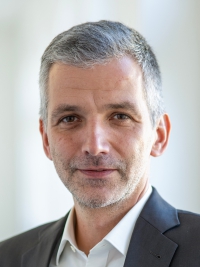
Dr.-Ing.
Thomas Grund
Function:
research associate
Phone:
+49 (0)371 531 –
35390
EMail:
thomas.grund@mb…
Room:
E01.103
Sub-project:
Materials and process development for the thermal metallisation of rotor blade leading edges
Department(s):
Thermal coating
Funding body:
Aviation Research Programme on Climate (LuFo Klima) (BMWK)
Funding reference number:
20E2227B
Duration:
2026–2029

Motivation & Objectives
The objectives of the Bladeprotect³ – OVBA sub-project are the selection and optimisation of materials, as well as the development of a process for metallising the leading edges of wind turbine rotor blades using thermal spraying. To this end, the proposed project will develop a manufacturing process chain in which the individual technologies work together to form coordinated sub-processes. A key focus at Chemnitz University of Technology is the development of metallic alloys that enable high bond strength to the rotor blade substrate and provide multifunctional protection within a coating system comprising a bonding layer and a functional top coat. A key aspect of this is the selection of filler materials and the investigation of modifications to the material composition with regard to functional properties. Furthermore, a solution for coating application via wire arc spraying using the previously developed metallic alloys is proposed, which represents a new approach in the field of wind energy. The technical functionalities of these metal coatings are comprehensively characterised in terms of their microstructure, adhesion strength and relevant property parameters. Building on this, the development and optimisation of coating parameters for wire arc spraying are investigated. Furthermore, the systematic investigation extends to the parameters for the surface preparation of the rotor blade substrates. As the coating adhesion mechanism is essentially characterised by mechanical interlocking, the topography and roughness of the substrate contribute significantly to the quality of adhesion. Using fractal design principles, a quantitative estimate of the bond strength – and thus the suitability for the intended application – can be developed. Finally, functional tests are carried out to validate the practical suitability of the coatings. These include electrochemical corrosion and tribological measurement methods carried out in a laboratory setting. The technical functionality of the multifunctional protective coating is characterised by high adhesion strength and a microstructure with few defects, whilst simultaneously exhibiting promising functional properties.
Contact person
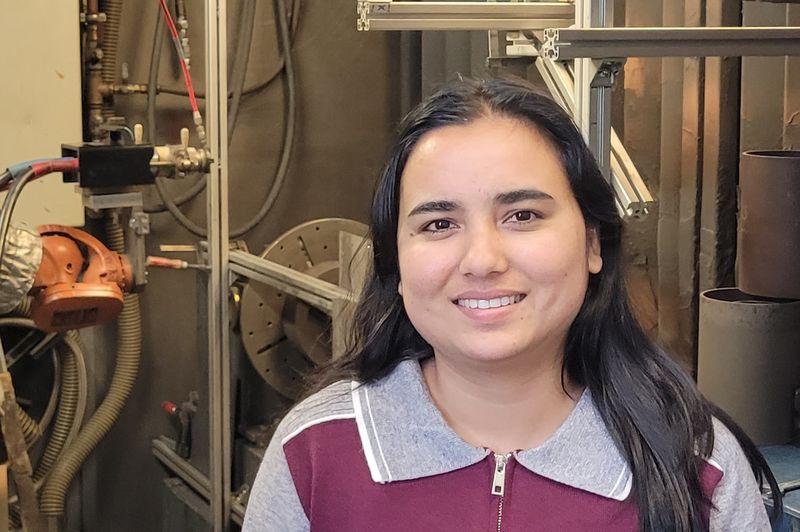
M.Sc.
Prativa Giri
Department:
Thermal coating
Function:
research associate
Phone:
+49 (0)371 531 –
33266
EMail:
prativa.giri@mb…
Room:
E06.103
2025
Department(s):
Chemical and Electrolytic Surface Treatment, Metallic Materials and Material Fatigue
Funding body:
DFG
Funding reference number:
547149748
Duration:
2025–2028
Motivation & Objectives
Meeting the growing demands in surface engineering – such as hardening surfaces in a targeted manner, for example through plasma nitriding, and determining the required process controls with precision – requires not only an in-depth understanding of the process but also extensive process development. To reduce the amount of experimental work required for this, numerical, model-based simulations are increasingly being used. However, state-of-the-art methods only allow plasma nitriding to be simulated under certain simplifications. Modern developments in mathematical modelling, information technology and mathematical algorithms enable the analysis of complex models with a high degree of precision. The project involves incorporating the effects of nitrogen and carbon contents – specifically their displacement mechanisms and solubility limits – on the phase transformations during plasma nitriding. In addition to mathematical modelling, the inverse calculation of the physical model parameters from plasma-nitrided layers is also a key part of the project. For the simulation, highly stable numerical methods developed in recent years are being put into practice.
Contact person

M.Sc.
Stephan Daniel Schwöbel
Department:
Electroplating and chemical coating technology
Function:
research associate
Phone:
+49 (0)371 531 –
36100
EMail:
stephan-daniel.schwoebel@mb…
Room:
E06.104

Dr.-Ing.
Lisa Winter
Department:
Metallic materials and material fatigue
Function:
Head of Department
Phone:
+49 (0)371 531 –
32632
EMail:
lisa.winter@mb…
Room:
E06.003
Department(s):
Metallic materials and material fatigue
Funding body:
BMWE IGF
Funding reference number:
01IF23541N
Duration:
2025–2027
Motivation & Objectives
The aim of the project is to determine and predict the influence of hydrogen addition in thermal processing plants on the mechanical properties and service lives of heat-resistant steels under combined thermochemical and cyclic mechanical loading, under conditions relevant to industrial applications. The results of these investigations are made available to plant manufacturers, service providers and materials suppliers. The data provide evidence of the corrosion behaviour and mechanical strengths of the materials used and their joint zones under the altered conditions of hydrogen combustion. This enables companies in the sector – particularly SMEs – to design future plants more precisely and to adapt existing plants in a targeted manner for use with hydrogen. The insights gained allow for the extension of costly maintenance intervals and the avoidance of unplanned plant outages. The aim is to ensure that the use of these materials in industrial systems fuelled by hydrogen is reliable, efficient and safe, thereby facilitating the transition to a low-carbon and sustainable energy supply.
Contact person

M.Sc.
Lisa-Marie Rymer
Department:
Metallic materials and material fatigue
Function:
research associate
Phone:
+49 (0)371 531 –
37902
EMail:
lisa-marie.rymer@mb…
Room:
E06.003
Sub-project:
Development of CoCrMo powder
Department(s):
Thermal coating
Funding body:
AiF ZIM
Funding reference number:
KK6021201SK5
Duration:
2025–2028

Motivation & Objectives
CoCrMo is the standard alloy for dental implants and is currently produced almost exclusively by casting. 3D printing offers significant advantages in this regard in terms of customisation and design freedom. Against the backdrop of the growing market trend towards patient-specific treatments in dentistry, there is an increasing demand for efficient, bespoke implant solutions. However, a major technical challenge for successful market entry is the surface quality of additively manufactured parts, as the powder-bed fusion process leads to undesirable particle adhesion. The development of a holistic, closed-loop process chain offers a promising solution here to overcome this hurdle and make the technology viable for patient-specific implant restorations.
The aim of the project is to develop a comprehensive additive manufacturing process for CoCrMo dental implants. The focus is on optimising the alloy composition in terms of wear resistance, passivity and biocompatibility. In addition, robust and reproducible printing parameters must be developed for complex geometries. The surface finish is first specifically improved using electrolytic plasma polishing (EPP) to remove any roughness caused by the printing process. Finally, the surface is functionalised using a physical vapour deposition (PVD) coating to further optimise the biocompatibility of the implants and enable optimal tissue integration.
The partners include AddPark and plasotec GmbH (manufacturing and processing), as well as Chemnitz University of Technology and Atatürk University (alloy and powder development, surface treatment and biocompatibility studies).
The aim of the project is to develop a comprehensive additive manufacturing process for CoCrMo dental implants. The focus is on optimising the alloy composition in terms of wear resistance, passivity and biocompatibility. In addition, robust and reproducible printing parameters must be developed for complex geometries. The surface finish is first specifically improved using electrolytic plasma polishing (EPP) to remove any roughness caused by the printing process. Finally, the surface is functionalised using a physical vapour deposition (PVD) coating to further optimise the biocompatibility of the implants and enable optimal tissue integration.
The partners include AddPark and plasotec GmbH (manufacturing and processing), as well as Chemnitz University of Technology and Atatürk University (alloy and powder development, surface treatment and biocompatibility studies).
Contact person
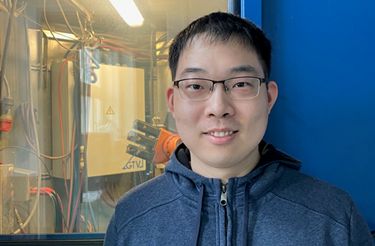
M.Sc.
Wang Colliery
Department:
Thermal coating
Function:
research associate
Phone:
+49 (0)371 531 –
37555
EMail:
zechen.wang@mb…
Room:
E06.119
Department(s):
Thermal coating
Funding body:
BMWE / IGF
Funding reference number:
01IF24515N
Duration:
2025–2027

Motivation & Objectives
Thermal spray coatings are used in numerous industrial applications, including to improve wear and corrosion resistance and to specifically tailor electrical and thermal properties (insulation or conductivity). Due to the highly dynamic nature of the spraying processes and the complex interactions between process parameters, particle properties and coating formation, quality control is of particular importance. However, currently available testing methods are often destructive, time-consuming or can only be used to a limited extent in-process. There is therefore a considerable need, particularly for small and medium-sized enterprises, for a fast, cost-effective testing solution that can be used on-site.
The aim of the IGF project ‘CoatAlyse’ is to develop a portable, non-destructive rapid test for the quality-related characterisation of thermally sprayed coatings directly in the production environment. By analysing electrochemical corrosion parameters using gel electrolytes and a customised measuring cell, the aim is to establish a robust correlation between the measurement signal and key coating properties. This will enable quality assessment close to the production process, reduce scrap and sustainably improve process stability. In the long term, ‘CoatAlyse’ aims to enable SMEs to monitor the quality of thermally sprayed coatings more efficiently and to strengthen their competitiveness in a targeted manner.
The aim of the IGF project ‘CoatAlyse’ is to develop a portable, non-destructive rapid test for the quality-related characterisation of thermally sprayed coatings directly in the production environment. By analysing electrochemical corrosion parameters using gel electrolytes and a customised measuring cell, the aim is to establish a robust correlation between the measurement signal and key coating properties. This will enable quality assessment close to the production process, reduce scrap and sustainably improve process stability. In the long term, ‘CoatAlyse’ aims to enable SMEs to monitor the quality of thermally sprayed coatings more efficiently and to strengthen their competitiveness in a targeted manner.
Contact person
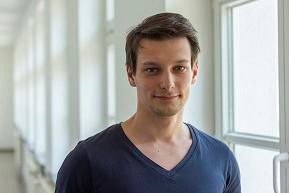
M.Sc.
Maximilian Grimm
Department:
Thermal coating
Function:
MA (Science) / Deputy Head of Department
Phone:
+49 (0)371 531 –
36581
EMail:
maximilian.grimm@mb…
Room:
E06.103
Sub-project:
Determining the relationships between complex loading and hydrogen-carrying components
Department(s):
Chemical and Electrolytic Surface Treatment
Funding body:
SAB-ERDF
Funding reference number:
100756423
Duration:
2025–2027
Motivation & Objectives
The overall objective of the Hy²Cycle collaborative project is to develop resource-efficient and recyclable cells and stacks for fuel cells (FC) and electrolysers (EL). New concepts for reversible and recyclable high-pressure alkali electrolyser/FC and PEM electrolyser/FC systems are being developed jointly. The development of recycling-friendly designs ranges from cell design through to energy-efficient manufacturing and, as a result of stack development, aims to take into account and implement novel recycling processes in line with a circular economy right from the design stage.
Hy²Cycle is a collaborative project run by the Saxon Hydrogen Union.
Hy²Cycle is a collaborative project run by the Saxon Hydrogen Union.
Contact person
M.Sc.
Jana Martini
Department:
Chemical and Electrolytic Surface Treatment
Function:
research associate
Phone:
+49 (0)371 531 –
33893
EMail:
jana.martini@mb…
Room:
E06.014
Green Hydrogen Production using Thermally Sprayed Nickel Cathodes in Water Electrolysis – Hydro-NiCE
Department(s):
Thermal coating
Funding body:
CET Partnership / SAB-EFRE
Funding reference number:
100783718
Duration:
2025–2027
Motivation & Objectives
Green hydrogen plays a central role in the transition to a low-carbon and sustainable energy future. Efficient production is crucial to utilising hydrogen as a viable and scalable solution, ensuring economic viability, conserving resources and reducing the impacts of climate change. Alkaline water electrolysis (AEL) is particularly well-suited to the large-scale production of green hydrogen due to its robustness and sustainability. It is characterised by high system stability and a long service life. Furthermore, it offers a high tolerance to fluctuations in the power supply, which makes it particularly attractive for operation with renewable energy sources. The performance of the cathodes plays a central role in the overall efficiency of the electrolysis process. It depends largely on the available reaction surface area, the electrical conductivity and the catalytic activity of the material. Cost-effective solutions therefore rely on non-precious-metal-based electrode materials. Nickel-based systems offer a balanced approach in terms of cost-effectiveness and efficiency. One approach to enhancing the performance of such materials is to increase the reactive surface area. Fine-pored, open-pored structures are particularly suitable for this purpose, as they enable improved gas diffusion and optimised mass transfer. Thermally sprayed coating systems are particularly well-suited to this approach. By precisely adjusting the porosity and internal surface area, catalytic activity can be increased, gas bubble detachment improved and mass transfer optimised, which enhances both the electrolytic performance and the durability of the electrodes. Raney nickel represents a promising basis for thermally sprayed coatings due to its high catalytic activity and stability in alkaline media. In the planned project, new nickel-based alloys will be developed and processed by thermal spraying, with the internal porosity specifically increased through the selective leaching of components of the coating system. This results in a large-area, highly active and structurally stable cathode surface. The resulting porous cathode structure will be tested on an industrial scale to assess its potential for improving hydrogen production efficiency and reducing energy consumption in alkaline electrolysis.
Contact person
M.Sc.
Ali Farsiabiemameh
Department:
Thermal coating
Function:
research associate
Phone:
+49 (0)371 531 –
36953
EMail:
ali.farsiabiemameh@mb…
Room:
E06.119
Sub-project:
Cathode production by wire arc spraying and leaching
Department(s):
Thermal coating
Funding body:
AiF ZIM
Funding reference number:
KK5112609KT4
Duration:
2025–2027
Motivation & Objectives
Green hydrogen is regarded as a promising zero-emission energy carrier for meeting the targets of the Climate Action Plan 2050 and developing a circular energy system. The development of innovative cathode solutions is essential to achieving competitive production via alkaline water electrolysis. This project aims to develop nickel-aluminium-based Raney nickel cathodes, which are produced by thermal spraying and activated by leaching. This combination of processes significantly increases the specific surface area of the open-pored sprayed structure through the partial removal of aluminium-rich phases, thereby improving cathode performance. Novel wire-in-wire materials are used as filler wire additives, enabling alloy modification whilst maintaining homogeneous processing properties. Through detailed characterisation of microstructural and functional properties throughout the entire process chain, the aim is to initiate the cost-effective production of green hydrogen on an industrial scale.
Contact person
Dr.-Ing.
Thomas Lindner
Department:
Thermal coating
Function:
Head of Department
Phone:
+49 (0)371 531 –
38287
EMail:
th.lindner@mb…
Room:
E06.105
Sub-project:
Electromagnetic alignment of reinforcement elements
Department(s):
Chemical and Electrolytic Surface Treatment
Funding body:
DFG
Funding reference number:
TRR 402/1-525069572
Duration:
2025–2028
Motivation & Objectives
The focus of sub-project B03 is on establishing an active, defined fibre orientation in short- and long-fibre-reinforced plastics (FRP) and a defined transition zone at the interface with continuously reinforced or non-reinforced substructures. Active alignment of the fibres is to be achieved by means of external magnetic excitation in an isostatic state. The research focuses on developing a suitable coating process for the production of magnetically coated carbon fibres (mc-CF), as well as the production of polymer composites incorporating mc-CF, and the associated experimental and numerical investigation.
This sub-project forms part of the DFG Collaborative Research Centre “SFB/TRR 402”. The project is dedicated to the development of novel production technologies for lightweight structures that are resource-efficient, sustainable and, at the same time, high-performance. The aim of these technologies is to significantly reduce energy consumption and carbon dioxide emissions both during production and during the operation of vehicles and machinery. The focus is on optimising the transitions between different materials in fibre-reinforced plastic composites. These transitions currently present one of the greatest challenges for mass production, as they significantly influence the load-bearing capacity and service life of the components. With the help of what is known as 3D grading, the aim is to produce smooth material transitions that are specifically tailored to the load requirements of the components. This method allows for a gradual change in the reinforcement structures, which improves the mechanical properties and optimises material usage.
This sub-project forms part of the DFG Collaborative Research Centre “SFB/TRR 402”. The project is dedicated to the development of novel production technologies for lightweight structures that are resource-efficient, sustainable and, at the same time, high-performance. The aim of these technologies is to significantly reduce energy consumption and carbon dioxide emissions both during production and during the operation of vehicles and machinery. The focus is on optimising the transitions between different materials in fibre-reinforced plastic composites. These transitions currently present one of the greatest challenges for mass production, as they significantly influence the load-bearing capacity and service life of the components. With the help of what is known as 3D grading, the aim is to produce smooth material transitions that are specifically tailored to the load requirements of the components. This method allows for a gradual change in the reinforcement structures, which improves the mechanical properties and optimises material usage.
Contact person
M.Sc.
Nisha Poonia
Department:
Chemical and Electrolytic Surface Treatment
Function:
research associate
Phone:
+49 (0)371 531 –
38818
EMail:
nisha.poonia@mb…
Room:
E06.014
Sub-project:
Development of a test rig for tribocorrosive unidirectional abrasive (TUA) loading
Department(s):
Thermal coating
Funding body:
BMWE – Central Innovation Programme for SMEs (ZIM)
Funding reference number:
KK5112610SH4
Duration:
2025–2028
Motivation & Objectives
The AlSiCoat research project is developing a sustainable coating concept for blades used in agricultural machinery. The aim is to replace conventional tungsten carbide–cobalt-based wear-resistant coatings with more environmentally friendly alternatives. These established systems contain critical raw materials such as tungsten and cobalt and are coming under increasing regulatory and environmental pressure.
The project therefore aims to develop novel aluminium metal matrix composites (AMCs) with embedded silicon carbide (SiC) particles. For the first time, these powders are to be produced from semi-finished AMC castings and applied to machine tools’ cutting edges using laser cladding. The combination of innovative powder production, an optimised coating process and application-oriented testing is intended to result in wear-resistant, tribocorrosion-resistant coatings.
The sub-project led by Chemnitz University of Technology (IWW) focuses on the development of a test method and a test rig for assessing combined wear and corrosion resistance. To this end, a tribocorrosive, unidirectional abrasion wear test is being developed which replicates the real-world operating conditions of agricultural tools as closely as possible. The results enable a quantitative assessment of the new coatings and support the optimisation of the entire process and materials system.
The project therefore aims to develop novel aluminium metal matrix composites (AMCs) with embedded silicon carbide (SiC) particles. For the first time, these powders are to be produced from semi-finished AMC castings and applied to machine tools’ cutting edges using laser cladding. The combination of innovative powder production, an optimised coating process and application-oriented testing is intended to result in wear-resistant, tribocorrosion-resistant coatings.
The sub-project led by Chemnitz University of Technology (IWW) focuses on the development of a test method and a test rig for assessing combined wear and corrosion resistance. To this end, a tribocorrosive, unidirectional abrasion wear test is being developed which replicates the real-world operating conditions of agricultural tools as closely as possible. The results enable a quantitative assessment of the new coatings and support the optimisation of the entire process and materials system.
Contact person
Graduate Engineer
Xiaoming Shen
Department:
Thermal coating
Function:
research associate
Phone:
+49 (0)371 531 –
35377
EMail:
xiaoming.shen@mb…
Room:
E06.120
Sub-project:
The influence of near-surface structural components and their geometric properties on fatigue strength
Department(s):
Metallic materials and material fatigue
Funding body:
DFG
Funding reference number:
547640565
Duration:
2025–2027
Motivation & Objectives
Many components must withstand periodically occurring load cycles throughout their service life. Long service lives with high allowable loads are of great technical and economic interest in this context. For components subjected to this type of cyclic loading, it is necessary to select suitable materials and optimise the geometric design to achieve high realisable fatigue strengths. Specified minimum fatigue life cycles, tailored to the specific application, must be withstood without the formation of cracks. As the component surface is the preferred location for crack initiation under high-cycle fatigue (HCF) loading, the geometric and material properties have a decisive influence on the cyclic load-bearing capacity and thus on the fatigue strength. This means that, in addition to strength, hardness and macroscopic surface topography, the notch effects resulting from microstructural features at the microscale also exert an influence. However, the mechanisms by which these microstructural factors influence fatigue strength have so far been inadequately investigated. The aim of the project is to characterise the influence of the near-surface microstructure on fatigue strength not only qualitatively but also quantitatively, in comparison with the macroscopic, manufacturing-induced surface topography, in order to take all relevant factors into account when designing a component to achieve improved operational properties.
Contact person

M.Sc.
Sahib Kaur
Department:
Metallic materials and material fatigue
Function:
research associate
Phone:
+49 (0)371 531 –
31556
EMail:
sahib.kaur@mb…
Room:
E06.017
Department(s):
Thermal Coating, Human-Cyber-Physical Systems
Funding body:
DFG
Funding reference number:
558601614
Duration:
2025–2028


Motivation & Objectives
The industrial manufacture of components involves the sequential linking of manufacturing processes to produce products with a defined set of properties. The challenges lie in optimising the manufacturing process, addressing uncertainties inherent in the process, and achieving global optimisation across the entire process chain. Multi-criteria optimisation is challenging, as there are conflicting target parameters relating to processing and functional properties.
Process chain optimisation is to be carried out in ProModFun using an experimental approach and data-driven modelling. First, the process chain comprising (1) thermal coating, (2) turning and (3) diamond smoothing will be established to produce a functional surface with a graded increase in hardness close to the surface. The innovative property profile is to be demonstrated using the ‘guide roller’ component as an example. Through thermal coating (primary shaping), surfaces made of manganese hard steel are applied to rotationally symmetrical components and then adjusted in terms of core and edge properties by turning and diamond finishing. The target parameters of the process chain to be optimised are to be influenced as follows: (1) maximise surface hardness, (2) minimise surface roughness, (3) maximise the oxide content of the coating system, and (4) maximise the energy efficiency of surface production.
Sensor technology is integrated into the manufacturing processes and the measurement data is used for modelling. The methodological approaches employed are statistical modelling and multidimensional, pattern-based description using grey-box AI algorithms (fuzzy pattern classification). These enable the quantification of various types of uncertainty and the forward coupling of the process chain. This is followed by the development of a method for inverse multi-criteria optimisation across the entire process chain for the purpose of global optimisation.
Process chain optimisation is to be carried out in ProModFun using an experimental approach and data-driven modelling. First, the process chain comprising (1) thermal coating, (2) turning and (3) diamond smoothing will be established to produce a functional surface with a graded increase in hardness close to the surface. The innovative property profile is to be demonstrated using the ‘guide roller’ component as an example. Through thermal coating (primary shaping), surfaces made of manganese hard steel are applied to rotationally symmetrical components and then adjusted in terms of core and edge properties by turning and diamond finishing. The target parameters of the process chain to be optimised are to be influenced as follows: (1) maximise surface hardness, (2) minimise surface roughness, (3) maximise the oxide content of the coating system, and (4) maximise the energy efficiency of surface production.
Sensor technology is integrated into the manufacturing processes and the measurement data is used for modelling. The methodological approaches employed are statistical modelling and multidimensional, pattern-based description using grey-box AI algorithms (fuzzy pattern classification). These enable the quantification of various types of uncertainty and the forward coupling of the process chain. This is followed by the development of a method for inverse multi-criteria optimisation across the entire process chain for the purpose of global optimisation.
Contact person

Dr rer. nat. habil. (Dipl.-Psych.)
Franziska Bocklisch
Department:
Human-Cyber-Physical Systems
Function:
Head of department
Phone:
+49 (0)371 531 –
36530
EMail:
franziska.bocklisch@mb…
Room:
E06.116
Professor, Dr.-Ing. (habil.)
Thomas Lampke
Function:
Holder of the Chair
Phone:
+49 (0)371 531 –
36163
EMail:
thomas.lampke@mb…
Room:
E02.112
Sub-project:
Materials Production and Characterisation
Department(s):
Sustainable materials and manufacturing processes
Funding body:
SAB
Funding reference number:
100706092
Duration:
2025–2026

Motivation & Objectives
As part of the project, atomisation processes are being utilised in collaboration with industry and research partners to produce highly particle-reinforced aluminium matrix composite (AMC) powders and to process these into near-net-shape components using the LPBF process. The aim is to establish a systematic correlation between the feedstock, the atomisation process, the LPBF process parameters and the performance characteristics of the manufactured components. In addition, cost-effectiveness and component quality are being investigated in comparison with conventional casting processes.
By the end of the project, the scientific and technical foundations should be in place to manufacture high-quality AMC products and establish them on the market. The commercial project partners expect the development of new materials and products to expand their product portfolios.
Funding is provided from the European Regional Development Fund (ERDF) and from tax revenue, in accordance with the budget approved by the Saxon State Parliament.
By the end of the project, the scientific and technical foundations should be in place to manufacture high-quality AMC products and establish them on the market. The commercial project partners expect the development of new materials and products to expand their product portfolios.
Funding is provided from the European Regional Development Fund (ERDF) and from tax revenue, in accordance with the budget approved by the Saxon State Parliament.
Contact person
M.Sc.
Sarah J. Hirsch
Department:
Sustainable materials and manufacturing processes
Function:
research associate
Phone:
+49 (0)371 531 –
36306
EMail:
sarah-johanna.hirsch@mb…
Room:
E06.016
Department(s):
Metallic materials and material fatigue
Funding body:
SAB ERDF
Funding reference number:
100757078
Duration:
2025–2026

Motivation & Objectives
The ‘FerriKo-EL’ project is investigating the use of cost-effective and resource-efficient ferritic stainless steels for water electrolysis. Compared with the commonly used austenitic steels with a high nickel content, ferritic steels are based on chromium as the main alloying element, which is significantly cheaper and more sustainable. At the same time, the absence of nickel results in reduced formability and corrosion resistance, which has so far limited their use to flat – and therefore less efficient – flow field structures. Furthermore, without suitable surface treatment, the aggressive media and high electrical voltages in electrolysers lead to accelerated degradation of the steels.
Studies have shown that the chromium content in ferritic steels allows the formation of self-passivating layers with very high corrosion resistance whilst maintaining sufficient electrical conductivity. The aim of FerriKo-EL is to systematically investigate this approach and apply it to ferritic electrolyser plates. To this end, the surfaces of the plates are specifically treated or coated using various methods in order to optimise the formation of protective coating systems. In parallel, tailored forming strategies are being developed to significantly improve the formability of the materials and enable the production of flow fields with deeper channel structures. This allows the performance and efficiency of the novel electrolyser plates to be significantly increased. Through the combination of materials development and advanced process design, FerriKo-EL makes a significant contribution to reducing costs, increasing efficiency and enabling the sustainable production of hydrogen as part of the energy transition.
Studies have shown that the chromium content in ferritic steels allows the formation of self-passivating layers with very high corrosion resistance whilst maintaining sufficient electrical conductivity. The aim of FerriKo-EL is to systematically investigate this approach and apply it to ferritic electrolyser plates. To this end, the surfaces of the plates are specifically treated or coated using various methods in order to optimise the formation of protective coating systems. In parallel, tailored forming strategies are being developed to significantly improve the formability of the materials and enable the production of flow fields with deeper channel structures. This allows the performance and efficiency of the novel electrolyser plates to be significantly increased. Through the combination of materials development and advanced process design, FerriKo-EL makes a significant contribution to reducing costs, increasing efficiency and enabling the sustainable production of hydrogen as part of the energy transition.
Contact person

M.Sc.
Linto George Thomas
Department:
Metallic materials and material fatigue
Function:
research associate
Phone:
+49 (0)371 531 –
37893
EMail:
linto.george-thomas@mb…
Room:
E06.018
Department(s):
Sustainable materials and manufacturing processes
Funding body:
SAB
Funding reference number:
100748757
Duration:
2025–2027
Motivation & Objectives
The aim is to develop a recycling technology for aluminium that produces material of a quality suitable for wire drawing processes, ultrasonic metal welding (USMW) and use in electrical components. USMW is an innovative joining process that is particularly relevant for applications in electromobility, as it enables high-strength, material-bonded and electrically conductive joints without the need for filler materials. A key application lies in wiring harness connections for electric and hydrogen-powered vehicles. Aluminium enables a weight reduction of up to 40 per cent in cable harnesses, thereby contributing to a reduction in energy consumption and, indirectly, in CO₂ emissions. Furthermore, aluminium offers greater availability and lower material costs compared with copper.
At present, primary aluminium is predominantly used for electrical applications, as there is a lack of suitable recycling technologies for secondary aluminium wires with the required electrical properties. However, the development of such a technology is crucial to the sustainability of the energy transition. The use of recycled aluminium reduces greenhouse gas emissions, lowers the energy required to source the material and minimises the demand for primary raw materials such as bauxite. At the same time, it conserves natural resources and reduces the environmental impact of raw material extraction.
Furthermore, the expansion of relevant recycling technologies offers economic potential through lower production costs and the strengthening of regional value chains. The project is therefore in line with the Free State of Saxony’s innovation strategy and the Raw Materials Initiative of the Saxon State Ministry for Economic Affairs, Labour and Transport, in particular with the aim of establishing Saxony as a centre for secondary raw materials.
At present, primary aluminium is predominantly used for electrical applications, as there is a lack of suitable recycling technologies for secondary aluminium wires with the required electrical properties. However, the development of such a technology is crucial to the sustainability of the energy transition. The use of recycled aluminium reduces greenhouse gas emissions, lowers the energy required to source the material and minimises the demand for primary raw materials such as bauxite. At the same time, it conserves natural resources and reduces the environmental impact of raw material extraction.
Furthermore, the expansion of relevant recycling technologies offers economic potential through lower production costs and the strengthening of regional value chains. The project is therefore in line with the Free State of Saxony’s innovation strategy and the Raw Materials Initiative of the Saxon State Ministry for Economic Affairs, Labour and Transport, in particular with the aim of establishing Saxony as a centre for secondary raw materials.
Contact person

Dr.-Ing.
Ismail Özdemir
Department:
Sustainable materials and manufacturing processes
Function:
research associate
Phone:
+49 (0)371 531 –
36634
EMail:
ismail.oezdemir@mb…
Room:
E06.016
Department(s):
Metallic materials and material fatigue
Funding body:
BMWE
Funding reference number:
03EN2135A
Duration:
2025–2028
Motivation & Objectives
The project aims to reduce scale formation on metals, such as steel and copper, within the hot rolling process chain, with a view to conserving resources and reducing CO₂ emissions. This is achieved by combining experimental investigations with simulation-based predictions of scale formation within hot forming process chains. These approaches are intended to reduce scale formation whilst maintaining component quality and to make scale removal measures more efficient. As over 90 per cent of copper and steel products manufactured worldwide are hot-formed, the project offers considerable potential for savings in terms of more efficient use of resources and energy, provided the set objectives are successfully achieved. The development of an AI-supported forecasting tool to map the heating and descaling stages is the primary means of achieving these objectives. The training data underlying the forecasting tool is generated through laboratory tests and the modelling of hot forming process chains. To model scale formation, specially developed subroutines are created within established hot forming simulation programmes. These models are then validated in an industrial setting. This enables the prediction tool to be provided with extensive training datasets to identify correlations between the process variables and scale growth, as well as scale properties. This enables the industrial partners to identify energy-saving potential during heating, descaling and hot forming in a time- and cost-efficient manner. Consequently, the successful implementation of the prediction tool into existing furnace control and descaling programmes enables the project partners to design their hot forming process chains in a way that conserves resources and reduces energy consumption.
Contact person

M.Sc.
Nayeem Siddique
Department:
Metallic materials and material fatigue
Function:
research associate
Phone:
+49 (0)371 531 –
33877
EMail:
md-nayeem-islam.siddique@mb…
Room:
E06.004
Sub-project:
Development of organosilicate coatings for metal substrates for the bonding of rubber with a defined level of adhesion
Department(s):
Chemical and Electrolytic Surface Treatment
Funding body:
BMWK, AiF-ZIM
Funding reference number:
KK5112608EB4
Duration:
2025–2027


Motivation & Objectives
Moulded rubber parts are of significant economic importance and are used in many industries, for example as seals in mechanical engineering or as elastic components in the automotive sector. They are usually produced by moulding using tools, followed by vulcanisation. However, this tried-and-tested process is primarily cost-effective for large production runs and restricts design freedom; small-batch production and design changes are costly and time-consuming.
Additive manufacturing of vulcanisable rubber compounds is still at an early stage of research. Initial attempts using screw extruder prototypes have so far been limited to simple geometries. Challenges include developing a formulation that is both printable and vulcanisable, ensuring dimensional stability during curing, and precisely controlling adhesion, particularly in multi-material applications.
Suitable materials and printing systems enable the rapid, tool-free production of prototypes, spare parts, complex geometries and multi-material components, such as rubber-metal combinations. The project therefore examines the entire process – from the formulation of the rubber compound, the development of a print head and research into 3D printing parameters, right through to the study of adhesion between rubber and metal surfaces.
Additive manufacturing of vulcanisable rubber compounds is still at an early stage of research. Initial attempts using screw extruder prototypes have so far been limited to simple geometries. Challenges include developing a formulation that is both printable and vulcanisable, ensuring dimensional stability during curing, and precisely controlling adhesion, particularly in multi-material applications.
Suitable materials and printing systems enable the rapid, tool-free production of prototypes, spare parts, complex geometries and multi-material components, such as rubber-metal combinations. The project therefore examines the entire process – from the formulation of the rubber compound, the development of a print head and research into 3D printing parameters, right through to the study of adhesion between rubber and metal surfaces.
Contact person
M.Sc.
Mohammad Dodangi
Department:
Chemical and Electrolytic Surface Treatment
Function:
MA (academic) / MA (technical)
Phone:
+49 (0)371 531 –
38917
EMail:
mohammad.dodangi@mb…
Room:
E06.002
2024
Sub-project:
Development and implementation of simulation-based concepts for resource-efficient electroplating using a robot-assisted system with integrated coating analysis
Department(s):
Chemical and Electrolytic Surface Treatment
Funding body:
BMWK-LuFo
Funding reference number:
20Q2212D
Duration:
2024–2027


Motivation & Objectives
The project aims to develop a green and smart electroplated coating using modular, robot-based electroplating with in-line process monitoring. This enables the reliable and reproducible coating of relevant aircraft components, even in small and medium batch sizes.
The sub-project run by the Chair of Materials and Surface Engineering focuses on the development of a robot-assisted electroplating system that covers the entire process chain for component coating. To this end, an existing plant is being expanded and modernised to incorporate larger process vessels for coating individual parts and to accommodate the use of rack-mounted components. The level of automation is being further increased in order to meet the quality requirements for aerospace components. This includes automatic bath maintenance and coating analysis. These upgrades are crucial for validating new simulation models and for gaining a better understanding of the relationships between process, microstructure and properties. The research aims to reduce resource consumption and the scrap rate, minimise the volume of waste water and contribute to a more environmentally friendly production of aircraft components.
The sub-project run by the Chair of Materials and Surface Engineering focuses on the development of a robot-assisted electroplating system that covers the entire process chain for component coating. To this end, an existing plant is being expanded and modernised to incorporate larger process vessels for coating individual parts and to accommodate the use of rack-mounted components. The level of automation is being further increased in order to meet the quality requirements for aerospace components. This includes automatic bath maintenance and coating analysis. These upgrades are crucial for validating new simulation models and for gaining a better understanding of the relationships between process, microstructure and properties. The research aims to reduce resource consumption and the scrap rate, minimise the volume of waste water and contribute to a more environmentally friendly production of aircraft components.
Contact person

MSc in Chemistry
Lars Lehmann
Department:
Chemical and Electrolytic Surface Treatment
Function:
research associate
Phone:
+49 (0)371 531 –
31910
EMail:
lars.lehmann@mb…
Room:
E06.013
Department(s):
Sustainable materials and manufacturing processes
Funding body:
DFG
Funding reference number:
525183593
Duration:
2024–2026
Motivation & Objectives
Particle-reinforced aluminium matrix composites (AMC) offer great potential for a wide range of applications, which is currently limited by material and manufacturing constraints. Large-scale applications require robust, reproducible and continuous manufacturing processes, which are made possible by new continuous AMC casting processes. At the same time, material quality is compromised by process-induced inhomogeneities. Conventional melt-metallurgical AMC manufacturing processes use aluminium casting alloys as the matrix material. Consequently, AMC materials have so far been available mainly as simple semi-finished products or ingots. Strip-shaped semi-finished products for forming processes or sheet metal applications do not yet exist, but would significantly expand the range of applications. The two-roll casting process combines melt-metallurgical primary forming with thermomechanical forming, and enables the production of strip-shaped semi-finished products with a reduced proportion of material inhomogeneities.
The aim of the research project is to establish correlations between process, microstructure and properties, so that different AMC material states can be taken into account in numerical process design. To this end, targeted characterisation methods are being employed to analyse material-process interactions and, building on this, to further develop material modelling and simulation. To this end, the AMC matrix materials previously used in the project—cast aluminium alloys (AlSi7Mg, AlSi9Mg)—are being replaced by heat-treatable wrought alloys. In addition to material development and process design, a comprehensive characterisation of the process steps – stir casting, casting rolling, hot rolling and deep drawing – is being carried out, including the necessary heat treatments. This enables numerical predictions to be made regarding forming forces, material flow, microstructure development and damage mechanisms.
The aim of the research project is to establish correlations between process, microstructure and properties, so that different AMC material states can be taken into account in numerical process design. To this end, targeted characterisation methods are being employed to analyse material-process interactions and, building on this, to further develop material modelling and simulation. To this end, the AMC matrix materials previously used in the project—cast aluminium alloys (AlSi7Mg, AlSi9Mg)—are being replaced by heat-treatable wrought alloys. In addition to material development and process design, a comprehensive characterisation of the process steps – stir casting, casting rolling, hot rolling and deep drawing – is being carried out, including the necessary heat treatments. This enables numerical predictions to be made regarding forming forces, material flow, microstructure development and damage mechanisms.
Contact person

M.Sc.
Sagar Gaikwad
Department:
Sustainable materials and materials processing
Function:
research associate
Phone:
+49 (0)371 531 –
35122
EMail:
sagar-devaji.gaikwad@mb…
Room:
E06.118
Department(s):
Thermal coating
Funding body:
DLR IGF
Funding reference number:
IGF No. 01IF23314N / DVS No. 02.3713
Duration:
2024–2027

Motivation & Objectives
Protecting components against wear is a key prerequisite for the performance and service life of technical systems across many industrial sectors. In particular, hardmetal coatings based on tungsten carbide and cobalt (WC-Co) currently represent the state of the art, as they offer very high wear resistance. At the same time, these systems are coming under increasing pressure: cobalt is considered a critical material due to health risks and is subject to regulatory restrictions, whilst tungsten is classified as a critical raw material with potential supply risks. Furthermore, WC-based coatings have limitations in terms of corrosion resistance and high-temperature resistance. There is therefore a growing need for high-performance alternatives.
The research project aims to develop a new generation of wear-resistant coatings based on high-entropy carbides (HEC). These materials consist of several transition metal carbides in approximately equal proportions and form stable mixed-crystal structures with high hardness and thermal stability. Through the targeted selection of elements, the use of critical or health-hazardous raw materials can be reduced and supply chains diversified.
The project involves synthesising suitable HEC compositions, combining them with alternative binder metals – in particular iron-based alloys – and, for the first time, processing them into agglomerated and sintered coating powders with a hard-phase content of 80 vol.%. Wear-resistant coatings are then produced using high-speed flame spraying and laser beam cladding, and are investigated in terms of microstructure, wear resistance, corrosion resistance and high-temperature resistance, and compared with current state-of-the-art coating systems. The aim is to develop a high-performance, cobalt-free alternative to existing cemented carbide coatings.
The research project aims to develop a new generation of wear-resistant coatings based on high-entropy carbides (HEC). These materials consist of several transition metal carbides in approximately equal proportions and form stable mixed-crystal structures with high hardness and thermal stability. Through the targeted selection of elements, the use of critical or health-hazardous raw materials can be reduced and supply chains diversified.
The project involves synthesising suitable HEC compositions, combining them with alternative binder metals – in particular iron-based alloys – and, for the first time, processing them into agglomerated and sintered coating powders with a hard-phase content of 80 vol.%. Wear-resistant coatings are then produced using high-speed flame spraying and laser beam cladding, and are investigated in terms of microstructure, wear resistance, corrosion resistance and high-temperature resistance, and compared with current state-of-the-art coating systems. The aim is to develop a high-performance, cobalt-free alternative to existing cemented carbide coatings.
Contact person
M.Sc.
Lukas Tegelkamp
Department:
Thermal coating
Function:
research associate
Phone:
+49 (0)371 531 –
32242
EMail:
lukas.tegelkamp@mb…
Room:
E06.120
Department(s):
Sustainable materials and manufacturing processes
Funding body:
DFG
Funding reference number:
529708992
Duration:
2024–2027
Motivation & Objectives
Research is being conducted into a thermomechanical treatment (TMB) for sheets made of martensitic stainless steels (MNS) with minimal austenitisation times. The aim is to develop a short-duration TMB for efficient sheet hardening, which enables high degrees of forming with short process times and ensures the desired material properties. This offers potential for reducing energy consumption and improving material yield.
Rapid heating followed by quenching creates thermodynamic states of disequilibrium which influence the solubility of accompanying and alloying elements, as well as the phase transformation temperatures. Established TMB models for MNS are therefore not directly applicable to short-term processes. In this project, X46Cr13 steel is heated into the austenite region using inductive rapid heating at heating rates of at least 100 K/s, formed without a holding time, and subsequently quenched. In this process, forming steps in the stable and metastable austenite regions are investigated. Short-term TMB is carried out using a forming simulator and a forming dilatometer to analyse phase transformation and forming behaviour. The influence of heating rate and austenitisation temperature on the solution state of the alloying elements is investigated on the basis of the precipitation state and the residual austenite content using SEM, EDX, XRD and thermophysical calculations. Supplementary mechanical and chemical characterisations are used to identify a process window that both enhances the formability of the MNS sheets and ensures defined application properties at room temperature.
In the final phase of the project, a demonstration tool and a demonstration process for the production of thermomechanically treated deep-drawn parts using rapid inductive heating will be developed and tested in order to demonstrate the technological added value compared with the current state of the art.
Rapid heating followed by quenching creates thermodynamic states of disequilibrium which influence the solubility of accompanying and alloying elements, as well as the phase transformation temperatures. Established TMB models for MNS are therefore not directly applicable to short-term processes. In this project, X46Cr13 steel is heated into the austenite region using inductive rapid heating at heating rates of at least 100 K/s, formed without a holding time, and subsequently quenched. In this process, forming steps in the stable and metastable austenite regions are investigated. Short-term TMB is carried out using a forming simulator and a forming dilatometer to analyse phase transformation and forming behaviour. The influence of heating rate and austenitisation temperature on the solution state of the alloying elements is investigated on the basis of the precipitation state and the residual austenite content using SEM, EDX, XRD and thermophysical calculations. Supplementary mechanical and chemical characterisations are used to identify a process window that both enhances the formability of the MNS sheets and ensures defined application properties at room temperature.
In the final phase of the project, a demonstration tool and a demonstration process for the production of thermomechanically treated deep-drawn parts using rapid inductive heating will be developed and tested in order to demonstrate the technological added value compared with the current state of the art.
Contact person

Dr.
Oleksandr Lypchanskyi
Department:
Sustainable materials and processes
Function:
research associate
Phone:
+49 (0)371 531 –
33197
EMail:
oleksandr.lypchanskyi@mb…
Room:
E06.118
Department(s):
Metallic materials and material fatigue
Funding body:
DFG
Funding reference number:
531872765
Duration:
2024–2026
Motivation & Objectives
The incremental sheet metal forming (IBU) process offers the possibility of manufacturing components in small batch sizes in a cost-effective manner that meets specific requirements. The in-service behaviour of manufactured components is largely determined by the prevailing residual stress state. The aim of the research project is to improve the in-service behaviour of incrementally formed high-strength components by specifically controlling the residual stress state during the industrial manufacturing process. The residual stresses are introduced locally into the workpiece through the process control of incremental sheet metal forming, in order to improve the component properties. In the transfer project with Faurecia Autositze GmbH, the findings are being applied to meet industrial requirements. To this end, the range of materials analysed to date is being extended to include high-strength dual-phase steels for industrial use, and application-specific geometries are being selected. In addition to component performance under static and cyclic loading, the focus is on the geometric accuracy of the manufactured components. To introduce additional compressive residual stresses close to the surface and reduce the process force, a concept involving oscillating die movement is being tested. The simultaneous use of several forming dies is intended to enable a reduction in process time.
Contact person
Dr.-Ing.
Lisa Winter
Department:
Metallic materials and material fatigue
Function:
Head of Department
Phone:
+49 (0)371 531 –
32632
EMail:
lisa.winter@mb…
Room:
E06.003
2023
Sub-project:
Layering systems and characterisation
Department(s):
Thermal coating
Funding body:
Aviation Research Programme on Climate (LuFo Klima) (BMWK)
Funding reference number:
20E2227B
Duration:
2023–2026
Motivation & Objectives
The sub-project being carried out by Chemnitz University of Technology as part of the TiHydrAero consortium addresses the funding policy objective of ‘environmentally friendly aviation’. To achieve this core objective and significantly reduce CO₂ and NOx emissions, new propulsion technologies and energy storage systems must be developed. In this context, hydrogen and lightweight construction are taking centre stage. Additive manufacturing processes, such as laser powder bed fusion (LPBF) and laser metal deposition (LMD) – each in combination with high-performance materials – are the key technologies for achieving this objective.
LPBF opens up unique opportunities for designers to optimally tailor the design of system components to the prevailing loads. This design freedom allows for the achievement of the highest functional packing densities, thereby significantly increasing the degree of lightweight construction. Particularly with regard to high-performance materials, this process has already been well-proven for the titanium alloy Ti-6Al-4V and is also qualified for aerospace applications. However, in the α+β phase, this alloy is highly susceptible to hydrogen embrittlement. It is anticipated that this property can be significantly improved through geometry-dependent process control in the LPBF process. A complementary approach is also being pursued through the development of processing parameters for the LMD process. The locally confined additive material deposition allows for the structural implementation of a layered composite design. The functional separation of the surface and the base material also offers solutions tailored to load distribution. Furthermore, the high design freedom afforded by the locally confined material deposition enables specific repair requirements to be met.
Research is being carried out into the titanium alloy newly developed by the project partner IWT for both the LPBF and LMD processes. Here too, the aim is not only to achieve the highest possible material densities but also to significantly reduce hydrogen absorption by means of optimised grain structures. Should these measures alone not yet lead to the desired result, investigations into shot peening and the diffusion-controlled introduction of impurity atoms into the surface layer will be carried out.
LPBF opens up unique opportunities for designers to optimally tailor the design of system components to the prevailing loads. This design freedom allows for the achievement of the highest functional packing densities, thereby significantly increasing the degree of lightweight construction. Particularly with regard to high-performance materials, this process has already been well-proven for the titanium alloy Ti-6Al-4V and is also qualified for aerospace applications. However, in the α+β phase, this alloy is highly susceptible to hydrogen embrittlement. It is anticipated that this property can be significantly improved through geometry-dependent process control in the LPBF process. A complementary approach is also being pursued through the development of processing parameters for the LMD process. The locally confined additive material deposition allows for the structural implementation of a layered composite design. The functional separation of the surface and the base material also offers solutions tailored to load distribution. Furthermore, the high design freedom afforded by the locally confined material deposition enables specific repair requirements to be met.
Research is being carried out into the titanium alloy newly developed by the project partner IWT for both the LPBF and LMD processes. Here too, the aim is not only to achieve the highest possible material densities but also to significantly reduce hydrogen absorption by means of optimised grain structures. Should these measures alone not yet lead to the desired result, investigations into shot peening and the diffusion-controlled introduction of impurity atoms into the surface layer will be carried out.
Contact person
Dr.-Ing.
Thomas Lindner
Department:
Thermal coating
Function:
Head of Department
Phone:
+49 (0)371 531 –
38287
EMail:
th.lindner@mb…
Room:
E06.105
Department(s):
Thermal coating
Funding body:
DFG
Funding reference number:
LA 1274/71-1
Duration:
2023–2027

Motivation & Objectives
Thermal spraying of multi-component coating materials offers great potential for the targeted adjustment and enhancement of coating properties. In particular, multi-component oxide systems allow properties such as wear resistance, hardness or electrical properties to be tailored by combining different material components. At the same time, however, complex material- and process-related interactions arise, the influence of which on microstructure and properties has so far been insufficiently understood. This applies in particular to changes in the powder materials during the spraying process, which are determined by process-dependent melting behaviour and possible in-situ reactions between the components.
Against this background, the project aims to systematically investigate the fundamental relationships between powder material, process control, the resulting microstructure and coating properties. The ternary oxide system Al₂O₃–Cr₂O₃–TiO₂ serves as the model system. A key focus is on analysing the process-induced changes in the powder particles and their influence on phase formation and microstructural development within the coating. To this end, experimental powder materials are produced with deliberately varied homogeneity in elemental distribution.
Through a combined investigation of the spraying process and a detailed characterisation of the resulting coatings in terms of microstructure and functional properties, fundamental relationships between powder material, process, microstructure and properties are derived. The results contribute to a better understanding of the mechanisms involved in the processing of multi-component oxide materials in the thermal spraying process and provide a scientific basis for the targeted development of high-performance multi-component coating systems.
Against this background, the project aims to systematically investigate the fundamental relationships between powder material, process control, the resulting microstructure and coating properties. The ternary oxide system Al₂O₃–Cr₂O₃–TiO₂ serves as the model system. A key focus is on analysing the process-induced changes in the powder particles and their influence on phase formation and microstructural development within the coating. To this end, experimental powder materials are produced with deliberately varied homogeneity in elemental distribution.
Through a combined investigation of the spraying process and a detailed characterisation of the resulting coatings in terms of microstructure and functional properties, fundamental relationships between powder material, process, microstructure and properties are derived. The results contribute to a better understanding of the mechanisms involved in the processing of multi-component oxide materials in the thermal spraying process and provide a scientific basis for the targeted development of high-performance multi-component coating systems.
Contact person
M.Sc.
Maximilian Grimm
Department:
Thermal coating
Function:
MA (Science) / Deputy Head of Department
Phone:
+49 (0)371 531 –
36581
EMail:
maximilian.grimm@mb…
Room:
E06.103
Sub-project:
Alloy development, thermal spraying, work hardening
Department(s):
Thermal coating
Funding body:
SAB (M-era.Net)
Funding reference number:
SAB 100689195
Duration:
2023–2026


Motivation & Objectives
Innovative materials and manufacturing concepts make it possible to meet the often conflicting requirements regarding processing and functional properties. Austenitic high-manganese steels (HMnS) offer significant, as yet untapped potential for applications in the field of surface engineering. They are characterised in particular by high work hardening under impact and shock loads, thereby enabling applications involving combined tribological stresses. The production of the powdered starting materials via gas atomisation and their processing using modern coating technologies such as HVOF and HS-LMD ensure a high material quality of the coating system. Mechanical post-processing allows the property profile to be adjusted in line with the tribological stress profile. A combination of thermal coating technologies and the refinement of HMnS coating systems thus enables surface functionalisation with graded coating properties achieved through work hardening. IronWorkCoat aims to provide sustainable coating solutions for applications subject to complex tribological stresses.
Contact person
Dr.-Ing.
Thomas Lindner
Department:
Thermal coating
Function:
Head of Department
Phone:
+49 (0)371 531 –
38287
EMail:
th.lindner@mb…
Room:
E06.105
2022
Sub-project:
TP1: Wear, corrosion and fatigue behaviour of HGSS functional surfaces
Department(s):
Metallic materials and material fatigue
Funding body:
German Research Foundation
Funding reference number:
460484491
Duration:
2022–2026
Motivation & Objectives
Cut surfaces produced by high-speed shear cutting (HGSS) may contain adiabatic shear bands (ASB), depending on the material and the selected process parameters. These are homogeneous zones that are clearly distinguished from the base material in terms of microstructure and exhibit a property profile that differs significantly from that of the surrounding material. However, the structure-property relationships of HGSS cut surfaces have so far remained largely unexplored. Sub-project 1 therefore focuses on providing a scientifically sound answer to the question of how HGSS cut surfaces behave under tribological, corrosive and cyclic mechanical loading. This is directly linked to the need to gain a fundamental understanding of the mechanisms at work and, consequently, to identify the relationships between process, microstructure and properties. A prerequisite for this is the interpretation – to be carried out in consultation with the research group partners – of the results of the wear, corrosion and fatigue tests, as well as the residual stress analysis; that is, the correlation of the determined cross-sectional properties with the process parameters and the resulting microstructure. The research results achieved in WP1 form the basis for evaluating the service properties and thus the practical suitability of HGSS cross-sections. Through feedback with the other sub-projects, the results also enable direct influence on the design of the HGSS process and thus the targeted adjustment of the properties of the functional surface.
Contact person
Dr.-Ing.
Lisa Winter
Department:
Metallic materials and material fatigue
Function:
Head of Department
Phone:
+49 (0)371 531 –
32632
EMail:
lisa.winter@mb…
Room:
E06.003
Sub-project:
Coordination project
Department(s):
Thermal coating
Funding body:
German Research Foundation
Funding reference number:
460484491
Duration:
2022–2026
Motivation & Objectives
High-speed shear cutting (HGSS) represents an economically and environmentally attractive alternative to conventional cutting processes such as standard, precision or laser cutting. HGSS offers great potential, particularly for high-strength and ultra-high-strength steels, but also for light metals, in terms of producing cut surfaces that can be used directly as functional surfaces without the need for further mechanical, thermal or thermochemical post-processing steps. This is due to the fact that, depending on the material and the process parameters, adiabatic shear bands (ASB) can form during HGSS, within which the material separation then takes place. The resulting cut surfaces are characterised by high hardness, minimal edge retraction and low surface roughness, and exhibit virtually no burr. However, there is currently a lack of fundamental understanding of the mechanisms leading to the formation of ASBs in HGSS. This, in turn, is essential if the exceptional cut surface properties described are to be utilised in a targeted manner. The FUNDAM³ENT research group is therefore dedicated, as part of an interdisciplinary consortium, to investigating the material- and process-related factors influencing the formation of ASBs during HGSS. The overarching aim of the research group is to develop a model grounded in materials science and process technology that describes shear band formation in HGSS as comprehensively as possible, i.e. for various materials and across a wide range of process parameters. This is to be achieved by pooling expertise from the fields of materials science, materials engineering and production engineering. Key research questions being investigated in greater depth by the research group include, for example, the influence of various microstructural components and the deformation history on the tendency for shear bands to form, or the question of whether shear bands can also be produced in highly thermally conductive materials, such as aluminium. Furthermore, research is being conducted into the extent to which the strain rate during the HGSS process determines the microstructure, geometry and properties of the shear bands, and whether a material’s melting or recrystallisation temperature influences ASB formation and the resulting microstructure. Extensive experiments across various strain rate ranges of the HGSS process (10²–10⁵ s⁻¹) not only generate comprehensive process knowledge but also form the basis for a sound understanding of the microstructural effects occurring within the shear band. This is supported by multi-scale simulation methods at both the microstructural and process levels. Systematic investigations into the material behaviour of HGSS cut surfaces under tribological, corrosive and cyclic mechanical loading enable an analysis of the relationships between the shear cutting process, the microstructure and the resulting cut surface properties.
Contact person

Dr.-Ing.
Rico Drehmann
Department:
Thermal coating
Function:
research associate
Phone:
+49 (0)371 531 –
39331
EMail:
rico.drehmann@mb…
Room:
E06.102.1
2023
Sub-project:
Experimental design of copper deposition and electroplating simulation of structural variants
Department(s):
Chemical and Electrolytic Surface Treatment
Funding body:
BMWK, AiF-Cornet
Funding reference number:
348 EBR
Duration:
2023–2024

Motivation & Objectives
The project focuses on developing copper coatings for complex hollow structures, covering the entire manufacturing process from substrate pre-treatment and electroless copper deposition (to metallise non-conductive polymer and wax substrates) to electroplating with thicker copper layers. Key challenges include achieving uniform copper coverage on complex geometries, controlling current density during electroplating, and ensuring proper electrolyte flow within hollow structures. Process parameters and electrolyte compositions are systematically optimised, and optical microscopy is used to evaluate coating quality. Laboratory-scale, 3D-printed fixtures are designed to hold the hollow parts, guide electrolyte flow and position anodes, enabling experimental testing and practical process control. The work also generates input data for COMSOL simulations to model current density distribution, supporting the design of uniform copper growth and scalable industrial processes.
The ultimate aim is to produce high-quality copper coatings on complex geometries using controlled processes that can be scaled up.
The ultimate aim is to produce high-quality copper coatings on complex geometries using controlled processes that can be scaled up.
Contact person
M.Sc.
Mohammad Dodangi
Department:
Chemical and Electrolytic Surface Treatment
Function:
MA (academic) / MA (technical)
Phone:
+49 (0)371 531 –
38917
EMail:
mohammad.dodangi@mb…
Room:
E06.002
Sub-project:
Development of solid lubricant-modified free-flowing alloys to reduce the coefficient of friction in valves – material development and characterisation
Department(s):
Thermal coating
Funding body:
AiF ZIM
Funding reference number:
KK5112606SH2
Duration:
2023–2025
Motivation & Objectives
Self-flowing alloys are a tried-and-tested coating material for applications involving complex stress profiles. Remelting the thermal spray coating results in the formation of a media-tight and firmly adherent layer. In the field of valve manufacturing, remelted nickel-based alloys are established metallic sealing systems. Reducing friction losses in sealing systems significantly improves cost and energy efficiency. Currently, friction-reducing diamond-like carbon (DLC) coatings are also being applied to the remelted metallic surface. Solid lubricants incorporated into the coating represent a promising alternative to the composite coating described above. The aim of current R&D activities is to develop a self-flowing alloy with structurally integrated solid lubricants, as well as to optimise its processing in the thermal spraying process.
Contact person
Dr.-Ing.
Thomas Lindner
Department:
Thermal coating
Function:
Head of Department
Phone:
+49 (0)371 531 –
38287
EMail:
th.lindner@mb…
Room:
E06.105
Sub-project:
Organosilicate coatings for use in combination with DLC coatings for direct plastic printing using the additive FFF process
Department(s):
Chemical and Electrolytic Surface Treatment
Funding body:
BMWK, AiF-ZIM
Funding reference number:
KK5112607KL
Duration:
2023–2025
Motivation & Objectives
Lightweight construction is becoming increasingly important in many industries, as the reduced mass of moving components enables significant energy savings. Fibre-reinforced plastics offer excellent weight-to-strength properties for this purpose, but are challenging to process and design. Whilst established processes such as hand lay-up, pre-preg autoclave or resin injection enable the production of components with near-final-contour shapes, additive manufacturing opens up new design freedoms. It allows for complex geometries and the integration of multiple components into a single, functionally integrated part. Consequently, there is growing interest in the mechanical engineering, automotive, electrical and medical technology sectors in cost-effective hybrid components made from metal and plastic.
For such hybrid structures, a suitable surface treatment of the semi-finished metal products is crucial to ensure that plastics can be printed directly onto them using the FFF process and adhere permanently. The planned project aims to develop new coatings for 3D-shaped metal substrates for this purpose. AxynTeC is developing an advanced diamond-like carbon (DLC) technology, as well as combinations of DLC and organosilicates. Chemnitz University of Technology is formulating the organosilicate coatings and investigating the printing of plastics using the FFF process. The innovative approach lies in particular in the in situ incorporation of the organosilicate component into the DLC layer, which is novel in both technological and process terms and is intended to lay the foundations for high-performance metal-plastic hybrid components.
For such hybrid structures, a suitable surface treatment of the semi-finished metal products is crucial to ensure that plastics can be printed directly onto them using the FFF process and adhere permanently. The planned project aims to develop new coatings for 3D-shaped metal substrates for this purpose. AxynTeC is developing an advanced diamond-like carbon (DLC) technology, as well as combinations of DLC and organosilicates. Chemnitz University of Technology is formulating the organosilicate coatings and investigating the printing of plastics using the FFF process. The innovative approach lies in particular in the in situ incorporation of the organosilicate component into the DLC layer, which is novel in both technological and process terms and is intended to lay the foundations for high-performance metal-plastic hybrid components.
Contact person
MSc in Chemistry
Lars Lehmann
Department:
Chemical and Electrolytic Surface Treatment
Function:
research associate
Phone:
+49 (0)371 531 –
31910
EMail:
lars.lehmann@mb…
Room:
E06.013
Sub-project:
EBC coatings on pultruded C/C substrates
Department(s):
Thermal coating
Funding body:
IGF
Funding reference number:
IGF 01IF23063N
Duration:
2023–2025
Motivation & Objectives
The IGF KOPRA project is developing a process chain suitable for large-scale production to manufacture oxidation-resistant C/C profile structures for high-temperature applications. The starting point is pultruded CFRP profiles based on carbon fibres and phenolic resin (Fraunhofer IWU Chemnitz), which are subsequently converted into carbon fibre-reinforced carbon (C/C) via pyrolysis and post-compaction (Chair of Composite Materials and Material Composites). This class of material is characterised by low density, high heat resistance and very good thermal shock resistance, and thus offers great potential for components in industrial furnaces, such as charging racks. A key challenge is also the susceptibility of the C/C material to oxidation, as well as its limited wear resistance.
The work carried out by the Chair of Materials and Surface Engineering (WOT) therefore focuses on the development of suitable ceramic protective coatings, which are applied to the C/C substrates using atmospheric plasma spraying. The aim is to produce dense, firmly adherent coatings that protect the material from oxidation, abrasive wear and the diffusion of carbon into the metallic components being treated. By precisely controlling the phase structure and thermal expansion, the aim is to reduce thermally induced stresses and minimise crack formation under thermocyclic loading.
The work involves adapting the injection moulding process to the specific material, characterising the microstructure, and carrying out extensive functional tests to assess adhesion strength, thermal cycling resistance, wear behaviour and oxidation protection. The aim is to develop a robust coating system for pultruded C/C profiles that enables a significant increase in the service life of the components, thereby opening up new commercial applications for C/C materials in industrial furnace construction.
The work carried out by the Chair of Materials and Surface Engineering (WOT) therefore focuses on the development of suitable ceramic protective coatings, which are applied to the C/C substrates using atmospheric plasma spraying. The aim is to produce dense, firmly adherent coatings that protect the material from oxidation, abrasive wear and the diffusion of carbon into the metallic components being treated. By precisely controlling the phase structure and thermal expansion, the aim is to reduce thermally induced stresses and minimise crack formation under thermocyclic loading.
The work involves adapting the injection moulding process to the specific material, characterising the microstructure, and carrying out extensive functional tests to assess adhesion strength, thermal cycling resistance, wear behaviour and oxidation protection. The aim is to develop a robust coating system for pultruded C/C profiles that enables a significant increase in the service life of the components, thereby opening up new commercial applications for C/C materials in industrial furnace construction.
Contact person
M.Sc.
Maximilian Grimm
Department:
Thermal coating
Function:
MA (Science) / Deputy Head of Department
Phone:
+49 (0)371 531 –
36581
EMail:
maximilian.grimm@mb…
Room:
E06.103
Department(s):
Chemical and Electrolytic Surface Treatment
Funding body:
DFG
Funding reference number:
LA 1274/77-1
Duration:
2023–2025
Motivation & Objectives
Plasma-electrolytic oxidation (PEO) is a process for producing oxide conversion layers which, amongst other things, are ideally suited as a corrosion barrier and for promoting adhesion at the interface of metal-plastic composites. Industrially, PEO is carried out in an electrolyte bath. Given the high process voltages and current densities involved, it makes sense to save energy by restricting the PEO process to selected functional areas. Until now, this has only been possible through a labour-intensive masking process. In this regard, PEO using an electrolyte jet (jet-PEO) represents a promising alternative. Furthermore, components that have so far been unmanageable in the bath process can be locally coated with PEO layers. However, the targeted production of adhesion-promoting PEO coatings with a porous, undercut-rich surface is not currently possible. This project therefore aims to gain a scientific understanding of the relationships between process, microstructure and properties in Jet-PEO. Firstly, the necessary foundations for a stable jet-PEO process with the lowest possible ignition voltage and a high deposition rate will be established through targeted electrolyte design. Based on the relationships between electrical parameters, discharge characteristics, microstructure and the morphology of the PEO layers, a finite element method (FEM) simulation model will be developed. Multiphysical FEM simulations are applied to the design of the free-jet-guided process with regard to fluid mechanics, jet geometry and electrical process control. The Jet-PEO process is used to produce point- and line-shaped oxide structures on substrate surfaces. The characterisation of the oxide structures is carried out, in particular, by electrochemical testing of media tightness using microcapillary technology and by evaluating the surface topography using fractal algorithms.
Contact person

Dr.-Ing.
Roy Morgenstern
Department:
Chemical and Electrolytic Surface Treatment
Function:
research associate
Phone:
+49 (0)371 531 –
32818
EMail:
roy.morgenstern@mb…
Room:
E06.013

M.Sc.
Frank Simchen
Department:
Electroplating and chemical coating technology
Function:
research associate
Phone:
+49 (0)371 531 –
30115
EMail:
frank.simchen@mb…
Room:
E06.002
Department(s):
Human-Cyber-Physical Systems
Funding body:
BMBF
Funding reference number:
02DWG1694B
Duration:
2023–2025

Motivation & Objectives
The REDUCE project aims to significantly reduce resource consumption in industrial production. In doing so, it addresses this sector’s significant share of national resource consumption, such as energy (currently around 70 per cent), and contributes to national and international efforts to make industry more resource-efficient – a measure that is urgently needed against the backdrop of the current climate crisis. This objective is achieved through a transdisciplinary approach that combines technology-driven digitalisation and efficient automation solutions with a consistently human-centred design of technology, which empowers users to act in a resource-efficient manner in production. In line with this approach, the work plan provides for two complementary analytical approaches, which are integrated into concrete design solutions. On the one hand, modern sensor and measurement technology is used to create a comprehensive database of all technical parameters relevant to resource consumption at various levels of production, on the basis of which specific potential savings are identified. On the other hand, a comprehensive process analysis systematically describes the work and process flows of human actors, from which options for action to reduce consumption are derived. By taking a systemic view of both analyses, measures to reduce resource consumption are developed and implemented in the form of a demonstrator. The project generates robust insights into potential for resource savings in the manufacturing sector through human-centred energy management and information systems. The results have high transfer potential and, in addition to scientific dissemination, can also be utilised in industry-oriented commercial applications. The project’s transdisciplinary approach is made possible by a consortium comprising partners from the fields of engineering and manufacturing, visual design and psychology.
Contact person
Dr rer. nat. habil. (Dipl.-Psych.)
Franziska Bocklisch
Department:
Human-Cyber-Physical Systems
Function:
Head of department
Phone:
+49 (0)371 531 –
36530
EMail:
franziska.bocklisch@mb…
Room:
E06.116
2022
Department(s):
Metallic materials and material fatigue
Funding body:
German Research Foundation
Funding reference number:
316273316
Duration:
2022–2023
Motivation & Objectives
For years, process and materials development has also been carried out to a large extent virtually, thereby saving important resources (e.g. materials, energy, time, etc.). To improve the accuracy of calculations, it is essential to determine real material data in a manner appropriate to the process and, ideally, to describe it mathematically. Analytical or semi-physical models are well-suited to this purpose when combined with FEM-based technology simulation. In addition to the base material, material loss in the form of oxides (up to 2 per cent of the initial mass in steel applications) is a crucial factor, particularly in hot forming processes and, more specifically, in hot forging processes, and influences process control in several ways (temperature distribution, friction conditions, tool wear). For this reason, these surface changes—which depend on the base material—and their behaviour during the heating and forming processes are now also of great interest, as the flow of material develops in a non-stationary manner due to varying friction conditions, but also due to the insulating effect of scale. In this follow-up proposal, the focus is on scale behaviour and failure during heating and the subsequent die forging, with a detailed description of its thermal and mechanical properties. Only in this way can the surface changes resulting from complex stress states within a real forming process, as well as their influence on the tribosystem, be described numerically and calibrated against the actual experiments.
Contact person
Dr.-Ing.
Lisa Winter
Department:
Metallic materials and material fatigue
Function:
Head of Department
Phone:
+49 (0)371 531 –
32632
EMail:
lisa.winter@mb…
Room:
E06.003
Department(s):
Metallic materials and material fatigue
Funding body:
German Research Foundation
Funding reference number:
468469638
Duration:
2022–2024
Motivation & Objectives
In over 90 per cent of cases, cyclic loading is the cause of failure in structural components. Alongside fatigue strength, crack propagation resistance is of crucial importance for the technical applicability of a material. In order to further develop materials, it is necessary to intervene conceptually in the microstructure. However, in conventional alloys with a base element that determines their properties, this approach is increasingly reaching its limits. The situation is different for high-entropy (HEA) and medium-entropy (MEA) alloys, whose development potential remains largely untapped. The MEA CrCoNi represents a promising example of this alloy concept for applications under cyclic loading, as it is characterised by a high crack propagation threshold. This is significantly influenced by the chemical composition of the alloy as well as by the targeted introduction of microstructural defects. The latter method, in particular, allows the microstructure of a material to be tailored to the specific application. The research therefore focuses on controlling the microstructure in the CrCoNi system using high-degree-of-plasticity forming in combination with a heat treatment route tailored to this process. The aim is to identify microstructural elements relevant to material properties that influence the threshold value and to assess their influence in relation to their proportion in the microstructure. This enables the investigation of microstructural elements such as twinning, grain size and their distribution, as well as their interaction with other lattice defects, such as stacking faults, in terms of their effect on the crack propagation threshold. In particular, the effect of twins is to be investigated, as they play a key role in the development of fatigue-resistant materials.
Contact person
M.Sc.
Lisa-Marie Rymer
Department:
Metallic materials and material fatigue
Function:
research associate
Phone:
+49 (0)371 531 –
37902
EMail:
lisa-marie.rymer@mb…
Room:
E06.003
Department(s):
Chemical and Electrolytic Surface Treatment
Funding body:
DFG
Funding reference number:
LA 1274/67-1
Duration:
2022–2024
Motivation & Objectives
Plasma-electrolytic oxidation (PEO) is an innovative process for producing ceramic protective coatings. Complex-shaped aluminium components can be qualified for applications requiring high wear and corrosion resistance, thereby ensuring that lightweight construction contributes to resource efficiency. A limiting factor for these applications is the reduction in fatigue strength often resulting from PEO, due to the brittle nature of the coating. However, as cyclic loading is present in most applications, and particularly in moving systems, it is necessary to increase the damage tolerance of the coatings and thus the service life of the coated component. Ceramic materials that meet high requirements for cyclic load-bearing capacity are generally based on zirconia, as this exhibits higher fracture toughness compared to alumina. The aim of the proposed project is therefore to improve the fatigue resistance of plasma-electrolytically oxidised aluminium substrates by forming crack-tough, damage-tolerant composite ceramic layers consisting of Al₂O₃/ZrO₂. To this end, REACH-compliant Zr-containing electrolytes are being developed to enable the production of these layers via PEO. The complex relationships between the PEO process (electrolyte composition, electrical regime and treatment time) and the composition of the composite ceramic layers (volume fraction, phase distribution of the ZrO₂ compounds) are being systematically investigated using optical emission spectroscopy and the use and further development of process diagnostics software developed in previous DFG projects, which consolidates and evaluates optical, electrical and spectral process information. In conjunction with microstructural, micro- and macro-mechanical analyses, fundamental insights can be gained into the causal relationships between the layer microstructure and the fracture mechanical properties of the layer, as well as the resulting cyclic load-bearing capacity of the system comprising the layer and the aluminium substrate. The focus is on gaining a comprehensive understanding of the mechanisms by which ZrO₂ phases are incorporated into the aluminium oxide coating as a function of the PEOprocess regime, as well as an assessment of the influence of the zirconia phases on crack initiation under cyclic loading and on local crack toughness, in correlation with the coating microstructure and the damage tolerance of the composite ceramic coatings.
Contact person
M.Sc.
Frank Simchen
Department:
Electroplating and chemical coating technology
Function:
research associate
Phone:
+49 (0)371 531 –
30115
EMail:
frank.simchen@mb…
Room:
E06.002
Department(s):
Thermal coating
Funding body:
DFG
Funding reference number:
LA 1274/66-1
Duration:
2022–2024
Motivation & Objectives
Lightweight construction concepts play a key role in achieving global targets, such as reducing the use of fossil fuels and greenhouse gas emissions. Replacing metal components with metal-plastic composites leads to a reduction in mass. Such composites using thermosets are well established in the aerospace sector. However, the high manufacturing costs stand in the way of their widespread use. Replacing them with thermoplastics offers a suitable solution. The resulting bond strength combines form-fit, material-fit and force-fit components and is largely based on mechanical interlocking. Through targeted machining or microstructuring of the metallic component in the composite, it is possible to increase the bond strength and broaden the range of applications.
The project aims to formulate algorithms for evaluating defined surface topographies using fractal geometry, and to determine the relationships between this and interlaminar strength, taking into account chemical surface and interfacial properties. Surface conditioning at different scales and modification with organosilanes are intended to identify the ranges of validity of the assumptions made. To specifically increase the bond strength, a process using geometrically defined cutting tools to precisely control the surface microtopography is to be developed.
The production of defined surface microstructures is initially carried out using laser machining. Test specimens machined in this way are used, amongst other things, to determine the measurement conditions for characterising the properties of the microstructures, so that the fractal dimension can subsequently be determined. Similar test specimens are also used for coating with adhesion-promoting organosilane layers. Based on shear strength tests, it can be demonstrated that the joint strength increases with increasing structural density and is further enhanced by coating with organosilane. Ultrasonic vibration-assisted deformational machining (UVADM) is being developed for the microstructuring of the metallic joining partner. Finite element (FE) simulations are used to design the tool geometry and relevant aspects of the machining parameters. Experimental investigations determine the effects of tool geometry and machining conditions on surface properties. The analysis shows a high degree of agreement with the simulations. Correlations between surface microstructure and the strength of the metal–plastic composite have been identified. The results of the investigations have shown that the fractal dimension is a suitable means of quantitatively evaluating these relationships.
The project aims to formulate algorithms for evaluating defined surface topographies using fractal geometry, and to determine the relationships between this and interlaminar strength, taking into account chemical surface and interfacial properties. Surface conditioning at different scales and modification with organosilanes are intended to identify the ranges of validity of the assumptions made. To specifically increase the bond strength, a process using geometrically defined cutting tools to precisely control the surface microtopography is to be developed.
The production of defined surface microstructures is initially carried out using laser machining. Test specimens machined in this way are used, amongst other things, to determine the measurement conditions for characterising the properties of the microstructures, so that the fractal dimension can subsequently be determined. Similar test specimens are also used for coating with adhesion-promoting organosilane layers. Based on shear strength tests, it can be demonstrated that the joint strength increases with increasing structural density and is further enhanced by coating with organosilane. Ultrasonic vibration-assisted deformational machining (UVADM) is being developed for the microstructuring of the metallic joining partner. Finite element (FE) simulations are used to design the tool geometry and relevant aspects of the machining parameters. Experimental investigations determine the effects of tool geometry and machining conditions on surface properties. The analysis shows a high degree of agreement with the simulations. Correlations between surface microstructure and the strength of the metal–plastic composite have been identified. The results of the investigations have shown that the fractal dimension is a suitable means of quantitatively evaluating these relationships.
Contact person
Dr.-Ing.
Thomas Lindner
Department:
Thermal coating
Function:
Head of Department
Phone:
+49 (0)371 531 –
38287
EMail:
th.lindner@mb…
Room:
E06.105
Department(s):
Chemical and Electrolytic Surface Treatment
Funding body:
DFG
Funding reference number:
LA 1274/75-1
Duration:
2022–2025
Motivation & Objectives
Meeting the growing demands in electroplating – namely, to deposit high-quality, homogeneous coatings even on complex-shaped workpieces – typically requires not only an in-depth understanding of the process but also extensive electrolyte and process development. To reduce these costs, numerical simulations are increasingly being used. However, state-of-the-art methods only allow for the simulation of electroplating processes under conditions of significant simplification or the use of assumed, but unsubstantiated, boundary conditions. However, modern developments in mathematical modelling, information technology and mathematical algorithms, together with ever more powerful hardware, are making it possible to progressively reduce the number of such model assumptions that limit accuracy.
The project centres on incorporating complexation and extending the formulation of electrode reactions into models of galvanic deposition. In addition to the mathematical modelling of galvanic deposition, the inverse calculation of model parameters from specially adapted experiments – such as spatially resolved titration in a flow cell to determine the electrode reactions – is also a key part of the project. The aim of the project is to extend the existing tools for simulation and parameter determination in order to model the layer formation process more precisely than before.
The project centres on incorporating complexation and extending the formulation of electrode reactions into models of galvanic deposition. In addition to the mathematical modelling of galvanic deposition, the inverse calculation of model parameters from specially adapted experiments – such as spatially resolved titration in a flow cell to determine the electrode reactions – is also a key part of the project. The aim of the project is to extend the existing tools for simulation and parameter determination in order to model the layer formation process more precisely than before.
Contact person
M.Sc.
Stephan Daniel Schwöbel
Department:
Electroplating and chemical coating technology
Function:
research associate
Phone:
+49 (0)371 531 –
36100
EMail:
stephan-daniel.schwoebel@mb…
Room:
E06.104
Department(s):
Metallic materials and material fatigue
Funding body:
IGF AiF
Funding reference number:
IGF 22509 BR/2
Duration:
2022–2023


Motivation & Objectives
The energy transition is a cornerstone of a sustainable and climate-neutral future. Hydrogen technologies, particularly fuel cells, play a key role in this, as they enable high efficiency, short refuelling times and long ranges. A key component of the fuel cell is the bipolar plate (BPP), which ensures the distribution of reaction gases and the removal of electricity, heat and water. However, its widespread adoption is currently limited by high system costs, with the BPP accounting for a significant proportion of these costs.
A promising approach to improving cost-effectiveness is to reduce the film thickness of metallic BPPs from the current level of around 100 µm to 50–75 µm. This enables savings in material and weight, a higher power density, and more compact flux field structures. However, the forming of ultra-thin foils presents a considerable challenge. At thicknesses of ≤ 75 µm, localised thinning and cracking occur more frequently, which cannot be adequately predicted using conventional mechanical models. The microstructure, in particular the ratio of grain size to foil thickness, plays a decisive role in this regard.
The aim of the project is to develop a methodology for the qualification of metallic foils for the production of ultra-thin BPP. To this end, thin foils are selectively recrystallised in order to create suitable microstructures and improve formability. On this basis, flow field geometries are designed numerically, manufactured and experimentally validated under conditions approximating real-world applications.
By combining materials science and forming technology, the aim is to significantly improve process reliability when processing ultra-thin films. This enables the production of lighter and more efficient fuel cells and contributes significantly to reducing costs and further developing sustainable hydrogen technologies.
A promising approach to improving cost-effectiveness is to reduce the film thickness of metallic BPPs from the current level of around 100 µm to 50–75 µm. This enables savings in material and weight, a higher power density, and more compact flux field structures. However, the forming of ultra-thin foils presents a considerable challenge. At thicknesses of ≤ 75 µm, localised thinning and cracking occur more frequently, which cannot be adequately predicted using conventional mechanical models. The microstructure, in particular the ratio of grain size to foil thickness, plays a decisive role in this regard.
The aim of the project is to develop a methodology for the qualification of metallic foils for the production of ultra-thin BPP. To this end, thin foils are selectively recrystallised in order to create suitable microstructures and improve formability. On this basis, flow field geometries are designed numerically, manufactured and experimentally validated under conditions approximating real-world applications.
By combining materials science and forming technology, the aim is to significantly improve process reliability when processing ultra-thin films. This enables the production of lighter and more efficient fuel cells and contributes significantly to reducing costs and further developing sustainable hydrogen technologies.
Contact person
Dr.-Ing.
Lisa Winter
Department:
Metallic materials and material fatigue
Function:
Head of Department
Phone:
+49 (0)371 531 –
32632
EMail:
lisa.winter@mb…
Room:
E06.003
Department(s):
Chemical and Electrolytic Surface Treatment
Funding body:
DFG
Funding reference number:
LA 1274/73-1
Duration:
2022–2024
Motivation & Objectives
The aim of the project is to reduce the energy consumption of the diffusion welding process for nickel whilst maintaining high joint strength. The joining temperature and hold time are reduced through a knowledge-based design of defined surface layer properties on the joining surfaces. To this end, the joining surfaces are pre-conditioned by turning and diamond polishing. The resulting acceleration of diffusion reduces the required process energy, thereby enabling the joining of temperature-sensitive components. The results are integrated into a predictive model that correlates the joining parameters and the expected joint strength with the microstructure of the surface layer.
Contact person
M.Sc.
Jana Martini
Department:
Chemical and Electrolytic Surface Treatment
Function:
research associate
Phone:
+49 (0)371 531 –
33893
EMail:
jana.martini@mb…
Room:
E06.014
Department(s):
Thermal coating
Funding body:
DLR IGF
Funding reference number:
IGF No. 01IF22577N / DVS No. 02.3526
Duration:
2022–2025
Motivation & Objectives
Tungsten carbide-cobalt (WC-Co) cemented carbide coatings have been the dominant choice for wear-resistant coatings in numerous fields of application for many years. The extremely high performance of these coatings is based on the almost perfect interaction between hard tungsten carbide and a ductile cobalt matrix. In recent years, however, efforts to replace this dominant coating system have intensified, as the future use of cobalt could be restricted due to its carcinogenic effects (REACH Regulation) and that of tungsten due to its classification by the EU as a ‘critical raw material’ (CRM). To improve competitiveness, the development of alternative coating systems is necessary. As part of this research project, the performance of niobium carbide-based, cobalt-free cemented carbide coatings is therefore being investigated. Niobium carbide exhibits a number of promising properties. These include high hardness, good oxidation resistance and improved interactions with cobalt-free binders (e.g. Fe-based) compared to WC. As part of the project, several experimental powder materials will be produced by agglomeration and sintering and processed using high-speed flame spraying and laser cladding. By optimising the powder material and the processing methods, the aim is to apply high-quality NbC-based cemented carbide coatings, the property profile of which will ultimately be characterised in detail and compared with reference systems used in industry (WC-Co, Cr₃C₂–NiCr, (Ti,Mo)(C,N)) used in industry.
Contact person
M.Sc.
Maximilian Grimm
Department:
Thermal coating
Function:
MA (Science) / Deputy Head of Department
Phone:
+49 (0)371 531 –
36581
EMail:
maximilian.grimm@mb…
Room:
E06.103
Department(s):
Chemical and Electrolytic Surface Treatment
Funding body:
SAB
Funding reference number:
100602769
Duration:
2022
Motivation & Objectives
Alongside the increased use of battery-powered drive systems, the use of green hydrogen for fuel cells represents the drive technology of the future. Compared with battery-powered vehicles, this technology offers a significantly lighter powertrain and largely eliminates the need for materials that are available only in limited quantities and are associated with significant geopolitical dependence, such as lithium, which is costly to extract. Magnesium has proven effective for hydrogen storage at elevated pressure, as it forms magnesium hydrides which can absorb the hydrogen and release it again when required.
The main objective of the project is to improve the kinetics of hydrogen absorption and desorption by magnesium. To this end, various methods are used to specifically modify magnesium-based powder in order to increase the dislocation density and incorporate catalytically active compounds.
The main objective of the project is to improve the kinetics of hydrogen absorption and desorption by magnesium. To this end, various methods are used to specifically modify magnesium-based powder in order to increase the dislocation density and incorporate catalytically active compounds.
Contact person
Dr.-Ing., Dipl.-Phys.
Thomas Mehner
Department:
Chemical and Electrolytic Surface Treatment
Function:
Head of Department
Phone:
+49 (0)371 531 –
38415
EMail:
thomas.mehner@mb…
Room:
E06.121
Department(s):
Metallic materials and material fatigue
Funding body:
BMWE PTJ
Funding reference number:
03EN4022A
Duration:
2022–2023

Motivation & Objectives
The main objective of the project is to develop a simulation-based process chain optimisation approach to save energy and resources in energy-intensive processes, and to increase the level of digitalisation by integrating the necessary process models. To this end, the various process chains will be optimised through the use and further development of simulation software for primary forming and secondary forming, thereby reducing costly energy inputs and scrap, in order to realise significant energy-saving potential and substantially reduce the CO₂ emissions generated during production. Initially, commercial simulation software will be used to visualise the existing primary and subsequent forming processes, with a view to combining the simulation approaches that currently exist largely in isolation (“silo solutions”). Measurement results from laboratory and field trials, as well as the calibrated simulation results, will be used jointly to identify optimisation potential across all process steps. These include, in particular, energy savings in the areas of heat treatment and forming, as well as the targeted reduction in the scrap rate. At the end of the project, further-developed simulation programmes will be made available on the market to enable the modelling of such integrated processes. Furthermore, a modelling strategy is being developed to enable these strategies to be transferred to other materials or related processes. In addition, process maps are being developed for various forming and shaping processes and a broad range of materials, incorporating the optimised strategies to reduce energy consumption and scrap rates.
Contact person
Dr.-Ing.
Lisa Winter
Department:
Metallic materials and material fatigue
Function:
Head of Department
Phone:
+49 (0)371 531 –
32632
EMail:
lisa.winter@mb…
Room:
E06.003
Department(s):
Metallic materials and material fatigue
Funding body:
DFG
Funding reference number:
372803376
Duration:
2022–2024
Motivation & Objectives
The incremental sheet metal forming (ISF) process offers the possibility of manufacturing components in small batch sizes in a cost-effective manner that meets specific requirements. The in-service behaviour is largely determined by the residual stress state prevailing within the component. The aim of the research project is to improve the service behaviour of incrementally formed components through the targeted adjustment of the residual stress state. The residual stresses are introduced into the workpiece in a locally defined manner through the process control of incremental sheet metal forming. During the first funding period, it was demonstrated that the process parameters of incremental sheet metal forming directly influence the forming mechanisms of bending, shearing and normal stress, and affect the magnitude and sign of the residual stresses. The second funding period focuses on verifying the achievable improvement in the properties of components produced by forming technology through the introduction of residual stresses. In this context, process extensions are being considered that enable the intensification or sign reversal of the residual stresses. The third project phase focuses on the predictability of property improvements for the operation of the components, as well as the stability of residual stresses under specific operating conditions during continuous operation and in corrosive environments. The insights gained will enable the design and manufacture of components tailored to specific requirements.
Contact person
Dr.-Ing.
Lisa Winter
Department:
Metallic materials and material fatigue
Function:
Head of Department
Phone:
+49 (0)371 531 –
32632
EMail:
lisa.winter@mb…
Room:
E06.003
Sub-project:
Edge-layer hardening of substrate materials
Department(s):
Thermal coating
Funding body:
SAB (M-era.Net)
Funding reference number:
SAB 100632831
Duration:
2022–2025
Motivation & Objectives
Extending the service life of functional surfaces forms the basis for the responsible use of available natural resources. This applies in particular to protective coatings used in machining and cutting applications. The aim of the project is to develop novel, super-hard protective coatings for wood-cutting and wood-machining tools. To prevent brittle failure of the thin films under localised stress, various options for surface functionalisation are being investigated. In addition to thermochemical processes for surface hardening, mechanical processes for work hardening are being investigated. Combining these two surface technologies enables the development of hierarchical nano/micro-coatings. The use of this new generation of cutting tools aims to reduce energy consumption and operating costs, and to extend the limits of their application.
Contact person
Dr.-Ing.
Thomas Lindner
Department:
Thermal coating
Function:
Head of Department
Phone:
+49 (0)371 531 –
38287
EMail:
th.lindner@mb…
Room:
E06.105
2021
Department(s):
Chemical and Electrolytic Surface Treatment
Funding body:
BMWi, AiF-IGF
Funding reference number:
21973 BR/2
Duration:
2021–2023
Motivation & Objectives
The use of cyanide as a complexing agent for the electroplating of fine gold is regarded as problematic due to the potential risks posed by the toxicity of the compounds. For users in the electroplating industry – which consists predominantly of SMEs – this entails increased technical and administrative burdens. A widespread substitution has so far failed due to the lack of suitable alternatives. The project is working on the development of suitable alternatives. The gold layers produced form the basis for the manufacture of safe bond and solder joints for connection technology. Despite their widespread use in this sector, cyanide-based electrolytes present not only a potential risk to the environment and company staff but also drawbacks regarding compatibility with various resists used to pattern surfaces. This results in an increased risk of ‘underplating’.
The project aims to synthesise new gold complexes and use them as starting compounds for electroplating gold. The feasibility in principle has already been demonstrated using a new di-thiourea-MSA-gold(I) complex as an example. Based on the gold complexes produced, the aim is to develop a cyanide-free gold electrolyte with high resist compatibility. In addition to the development of the process bath, wastewater treatment and the necessary analytical methods will also be taken into account in close consultation with the participating SMEs.
The project aims to synthesise new gold complexes and use them as starting compounds for electroplating gold. The feasibility in principle has already been demonstrated using a new di-thiourea-MSA-gold(I) complex as an example. Based on the gold complexes produced, the aim is to develop a cyanide-free gold electrolyte with high resist compatibility. In addition to the development of the process bath, wastewater treatment and the necessary analytical methods will also be taken into account in close consultation with the participating SMEs.
Contact person
MSc in Chemistry
Lars Lehmann
Department:
Chemical and Electrolytic Surface Treatment
Function:
research associate
Phone:
+49 (0)371 531 –
31910
EMail:
lars.lehmann@mb…
Room:
E06.013
Department(s):
Chemical and Electrolytic Surface Treatment
Funding body:
DFG
Funding reference number:
LA 1274/62-1
Duration:
2021–2024
Motivation & Objectives
Plasma-electrolytic oxidation (PEO) offers great potential for the corrosion protection of high-strength steels, whilst also providing excellent bonding of polymer matrices in modern composite materials for lightweight construction. However, the necessary fundamental knowledge is currently lacking. This project aims to investigate the fundamental mechanisms of passivation and film formation in order to enable the targeted passivation and surface structuring of steels via PEO. For the anodic passivation of unalloyed and low-alloy steels and to achieve the ignition voltage, the addition of passivators (silicates, aluminates) to the electrolyte is required. Therefore, the passivation and ignition behaviour will first be investigated using potential-controlled ramp tests. The passivators also play a decisive role in determining the chemical composition of the PEO layer. Using an instrumented test setup, the influence of the current regime on the distribution and intensity of the spark discharges and the resulting layer microstructure is determined. In addition, optical and electrical process parameters are used as termination criteria following the formation of a comparatively thin, porous PEO layer. Furthermore, as part of the research project, effective, pronounced undercuts are created on the metal side to achieve a load-bearing, form-fit metal-plastic bond. This process step takes place prior to the PEO deposition in the same bath and utilises anodic metal dissolution below the passivation potential. The application-relevant properties of the PEO layer adhesion, the metal-plastic composite adhesion and the corrosion behaviour are characterised as a function of the layer microstructure and surface topography using mechanical and electrochemical methods.
Contact person
Dr.-Ing.
Roy Morgenstern
Department:
Chemical and Electrolytic Surface Treatment
Function:
research associate
Phone:
+49 (0)371 531 –
32818
EMail:
roy.morgenstern@mb…
Room:
E06.013
Sub-project:
Additive Manufacturing and Characterisation
Department(s):
Thermal coating
Funding body:
AiF ZIM
Funding reference number:
KK5112605SU1
Duration:
2021–2024
Motivation & Objectives
Owing to the wide-ranging technical possibilities offered by additive manufacturing processes in terms of design freedom, their market relevance is growing steadily. However, due to the nature of the process, additively manufactured components often exhibit a comparatively high degree of surface roughness, which usually prevents the full potential of additive manufacturing processes from being realised, as the post-processing of integrated cooling channels, small bores, etc. to reduce surface roughness involves a great deal of effort. The aim of this research project is to develop a process chain for the surface conditioning of additively manufactured (SLM) components made from 17-4 PH using plasma polishing and low-temperature surface hardening. The key research questions here concern the possibilities and limitations of plasma polishing for reducing surface roughness in hard-to-reach areas (e.g. the outer surfaces of small bores), as well as the effect of the process-induced microstructure and plasma polishing on subsequent low-temperature surface hardening. The aim of surface hardening is to increase wear resistance through the interstitial incorporation of carbon and nitrogen in the surface layer without compromising corrosion resistance. The project also examines the influence of the powder fraction used on the microstructure and the property profile of SLM-manufactured components.
Contact person
Dr.-Ing.
Thomas Lindner
Department:
Thermal coating
Function:
Head of Department
Phone:
+49 (0)371 531 –
38287
EMail:
th.lindner@mb…
Room:
E06.105
2020
Sub-project:
Development of process-structure-property relationships for aluminium matrix composites suitable for the new sintering process
Department(s):
Sustainable materials and manufacturing processes
Funding body:
AiF-ZIM
Funding reference number:
KK5112602AG0
Duration:
2020–2023
Motivation & Objectives
The technical approach pursued in the project is the cost-effective and reproducible sintering of powdered materials in mixed and defined configurations. To this end, a hot press is being developed which enables pressure and current pulsing to be carried out during the sintering process. The aim is to break down surface oxides by using alternating current to heat the components conductively. With the aid of innovative, purpose-built and synchronised measurement technology, the entire sintering process can be monitored and analysed. On this basis, a sintering and quality criterion is being developed which makes it possible to characterise the bonding state and achieve non-destructive component monitoring. At the same time, the sintering or joining time parameter is to be based on the actual bonding characteristics that develop, rather than on empirical values. This reduces the scrap rate (caused by a sintering time set too short, resulting in incomplete or insufficient bonding) whilst also allowing the sintering time to be shortened, as the sintering process can be completed once full bonding has been achieved.
The project is being carried out in collaboration with an established plant manufacturer and service provider whose core expertise lies in application- and component-oriented plant development for sintering processes, whilst the expertise in joining technology and metrology of the Chair of Welding Technology will be utilised. The area of materials characterisation and analysis for verifying the targeted material quality characteristics is covered by the Chair of Materials and Surface Engineering.
The project is being carried out in collaboration with an established plant manufacturer and service provider whose core expertise lies in application- and component-oriented plant development for sintering processes, whilst the expertise in joining technology and metrology of the Chair of Welding Technology will be utilised. The area of materials characterisation and analysis for verifying the targeted material quality characteristics is covered by the Chair of Materials and Surface Engineering.
Contact person
Dr.-Ing.
Thomas Grund
Function:
research associate
Phone:
+49 (0)371 531 –
35390
EMail:
thomas.grund@mb…
Room:
E01.103
M.Sc.
Sarah J. Hirsch
Department:
Sustainable materials and manufacturing processes
Function:
research associate
Phone:
+49 (0)371 531 –
36306
EMail:
sarah-johanna.hirsch@mb…
Room:
E06.016
Department(s):
Thermal coating
Funding body:
ZIM
Funding reference number:
ZF4131911SU9
Duration:
2020–2022
Motivation & Objectives
The ZIM collaborative project KorroGel is developing a novel method for the rapid and, as far as possible, non-destructive corrosion testing of thermally sprayed coatings. Thermally sprayed coating systems are frequently used for wear and corrosion protection; however, their corrosion resistance can only be assessed to a limited extent using established test methods such as salt spray or standard electrochemical tests, and this usually involves a significant investment of time and samples. Furthermore, liquid electrolytes frequently penetrate the porous coating structure and cause corrosion processes on the substrate, making it difficult to assess the coating specifically.
The aim of the project is therefore to develop a corrosion measurement cell which, in combination with high-viscosity gel electrolytes, enables a rapid electrochemical assessment of corrosion resistance directly on the coated component. The gel-like consistency of the electrolyte prevents it from infiltrating the microporous spray-applied coating, so that corrosion attack is confined to areas close to the surface and the properties of the coating can be assessed independently of the substrate. At the same time, this approach allows for a virtually non-destructive test that can be carried out without the need for time-consuming sample preparation.
Working together, the project partners are developing suitable gel electrolytes with a defined corrosive effect, applying thermally sprayed coatings with varying microstructures, and designing and validating the measuring cell. By combining these activities, the aim is to determine reliable electrochemical parameters for the rapid assessment of corrosion resistance. The test method developed is intended for future use in materials development and in in-process quality assurance, thereby enabling a significantly faster and more cost-effective evaluation of coating systems.
The aim of the project is therefore to develop a corrosion measurement cell which, in combination with high-viscosity gel electrolytes, enables a rapid electrochemical assessment of corrosion resistance directly on the coated component. The gel-like consistency of the electrolyte prevents it from infiltrating the microporous spray-applied coating, so that corrosion attack is confined to areas close to the surface and the properties of the coating can be assessed independently of the substrate. At the same time, this approach allows for a virtually non-destructive test that can be carried out without the need for time-consuming sample preparation.
Working together, the project partners are developing suitable gel electrolytes with a defined corrosive effect, applying thermally sprayed coatings with varying microstructures, and designing and validating the measuring cell. By combining these activities, the aim is to determine reliable electrochemical parameters for the rapid assessment of corrosion resistance. The test method developed is intended for future use in materials development and in in-process quality assurance, thereby enabling a significantly faster and more cost-effective evaluation of coating systems.
Contact person
M.Sc.
Maximilian Grimm
Department:
Thermal coating
Function:
MA (Science) / Deputy Head of Department
Phone:
+49 (0)371 531 –
36581
EMail:
maximilian.grimm@mb…
Room:
E06.103
Department(s):
Metallic materials and material fatigue
Funding body:
German Research Foundation
Funding reference number:
435265960
Duration:
2020–2022
Motivation & Objectives
Electrochemical conversion treatments, such as anodic or plasma-electrolytic oxidation, are an effective means of improving the corrosion and wear resistance of aluminium alloys. The type of conversion coating, with its respective structure and properties, has a direct influence on fatigue strength and the failure mechanisms under cyclic loading. This complex relationship between the adjustable ‘substrate with anodic/plasma-electrolytic coating’ system and fatigue properties is not yet fully understood. The aim of the proposed research project is to gain a comprehensive understanding of the effect of substrate and coating microstructure, coating thickness, as well as work hardening of the substrate surface and post-treatment of the conversion coatings, on fatigue strength in the HCF range and the mechanisms of coating damage. The focus is on fundamental insights into the relationships between a conversion coating, its microstructural properties and residual stresses, and its cyclic load-bearing capacity, crack initiation and crack propagation from the coating into the substrate.
Contact person
Dr.-Ing.
Lisa Winter
Department:
Metallic materials and material fatigue
Function:
Head of Department
Phone:
+49 (0)371 531 –
32632
EMail:
lisa.winter@mb…
Room:
E06.003
Department(s):
Sustainable materials and manufacturing processes
Funding body:
DFG
Funding reference number:
414236319
Duration:
2020–2023
Motivation & Objectives
The research project aims to reduce traffic-related particulate emissions by developing low-wear braking systems for passenger cars. Conventional cast-iron brake discs are subject to significant wear and thus contribute substantially to particulate emissions from road traffic.
Particle-reinforced aluminium matrix composites (AMCs) are being investigated as alternative materials for brake discs in order to minimise wear. However, the large-scale industrial application of these materials is currently limited by a lack of understanding of tribological interactions and the absence of suitable processes for function-oriented finishing. The aim of the project is therefore to develop a fundamental understanding of the relationships between surface characteristics, pre-conditioning and wear behaviour of AMC-based braking systems under application-relevant loads. The focus is on the brake disc/brake pad tribological system.
A key area of research is the development of manufacturing strategies for producing functional friction surfaces. The research focuses on surface structures that enable the controlled formation of the tribofilm and optimised running-in behaviour. Two approaches are being pursued to this end: the targeted removal of the matrix alloy with micrometre precision, and the creation of defined micro-edges through ultrasonic-assisted machining. The resulting surfaces are characterised using optical, tactile and microstructural resolution techniques. The findings obtained on a laboratory scale are transferred to real brake discs and validated in collaboration with the application partner. The project combines materials science and manufacturing engineering approaches to form an interdisciplinary concept for low-emission braking systems.
Particle-reinforced aluminium matrix composites (AMCs) are being investigated as alternative materials for brake discs in order to minimise wear. However, the large-scale industrial application of these materials is currently limited by a lack of understanding of tribological interactions and the absence of suitable processes for function-oriented finishing. The aim of the project is therefore to develop a fundamental understanding of the relationships between surface characteristics, pre-conditioning and wear behaviour of AMC-based braking systems under application-relevant loads. The focus is on the brake disc/brake pad tribological system.
A key area of research is the development of manufacturing strategies for producing functional friction surfaces. The research focuses on surface structures that enable the controlled formation of the tribofilm and optimised running-in behaviour. Two approaches are being pursued to this end: the targeted removal of the matrix alloy with micrometre precision, and the creation of defined micro-edges through ultrasonic-assisted machining. The resulting surfaces are characterised using optical, tactile and microstructural resolution techniques. The findings obtained on a laboratory scale are transferred to real brake discs and validated in collaboration with the application partner. The project combines materials science and manufacturing engineering approaches to form an interdisciplinary concept for low-emission braking systems.
Contact person
Dr.-Ing.
Thomas Grund
Function:
research associate
Phone:
+49 (0)371 531 –
35390
EMail:
thomas.grund@mb…
Room:
E01.103
M.Sc.
Sarah J. Hirsch
Department:
Sustainable materials and manufacturing processes
Function:
research associate
Phone:
+49 (0)371 531 –
36306
EMail:
sarah-johanna.hirsch@mb…
Room:
E06.016
Department(s):
Thermal coating
Funding body:
DFG
Funding reference number:
AW 6/41-1, DR 1173/2-1
Duration:
2020–2023
Motivation & Objectives
The cold gas spraying coating process offers great potential for additive manufacturing, particularly of metals susceptible to oxidation, as the material is not melted during the process. Furthermore, significantly higher deposition rates can be achieved than with conventional additive manufacturing processes such as selective laser melting or laser cladding. Titanium is regarded as a high-performance material due to its unique combination of properties, including good corrosion resistance, biocompatibility and high strength combined with a comparatively low density. However, due to its high cost, it makes sense for many applications to use composite materials in which titanium is used only on the surface of the workpiece, whilst more cost-effective materials such as aluminium are used for the remaining volume. In this project, cold gas-sprayed pure titanium layers were deposited onto aluminium substrates and subsequently formed into defined three-dimensional final contours by die forging and round kneading.
Contact person
Dr.-Ing.
Rico Drehmann
Department:
Thermal coating
Function:
research associate
Phone:
+49 (0)371 531 –
39331
EMail:
rico.drehmann@mb…
Room:
E06.102.1
Department(s):
Sustainable materials and manufacturing processes
Funding body:
AiF-IGF
Funding reference number:
20767 BG
Duration:
2020–2022
Motivation & Objectives
The overarching aim of the planned project is to develop a suitable method for predicting heat treatment parameters that depend on boundary conditions and component geometry, with a view to specifically adjusting processing or service properties whilst simultaneously optimising energy consumption. The heat treatment parameters are to be predicted using artificial neural networks (ANNs) based on the component geometry and batch composition. This will eliminate the need for time-consuming preliminary trials to achieve the desired heat treatment result, thereby enabling more cost-effective and energy-efficient production. To this end, a database-driven prediction tool is being developed and validated; this will be made available to all interested users and will significantly reduce the need for costly and time-consuming ‘trial-and-error’ tests that would otherwise be required for every new variation in geometry and batch composition. This tool is structured in two stages and performs the following functions:
1) Reliable prediction of the heat treatment cycle and heat treatment results (properties) for various components (shafts) in heterogeneous batches, depending on the material, for given heat treatment parameters (time, temperature).
2) Based on this, inverse optimisation is used to determine the energetically and technically optimised settings for the heat treatment parameters in order to achieve the required component properties (hardness). The optimisation of the heat treatment parameters is carried out whilst ensuring minimum energy consumption.
1) Reliable prediction of the heat treatment cycle and heat treatment results (properties) for various components (shafts) in heterogeneous batches, depending on the material, for given heat treatment parameters (time, temperature).
2) Based on this, inverse optimisation is used to determine the energetically and technically optimised settings for the heat treatment parameters in order to achieve the required component properties (hardness). The optimisation of the heat treatment parameters is carried out whilst ensuring minimum energy consumption.
Contact person
Dr.-Ing.
Thomas Grund
Function:
research associate
Phone:
+49 (0)371 531 –
35390
EMail:
thomas.grund@mb…
Room:
E01.103
Dr.-Ing.
Lisa Winter
Department:
Metallic materials and material fatigue
Function:
Head of Department
Phone:
+49 (0)371 531 –
32632
EMail:
lisa.winter@mb…
Room:
E06.003
2019
Department(s):
Chemical and Electrolytic Surface Treatment
Funding body:
DFG
Funding reference number:
LA 1274/55-1
Duration:
2019–2022
Motivation & Objectives
Magnesium is the lightest metallic structural material and therefore offers enormous potential for weight savings in mobile systems. Furthermore, Mg is highly recyclable. Excellent casting properties, combined with good damping capabilities against electromagnetic and mechanical vibrations, make magnesium materials ideal for the construction of machine housings, as well as for frames and casings for sensitive sensor, optical and consumer electronics devices.
Despite these positive processing and application properties, the range of applications for Mg alloys is currently limited by their low resistance to corrosive and tribological stresses. Plasma-electrolytic oxidation is a promising, environmentally friendly surface treatment process designed to address this technical challenge. In a previous DFG project (LA 1274/34-1), the targeted incorporation of electrolyte components into the resulting PEO layer had already been achieved. It was demonstrated that, by using highly concentrated electrolytes, very hard, chemically stable mixed-oxide layers (whose chemical composition is dominated not by substrate but by electrolyte components) can be produced on Mg surfaces, the hardness of which significantly exceeds that of MgO layers. However, the defect-laden morphology of such coatings has a negative effect on the resulting corrosion and wear resistance. However, given the current state of the art and the lack of a comprehensive process model, characterisation of the complex coating formation processes and the interactions between chemical and electrical process parameters during the plasma-electrolytic coating process is only possible empirically. The aim of the project is therefore to investigate the interaction mechanisms of the chemical and electrical processes during the PEO of Mg with mixed oxide formation.
Despite these positive processing and application properties, the range of applications for Mg alloys is currently limited by their low resistance to corrosive and tribological stresses. Plasma-electrolytic oxidation is a promising, environmentally friendly surface treatment process designed to address this technical challenge. In a previous DFG project (LA 1274/34-1), the targeted incorporation of electrolyte components into the resulting PEO layer had already been achieved. It was demonstrated that, by using highly concentrated electrolytes, very hard, chemically stable mixed-oxide layers (whose chemical composition is dominated not by substrate but by electrolyte components) can be produced on Mg surfaces, the hardness of which significantly exceeds that of MgO layers. However, the defect-laden morphology of such coatings has a negative effect on the resulting corrosion and wear resistance. However, given the current state of the art and the lack of a comprehensive process model, characterisation of the complex coating formation processes and the interactions between chemical and electrical process parameters during the plasma-electrolytic coating process is only possible empirically. The aim of the project is therefore to investigate the interaction mechanisms of the chemical and electrical processes during the PEO of Mg with mixed oxide formation.
Contact person
M.Sc.
Frank Simchen
Department:
Electroplating and chemical coating technology
Function:
research associate
Phone:
+49 (0)371 531 –
30115
EMail:
frank.simchen@mb…
Room:
E06.002
Department(s):
Sustainable materials and manufacturing processes
Funding body:
BMWE
Funding reference number:
03EFNSN155
Duration:
2019–2022


Motivation & Objectives
In the proposed transfer project, a direct casting process for AMC materials – previously developed as part of a publicly funded project – was taken from the demonstration stage to industrial applicability. By the end of the funding period, a casting line suitable for small and special production runs was in place, on which AMC semi-finished products can be produced reproducibly for further processing in accordance with application-specific material specifications. At the same time, further commercialisation was achieved through the spin-off of a start-up, CMMC GmbH (https://www.cmmc-engineering.com/). The products include both materials and semi-finished products in single and small batches, as well as the process itself and its licensed use. Users of AMC semi-finished products, AMC products and AMC raw materials – and thus potential interested parties – were already acquired during the course of the funded project and involved in the development work.
Contact person
Dr.-Ing.
Thomas Grund
Function:
research associate
Phone:
+49 (0)371 531 –
35390
EMail:
thomas.grund@mb…
Room:
E01.103
Department(s):
Human-Cyber-Physical Systems
Funding body:
BMBF
Funding reference number:
16SV8297
Duration:
2019–2023
Motivation & Objectives
The aim of the project is to develop a technology-oriented range of services and software for the development and implementation of cognition-based interfaces for human-technology interaction (KoMTI). KoMTI maps findings from cognitive psychology (including those relating to comprehension and decision-making processes) onto machine learning algorithms that are as transparent and powerful as possible, in order to enable a new quality of interaction between humans and (partially) autonomous technical/digital systems. The project is guided by the principle of assistive technology that supports human self-determination rather than controlling or restricting it. KoMTI is aimed at product developers in the application areas of “Intelligent Mobility” and “Digital Society”. It addresses new issues, such as the user-centred design of automated driving functions (including driving comfort) or the optimisation of individual interactions with digital products such as apps (e.g. with regard to interaction errors, data security and privacy). The project has resulted in a modular KoMTI methodology toolkit and a strategic approach to the development and implementation of human-centred interaction interfaces in complex human-technology systems.
Contact person
Dr rer. nat. habil. (Dipl.-Psych.)
Franziska Bocklisch
Department:
Human-Cyber-Physical Systems
Function:
Head of department
Phone:
+49 (0)371 531 –
36530
EMail:
franziska.bocklisch@mb…
Room:
E06.116
Department(s):
Sustainable materials and manufacturing processes
Funding body:
DFG
Funding reference number:
422219047
Duration:
2019–2021
Motivation & Objectives
The project focuses on investigating the adhesion mechanisms and characterising the adhesion criteria of DLC coatings deposited by PACVD onto plasma-nitrided steel surfaces. A fundamental and systematic approach was adopted to enable the evaluation of the identified adhesion criteria. The aim of the work was to develop a knowledge-based model of the adhesion of DLC coatings to plasma-nitrided steels, which would allow for application-specific conclusions, for example with regard to maximising adhesion. The starting point was the observation that, compared with untreated steels, DLC coatings on plasma-nitrided steel surfaces exhibit very high adhesion values even without metallic intermediate or bonding layers. At the same time, it is possible to achieve different chemical, structural and morphological modifications of the treated steel surface by varying the plasma nitriding parameters.
Contact person
Dr.-Ing.
Thomas Grund
Function:
research associate
Phone:
+49 (0)371 531 –
35390
EMail:
thomas.grund@mb…
Room:
E01.103
Sub-project:
Alloy and Coating Development
Department(s):
Thermal coating
Funding body:
SAB ESF Funding Programme in the ‘Young Researcher Groups’ project area
Funding reference number:
SAB 100382175
Duration:
2019–2023

Motivation & Objectives
The aim of the project is to further develop high-entropy alloys (HEAs) for processing tailored to coating technologies. This will enable cost-effective base materials to be coated in such a way that they meet complex surface protection requirements. A key focus of the research group is to apply this new class of materials to semi-finished products and components with varying coating thickness requirements. This approach supports lightweight construction. The limited use of material ensures the cost-effective application of these expensive complex alloys. Thanks to their outstanding material properties, HEAs offer extensive research and development potential, particularly in terms of higher wear and corrosion resistance, temperature stability and creep resistance. Such alloys are of great technical and economic relevance, amongst other things, for components subject to tribological stress at elevated operating temperatures.
Contact person
Dr.-Ing.
Thomas Lindner
Department:
Thermal coating
Function:
Head of Department
Phone:
+49 (0)371 531 –
38287
EMail:
th.lindner@mb…
Room:
E06.105
Sub-project:
SPM-08: Machining of nitrided steel layers
Department(s):
Thermal Coating, Sustainable Materials and Processing
Funding body:
Fraunhofer Society
Funding reference number:
100380246
Duration:
2019–2020


Motivation & Objectives
Thermally sprayed coatings are used in mechanical and plant engineering, as well as in tool and mould making. The required performance characteristics are often linked to the fine surface finish of the components. For example, surfaces in tribological systems often require defined oil retention volumes to ensure dry-running properties. The finishing process therefore influences the tribology of sliding systems, the resulting component wear, thermal effects during component operation, the properties of interacting material surfaces and much more. It must therefore, on the one hand, be adapted to the intended application and, on the other hand, lead to reproducible results in terms of the geometric and material properties of the surface.
As part of a research project, open-pored thermally sprayed coatings were gas-nitrided and subsequently machined to achieve a specific and robustly reproducible surface condition. The machining targets relate equally to the microscale surface topography – i.e. roughness and surface-open porosity – as well as to the microstructural and chemical state of the near-surface boundary zones of the machined components. The components were finally characterised functionally using experimental investigations on a tribometer.
As part of a research project, open-pored thermally sprayed coatings were gas-nitrided and subsequently machined to achieve a specific and robustly reproducible surface condition. The machining targets relate equally to the microscale surface topography – i.e. roughness and surface-open porosity – as well as to the microstructural and chemical state of the near-surface boundary zones of the machined components. The components were finally characterised functionally using experimental investigations on a tribometer.
Contact person
Dr.-Ing.
Thomas Grund
Function:
research associate
Phone:
+49 (0)371 531 –
35390
EMail:
thomas.grund@mb…
Room:
E01.103
Dr.-Ing.
Thomas Lindner
Department:
Thermal coating
Function:
Head of Department
Phone:
+49 (0)371 531 –
38287
EMail:
th.lindner@mb…
Room:
E06.105
2018
Sub-project:
Conditioning tribofilm formation
Department(s):
Sustainable materials and manufacturing processes
Funding body:
DBU
Funding reference number:
DBU 34284/01
Duration:
2018–2021

Motivation & Objectives
The transport sector accounts for a very high proportion of primary energy consumption and critical emissions. Consequently, energy savings and emissions reductions are of great importance for sustainable mobility. Tailor-made lightweight construction solutions can create synergies that address both of these issues. The project focused on light-metal brake discs made from highly reinforced aluminium composites (AMC) and their finishing for use in high-volume vehicle production.
The aim of the proposed project was to to use a smart tool during the final machining of AMC brake discs to generate preconditioning in the form of an artificially applied tribofilm on the AMC surface, resulting in a stable steady state of the tribosystem.
The aim of the proposed project was to to use a smart tool during the final machining of AMC brake discs to generate preconditioning in the form of an artificially applied tribofilm on the AMC surface, resulting in a stable steady state of the tribosystem.
Contact person
Dr.-Ing.
Thomas Grund
Function:
research associate
Phone:
+49 (0)371 531 –
35390
EMail:
thomas.grund@mb…
Room:
E01.103
2017
Sub-project:
T7: Integration of effective heat treatment strategies into the manufacturing process for high-strength aluminium screws
Department(s):
Metallic materials and material fatigue
Funding body:
German Research Foundation
Funding reference number:
14208545
Duration:
2017–2019
Motivation & Objectives
This transfer project aims to apply the findings on precipitation engineering (forming in the solution-annealed state followed by precipitation hardening) in aluminium alloys, obtained as part of SFB692, to the practical production of screws. The aim is to harness the positive effects of a reduced ageing time and increased strength within a novel process chain. In collaboration with the industry partner EJOT GmbH & Co. KG, the altered precipitation kinetics following inhomogeneous forming involving changes in direction are being investigated in model and process chain trials.
Contact person
Dr.-Ing.
Lisa Winter
Department:
Metallic materials and material fatigue
Function:
Head of Department
Phone:
+49 (0)371 531 –
32632
EMail:
lisa.winter@mb…
Room:
E06.003
Department(s):
Sustainable materials and manufacturing processes
Funding body:
DFG
Funding reference number:
334485458
Duration:
2017–2020
Motivation & Objectives
High-alloy martensitic stainless steels (MNS) exhibit good corrosion resistance as well as high hardness and strength. Components made from these steels are currently produced largely by cold forming in the soft-annealed condition. After forming, it is necessary to achieve the desired mechanical properties through hardening and tempering. However, the degrees of forming achievable by cold forming are often insufficient for the manufacture of complex components. This disadvantage can be overcome by thermomechanical treatment (TMB), i.e. forming at elevated temperatures with precise control of the forming and temperature regimes. During TMB of martensitic stainless steels, various metal-physical processes (phase transformation, recrystallisation, precipitation) which influence both the processing properties (formability) and service properties (hardness, strength, corrosion behaviour) to an equal extent. This presents the user with fundamental challenges in terms of the interrelationships between process engineering and materials science. Consequently, the effects of thermal and thermomechanical treatment on the formability and service properties of martensitic stainless steels have so far been inadequately researched. The project therefore systematically investigated the key process parameters of thermal and thermomechanical treatment (austenitising temperature, holding time, degree of forming, forming temperature and forming rate) and their effect on the microstructures of representative samples of these steels. In this way, on the one hand, the specific boundary conditions for process control were determined. On the other hand, the metallophysical processes influenced by TMB and their impact on precipitation and transformation kinetics, as well as the resulting microstructural changes, were identified. From this, the potential of TMB processes for extended applicability to MNS was derived.
Contact person
Dr.-Ing.
Thomas Grund
Function:
research associate
Phone:
+49 (0)371 531 –
35390
EMail:
thomas.grund@mb…
Room:
E01.103
2006
Sub-project:
C1: Strength/Failure
Department(s):
Metallic materials and material fatigue
Funding body:
German Research Foundation
Funding reference number:
14208545
Duration:
2006–2017
Motivation & Objectives
This sub-project aims to carry out fundamental microstructural investigations into the damage mechanisms in highly plastically deformed materials with a nanoscale structure. A deliberate distinction will be made between unreinforced and reinforced materials. For the safety-critical design of components, fundamental insights into the failure process, based on materials physics, are essential. In addition to characterising the damage mechanism, experiments are planned to identify material model parameters for numerical simulation.
Contact person
Dr.-Ing.
Lisa Winter
Department:
Metallic materials and material fatigue
Function:
Head of Department
Phone:
+49 (0)371 531 –
32632
EMail:
lisa.winter@mb…
Room:
E06.003