
Project Portfolio
DigiLehr - Digital Teaching Tools for Medieval Studie

Participating Chairs: Psychology of Digital Learning Media, Humans and Technology
Project Leader(s): Prof. Dr. Günter Daniel Rey, Prof. Dr. Lewis Chuang
Scientific Staff: Ferenc Rózsa, Martina Seemann, Daniel Trommler, Lukas Wesenberg
Funding Institution: Foundation Innovation in Higher Education (Freiraum 2025)
Duration: 04/2025 – 03/2027
Keywords: Learning with digital media, instructional design, Middle Ages, history, higher education
Summary: DigiLehr is dedicated to the development and testing of digital teaching materials for medieval history. The focus is on how AI and digital tools can support source analysis. The project combines subject-specific expertise with principles of instructional psychology to improve university teaching.
Lokale Öffentlichkeiten und soziale Konflikte um KI-gestützte Sicherheitstechnologien (LoKI)
Participating Chair: Visual Communication and Media Sociology
Project Leader(s): Dr. Philipp Knopp
Funding Institution: Mercator Foundation
Duration: 01/2025 – 04/2025
Keywords: AI, surveillance, police, social conflicts, experiment
Summary: LoKI examines social conflicts surrounding AI video surveillance using the example of Hansaplatz in Hamburg. It analyzes how the use of AI changes relationships between state actors and marginalized groups. The project is designed participatively and is developing a toolbox for informed civil society engagement with AI.
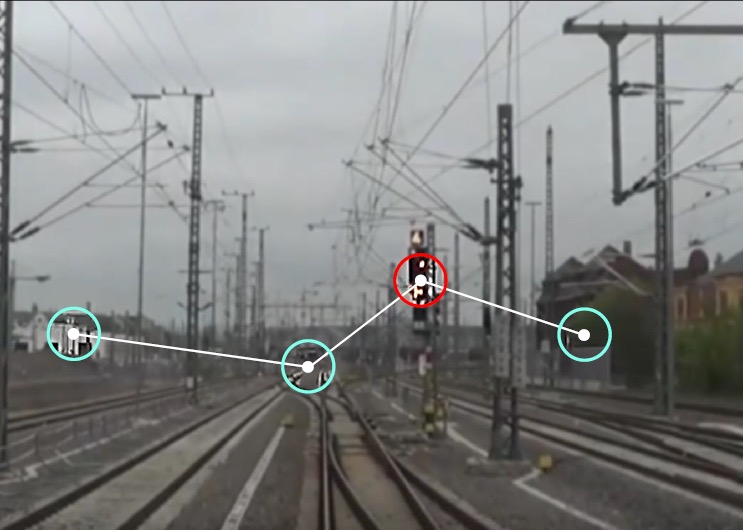
Automation and Digitalization of Railway Operating Functions (AuDiBaF)
Participating Chair: Humans and Technology
Project Leader(s): Prof. Dr. Lewis Chuang
Scientific Staff: Ferenc Rózsa, Daniel Trommler, Dr. Giuseppe Sanseverino
Funding Institution: Federal Ministry of Transport (Funding Code: 19DZ23001A)
Duration: 01/2024 – 12/2026
Keywords: Automation, teleoperation, visual information processing, psychophysiology, response time modeling
Summary: The AuDiBaF project investigates formal models for the development of a digital twin in automated railway operations. The focus is on the evaluation of teleoperation workstations, the analysis of latency effects, and the development of AI-based assistance systems. Using psychophysical and psychophysiological methods (e.g., eye-tracking, EEG), response time models are created to optimize the safety and reliability of remote control.
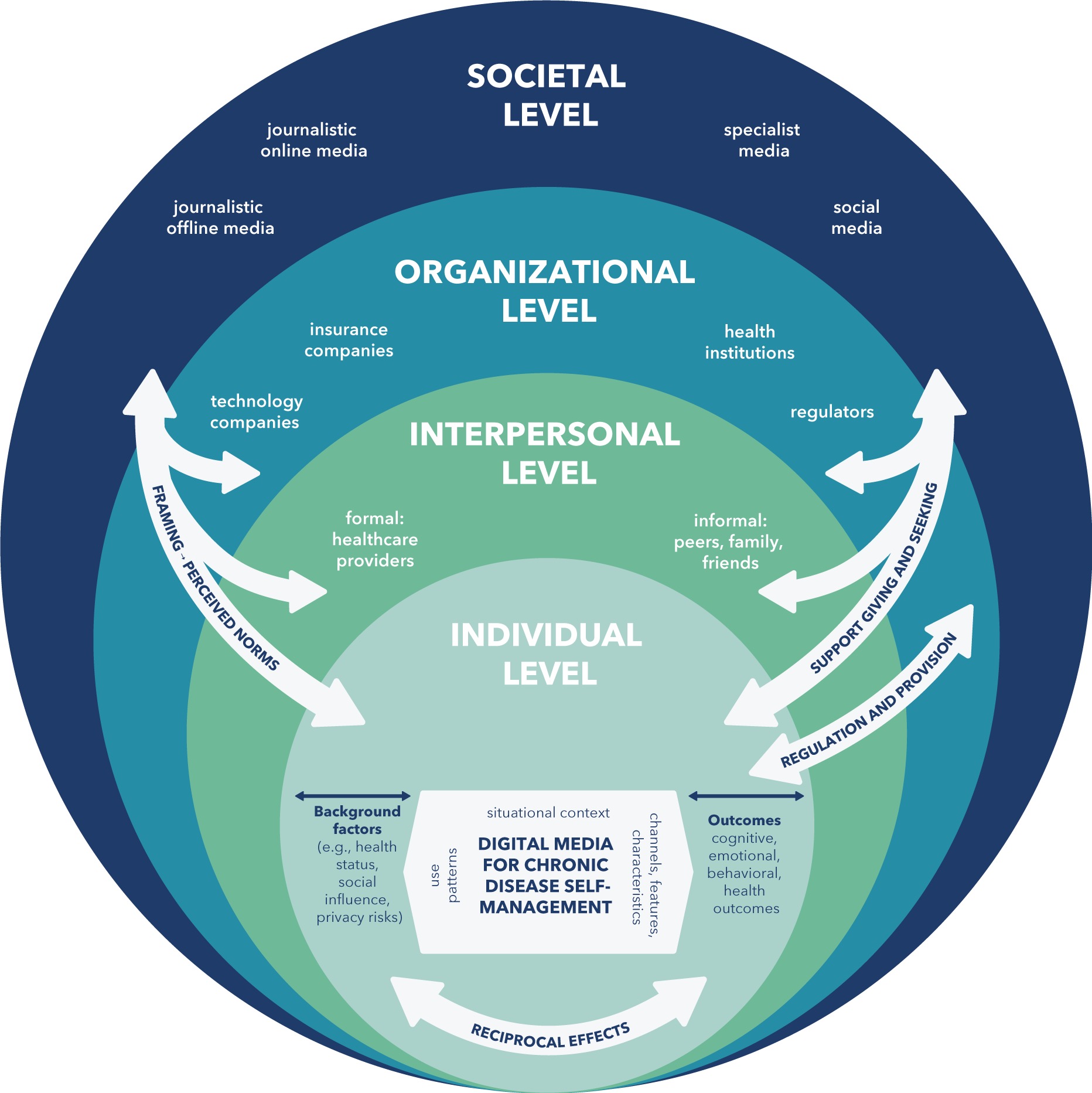
Usage Niches of Mobile Media in the Self-Management of Chronic Diseases (DISELMA)
Participating Chair: Media Communication
Project Leader(s): Prof. Dr. Veronika Karnowski, Prof. Dr. Constanze Rossmann
Scientific Staff: Dr. Annemarie Wiedicke, Janine Brill
Funding Institution: German Research Foundation (DFG) (Project number 456132969)
Duration: 12/2023 – 11/2027
Keywords: mHealth, chronic diseases, continued use, diabetes, asthma/COPD
Summary: As part of the DFG research group DISELMA, this project investigates the specific usage niches of mobile media in the self-management of diabetes and asthma/COPD. It aims to systematize the use of mHealth services at the situational and individual level and to further develop the niche concept for mobile media practices.
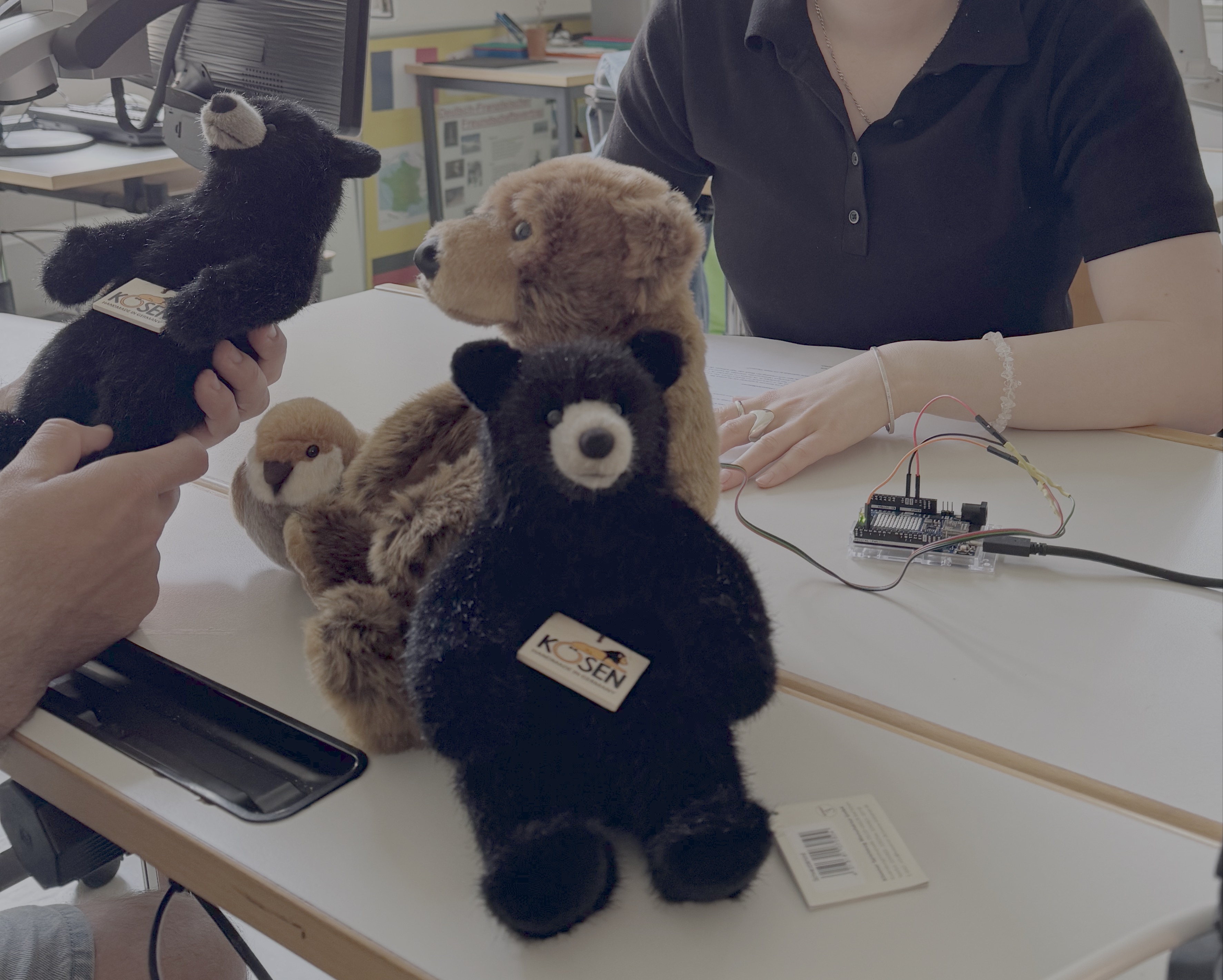
bitplush – Sustaining Relationships through Smart Plush Toys
Participating Chair: Humans and Technology
Project Leader(s): Prof. Dr. Lewis Chuang
Scientific Staff: Lena Nischwitz
Funding Institution: Federal Ministry of Education and Research (BMBF)
Project Duration: 04/2023 – 03/2026
Keywords: physical proximity despite distance, emotional connection, implicit & multimodal communication, secret language
Summary: The bitplush project explores new forms of implicit communication through smart plush toys to enable emotional proximity over spatial distance. Gestures such as stroking or squeezing are translated into haptic signals (heat, movement). The goal is to develop intuitive prototypes that strengthen social bonds and counteract loneliness.
MeMo – Strengthening Students’ Metacognition and Motivation through Individualized Smart Personal Assistants
Participating Chair: Psychology of Digital Learning Media
Project Leader(s): Prof. Dr. Günter Daniel Rey
Scientific Staff: Markus Suren, Manuel Schmitz, Martina Seemann
Funding Institution: Foundation Innovation in Higher Education
Duration: 09/2022 – 12/2023
Keywords: Metacognitive skills, motivation in the learning process, Smart Personal Assistants (SPAs), Digital Higher Education Summary: MeMo uses individualized Smart Personal Assistants to optimize learning processes in digital studies. The assistants specifically support students' self-regulation, concentration, and motivation. A special feature is the consideration of student heterogeneity through data-based individualization.
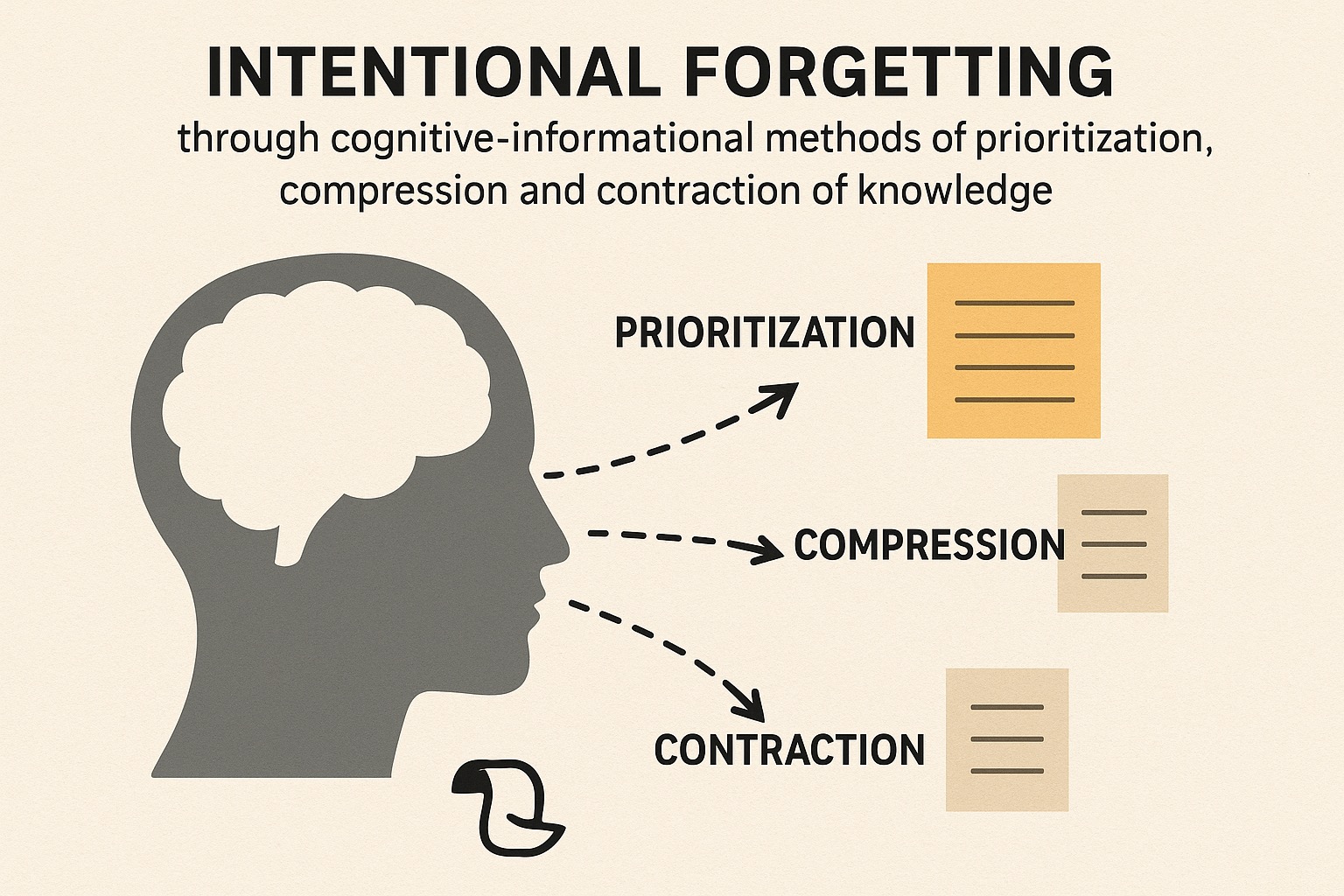
Intentional forgetting through cognitive-informational methods of prioritization, compression and contraction of knowledge (IF I)
Participating Chair: Predictive Behavior Analysis
Project Leader(s): Prof. Dr. Marco Ragni
Scientific Staff: Daniel Brand, Tina Frenzel, Jenny Rettstatt, Max Bernhagen
Funding Institution: German Research Foundation DFG (Priority Program SPP1921)
Duration: 08/2022 – 04/2024
Keywords: Intentional forgetting, cognitive-computational model, knowledge compression, prioritization, organizational memory Summary: The project addresses the information flood in organizations. Using methods from cognitive science and informatics, functions for prioritization and forgetting are developed to reduce data volumes. The goal is the development of a cognitive-computational system that lowers workload through efficient knowledge compression.
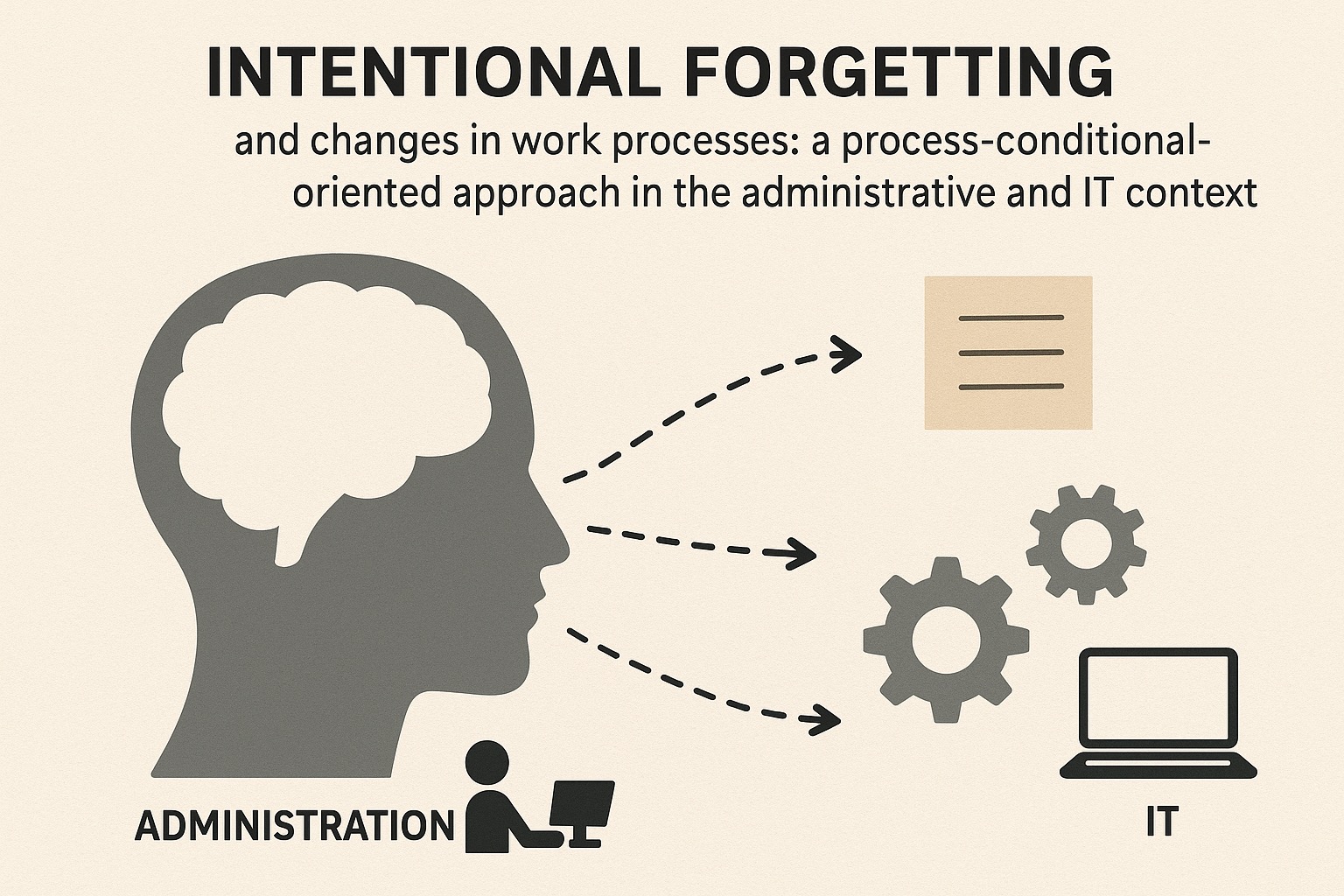
Intentional forgetting and changes in work processes: a process-conditional-oriented approach in the administrative and IT context (IF II)
Participating Chair: Predictive Behavior Analysis
Project Leader(s): Prof. Dr. Marco Ragni
Scientific Staff: Dr. Ying-Hsang Liu, Dr. Clemens Bombach, Daniel Brand
Funding Institution: German Research Foundation (DFG) (Priority Program SPP1921)
Duration: 01/2022 – 07/2026
Keywords: Process optimization, intentional forgetting, cognitive modeling, stress reduction, knowledge representation Summary: The goal is to develop a model for improving work processes in administrative and IT contexts. By identifying essential operations and abstracting special cases, clarity is to be increased. The project uses knowledge reduction to streamline workflows and reduce stress factors through targeted process modeling.
EU Fairplay
Participating Chair: Psychology of Digital Learning Media
Project Leader(s): Sebastian Jansen, Markus Suren, Dr. Skylor Zhitian Zhang, Dr. Mathias Hofmann
Scientific Staff: Sebastian Jansen, Markus Suren
Funding Institution: BMBF / Project Management Agency DLR
Duration: 01/2022 - 12/2024
Keywords: Digital Game-Based Learning (DGBL), educational equity, networking, educational research, game research Summary: EU-FairPlay networks actors from various disciplines to further develop digital game-based learning (DGBL) under the aspect of educational equity. The goal is to develop a common agenda on how new technological possibilities can be used to create fairer educational opportunities in all stages.
BeeLife - A Situationally Embedded Mobile Learning App for Raising Environmental Awareness
Participating Chair: Psychology of Digital Learning Media
Project Leader(s): Prof. Dr. Maria Wirzberger
Scientific Staff: Markus Suren, Felix Krieglstein
Funding Institution: DBU
Duration: 11/2020 – 10/2022
Keywords: Wild bees, environmental education, mobile learning app, sustainability, project workshops
Summary: BeeLife aims to create a sustainable ecological awareness for the protection of wild bees. Via a mobile app, users care for a virtual wild bee and thus directly experience the consequences of their actions. The project combines digital media with practical workshops and is primarily aimed at students in grades five and six.
Social Displays. On the Accountability of Embodied Digital Technologies in Everyday Life
Participating Chair: Visual Communication and Media Sociology
Project Leader(s): Prof. Dr. Michael Müller
Scientific Staff: Sabrina Tietz
Funding Institution: DFG Collaborative Research Center (Project number 416228727)
Duration: 01/2020 – 06/2024
Keywords: Visual sociology, interface, robot, embodiment, display
Summary: The project investigates the communicative integration of autonomous technologies (e.g., self-driving cars) into everyday life. It analyzes how different displays (anthropomorphic, functional) are used to inform people about the capabilities and intentions of the technology. The goal is the development of a theory on the social representation of accountability of non-human actors.
Sehordnungen. Die Rationalität immersiven und explorativen Bildgebrauchs am Beispiel von Stereoskopie und Bildcluster/Hyperimage
Participating Chair: Visual Communication and Media Sociology
Project Leader(s): Prof. Dr. Michael Müller
Funding Institution: Fritz Thyssen Foundation
Duration: 2018 – 2020
Keywords: Visual sociology, image clusters, hyperimage, qualitative methods, social media
Summary: The project investigates socio-cultural visual orders using the examples of stereoscopy (immersive seeing) and image clusters (explorative seeing). It analyzes how image media techniques and background knowledge structure our cognitive reference to images. The empirical analysis of contrastive case studies aims to theoretically ground the rationality of image-medial visual orders.
Stile des Lebens 2.0 - Zur Genese und Struktur querläufiger Vergesellschaftung
Participating Chair: Visual Communication and Media Sociology
Project Leader(s): Prof. Dr. Michael Müller
Funding Institution: DFG
Duration: 2017 – 2022
Keywords: Visual sociology, lifestyles, image, visual language, mediatization
Summary: The research project investigates lifestyle formations characterized by the linking of local and digital practices. The focus is on the change in social style communities through mediatization and the emergence of new techniques of image management. The project contributes to lifestyle sociology and the understanding of global mediatization processes.
Documents - Memories - Historiography. The Second Film on Theresienstadt: Documentation and Reconstruction from the Perspective of the Survivor
Participating Chair: Visual Communication and Media Sociology
Project Leader(s): Prof. Dr. Michael Müller
Funding Institution: Volkswagen Foundation
Duration: 2017 – 2019
Keywords: Visual sociology, Shoah, film analysis, Theresienstadt, propaganda
Summary: The project analyzes the fragmentarily preserved Nazi propaganda film about the Theresienstadt concentration camp from 1944. It reconstructs the film fragments sociologically and from a media studies perspective, taking visual language into account. Additionally, survivors comment on the recordings in interviews to create a complete cinematic representation between propaganda and memory.
ID4BM – Instructional Design for Educational Management: Collaborative Production of Open Educational Resources within a Cross-University Seminar Cooperation
Participating Chair: Psychology of Digital Learning Media
Project Leader(s): Prof. Dr. Günter Daniel Rey
Scientific Staff: Prof. Dr. Sascha Schneider
Funding Institution: Higher Education Didactics Center Saxony (HDS)
Duration: 10/2015 – 03/2016
Keywords: Instructional design, Educational management, Open Educational Resources (OER), Inter-university collaboration
Summary: Together with the Professorship of Educational Technologies and the Media Center of the Faculty of Education at TU Dresden, the professorship has acquired a teaching-learning project in the joint project "Teaching Practice in Transfer" of the Saxon universities. This project was funded by the Higher Education Didactics Center Saxony (HDS). The teaching-learning project "ID4BM – Instructional Design for Educational Management" focused on the collaborative production of open learning resources as part of a cross-university seminar cooperation.
CrossWorlds: Linking Virtual and Real Social Worlds
Participating Chair: Visual Communication and Media Sociology
Project Leader(s): Prof. Dr. Michael Müller
Funding Institution: DFG Graduate School
Duration: 2015 – 2018
Keywords: Virtuality, digitalization
Summary: The graduate school addresses the increasing virtualization of processes and communication. The goal is to overcome existing limitations of media-mediated interaction by exploring new ways of linking virtual and real worlds. Research is conducted interdisciplinary in the areas of communication, emotions, sensorimotor skills, and learning.