
Research Group Cognitive and Engineering Psychology
Usability & Human Factors
Usability & Human Factors
 Users' needs are of crucial importance in the fields of Usability and Human Factors. Which expectations do users have when interacting with a system? Which system properties facilitate an effective and efficient interaction with the system and which features have the potential to increase user satisfaction? A poorly designed user interface can interfere an efficient human-machine-interaction and can decrease user satisfaction, whether it is in the field of operationally application software, mobile applications or surfing in the internet.
At the research group 'Cognitive and Engineering Psychology' projects in the fields of Usability and Human Factors cover classical user tests and expert evaluations regarding different products and applications as well as studies to examine user acceptance. These projects are characterized by their practical relevance. In cooperation with software developers our scientific results could be implemented directly. Furthermore, new forms of human-computer-interaction (e.g. virtual and mixed reality) as well as research questions in the field of individual data privacy are examined in our research projects.
Factory2Fit Empowering and participatory adaption of factoy automation to fit for workers
Socially acting cognitive systems for assessing the need for help
AndProtect Personal data privacy by means of static and dynamic abalysis for Android app validation
Crossworlds Coupling of virtual and real social worlds
fast realtime Effect of system latency on real-time perception and system control with tactile interaction
KiU competence initiatve usability
KUM Centre of competence for small and medium enterprises
User centred presentation of information

Call for participation in a short linguistic survey by Chemnitz University of Technology – no specialist knowledge needed …
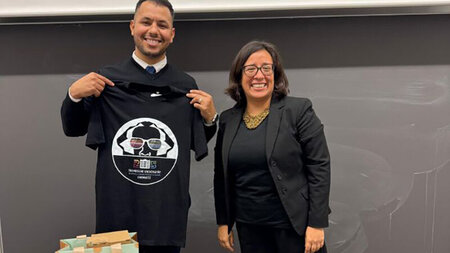
Visiting Scholar Benanchour Saidi at the Junior Professorship of Intercultural Practice with a Focus on Digital Cultures …
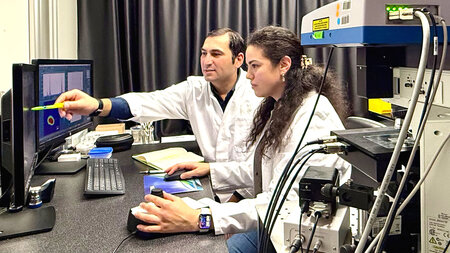
Chemnitz University of Technology researchers uncover a new way to amplify light-matter coupling in graphene using tin nanoantennas, published in “Advanced Optical Materials” …

From dual system to network: Research team from Chemnitz, Santiago de Chile, and Magdeburg presents a new perspective on how the brain controls actions — and how this understanding could benefit the development of neuro-inspired AI …