The Department of Cognitive Psychology and Human Factors combines fundamental and applied topics from the fields of "General Psychology/Cognitive Psychology" and "Human Factors/Engineering Psychology" in an innovative and integrative way in research, teaching, and project work.
Visitor Address
Contact/Mailing Address
Wilhelm-Raabe-Straße 43
Room: 4/304 (new: B01.304)
09120 Chemnitz
University of Technology Chemnitz
Institute of Psychology
Chair of Cognitive Psychologie & Human Factors
D-09107 Chemnitz
Tel.: 0371/531-38142
EMail: ahf@…
LinkedIn-Profil
News
Dear first-semester Human Factors students,
We would like to invite you to an introductory session as part of the Orientation Week on Thursday, October 8th, 2026, from 11:00 a.m. to 12:30 p.m. The session will take place at Wilhelm-Raabe-Str. 43, room B01.102.
We look forward to seeing you there. Prof. Stefan Brandenburg and Madlen Günther
Mobilitätsimpuls 2026: Autonomous Driving in Public Transit – Innovations and Future Prospects
 On October 5th and 6th, 2026, the Chemnitzer Verkehrs-AG (CVAG) will host the Mobiliätsimpulse conference MOBILITÄTSIMPULS on autonomous driving in public transport in Chemnitz. Following the first networking evening on October 5th at the Industriemuseum, the conference begins on October 6th at 9:00 a.m. in the impressive setting of the Garagen-Campus on Zwickauer Str.
The focus will be not only on technical developments but also on the human perspective. Therefore, our professorship is actively participating through various formats:
- Talk on October 6th at 1:55 p.m.: “Brave New World of Automation—How We Humans Want to Be Driven” Prof. Dr. Angelika Bullinger-Hoffmann (Professorship for Ergonomics and Innovation Management) and Prof. Dr. Stefan Brandenburg will examine how users experience autonomous systems and which psychological factors are crucial for acceptance and safety.
- Forum 4 on October 6th, starting at 2:30 p.m.: “Between Interests: Stakeholder Conflicts in Automated Public Transit” Dr. Josephine Halama & Dr. Madlen Günther from our Mobility Research Group will discuss how different stakeholders—from passengers to operators—shape the introduction of autonomous systems.
In addition, various prototypes from Chemnitz University of Technology will be made available for visitors to try out. The conference warmly welcomes, in particular, interested professionals from transportation companies, local governments, academia (especially psychology and engineering), politics, and industry.
Cost: 295€ plus VAT (includes meals and digital conference materials).
Registration deadline: August 30th, 2026
For more information and the registration form, visit:
www.cvag.de/fachtagung-autonomes-fahren
When Cars and Shuttles Take Care.
In July, our Mobility Research Group at our professorship launched the new funded project VIRTUS (the Technical University of Chemnitz reports here). The joint project consortium with the Fraunhofer Institute for High Speed Dynamics and the Motor Vehicles Research Group at TU Berlin is funded by the Federal Ministry of Research, Technology, and Space. The project focuses in particular on risk minimization and predictive accident analysis through the adjustment of vehicle trajectories to protect vulnerable road users. The Mobility Research Group is responsible for the human-centered validation of the algorithms and investigates their effectiveness while taking into account intuitive behavior, acceptance, and interaction.
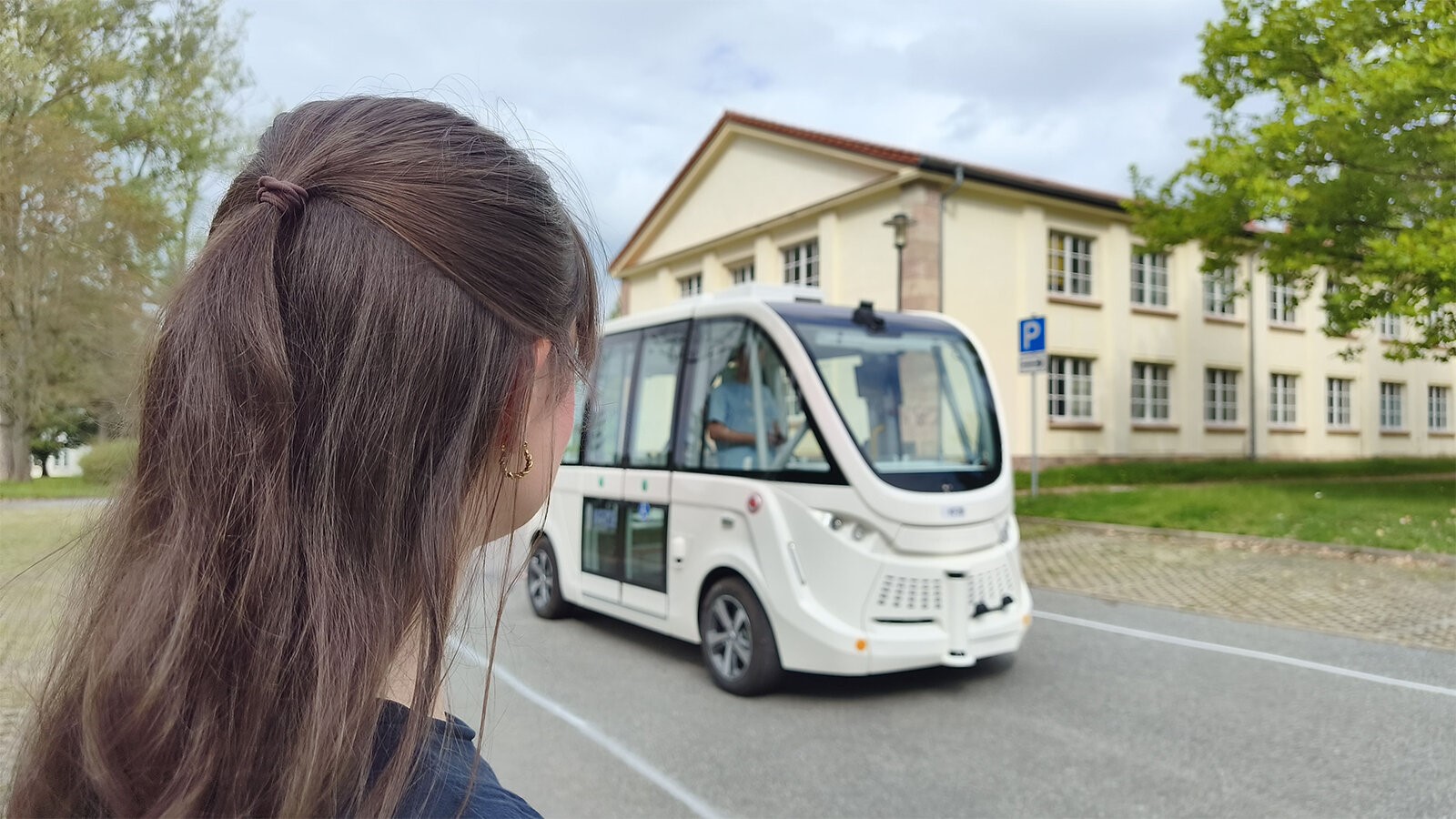 The vulnerability of road users was also a key focus of the studies conducted in July and August at the Erfenschlager Straße campus. In collaboration with the Professorship of Ergonomics and Innovation Management—as part of the Chemnitz Center for Mobility (CCM)—and the Department of Automotive Engineering at TU Berlin, the interaction between automated shuttles and pedestrians was investigated. The studies provided insights into users’ perspectives on differently communicated vehicle modes, speed, and the braking behavior of automated shuttles (the Technical University of Chemnitz reports here). Research as part of the shuttle project will continue until the end of 2027.
Both projects provide important insights into the user-friendliness and system adaptability of vehicles. The goal is to promote traffic safety by enabling automated traffic systems to communicate with vulnerable road users in a transparent and intuitive manner.
InnoTrans 2026 - the journey continues
Together with the Smart Rail Connectivity Campus, the Professorship of Cognitive Psychology and Human Factors, represented by Beatrice Schmieder, presented current research findings on automated rail transport.
A particular highlight was our remote operator workstation model. Its journey began at InnoTrans 2026 in Berlin, and from there, it will travel to various locations over the coming months, bringing our latest research findings directly to the places where the future of automated rail transport is being shaped.
The Professorship of Cognitive Psychology and Human Factors at the 2026 DGP Congress in Luxembourg
From September 7th to 10th, 2026, the 54th Congress of the German Psychological Society took place in Luxembourg under the motto “Haltung. Vielfalt. Zukunft”. The congress brought together researchers from various subfields of psychology and addressed current societal and scientific challenges, including, in particular, artificial intelligence, digital transformation, and human-technology interaction.
The Professorship of Cognitive Psycholgoy and Human Factors was also represented with several presentations. Joy Geuenich presented a study on the influence of explainable AI, trust, and individual attitudes on the perception of bias and how people handle erroneous AI recommendations in personnel selection. Lana Mohr presented research on the trustworthy design of AI-based speech analysis tools as a complement to psychotherapy. Ann-Christin Hensch presented two papers on human-technology interaction in public spaces, focusing on countdown displays for automated shuttles and the acceptance of various communication concepts for delivery robots. Julian Bornemeier presented research on bias in generative AI and examined the role of transparency and individual attitudes in fairness assessments.
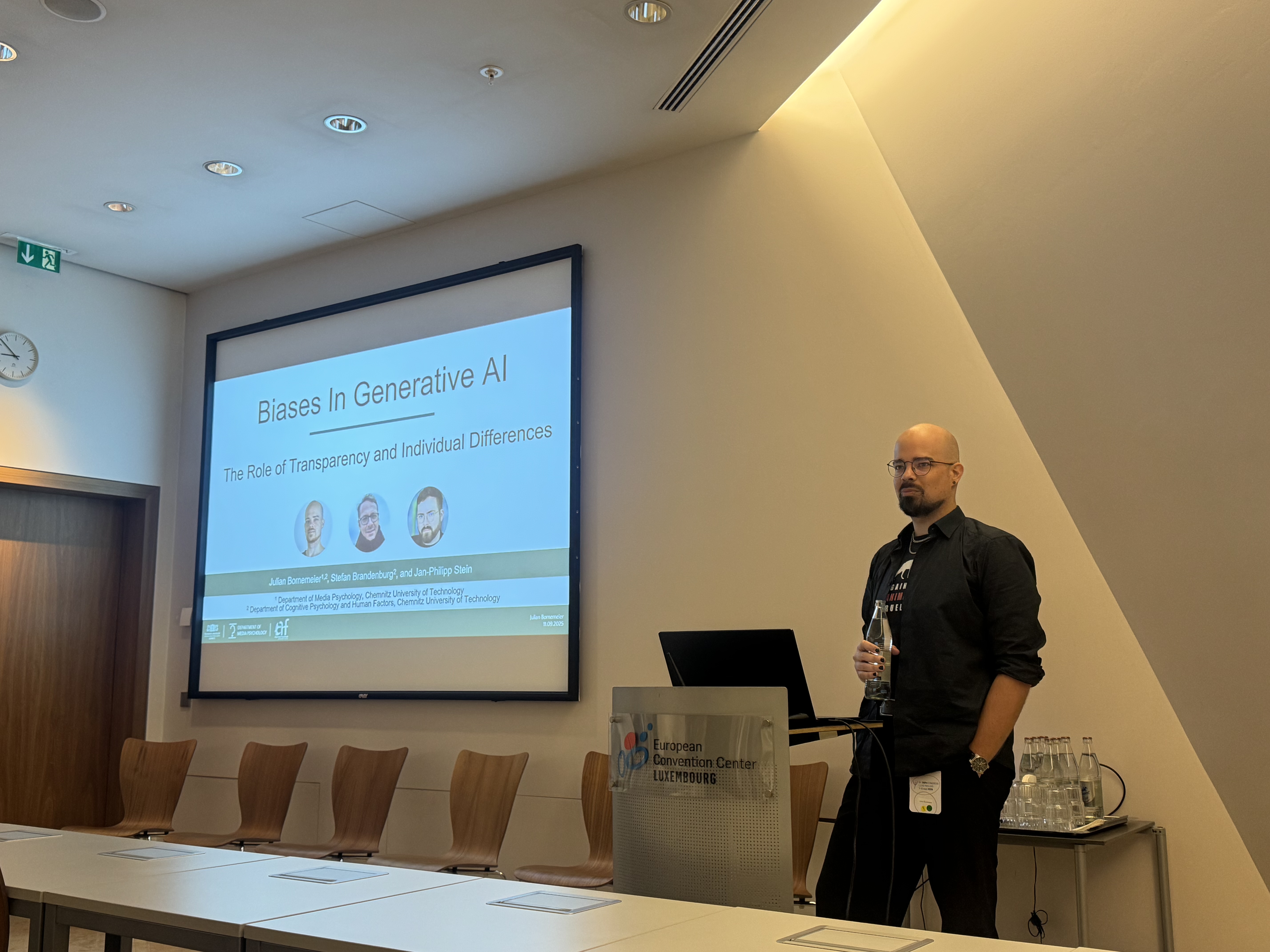
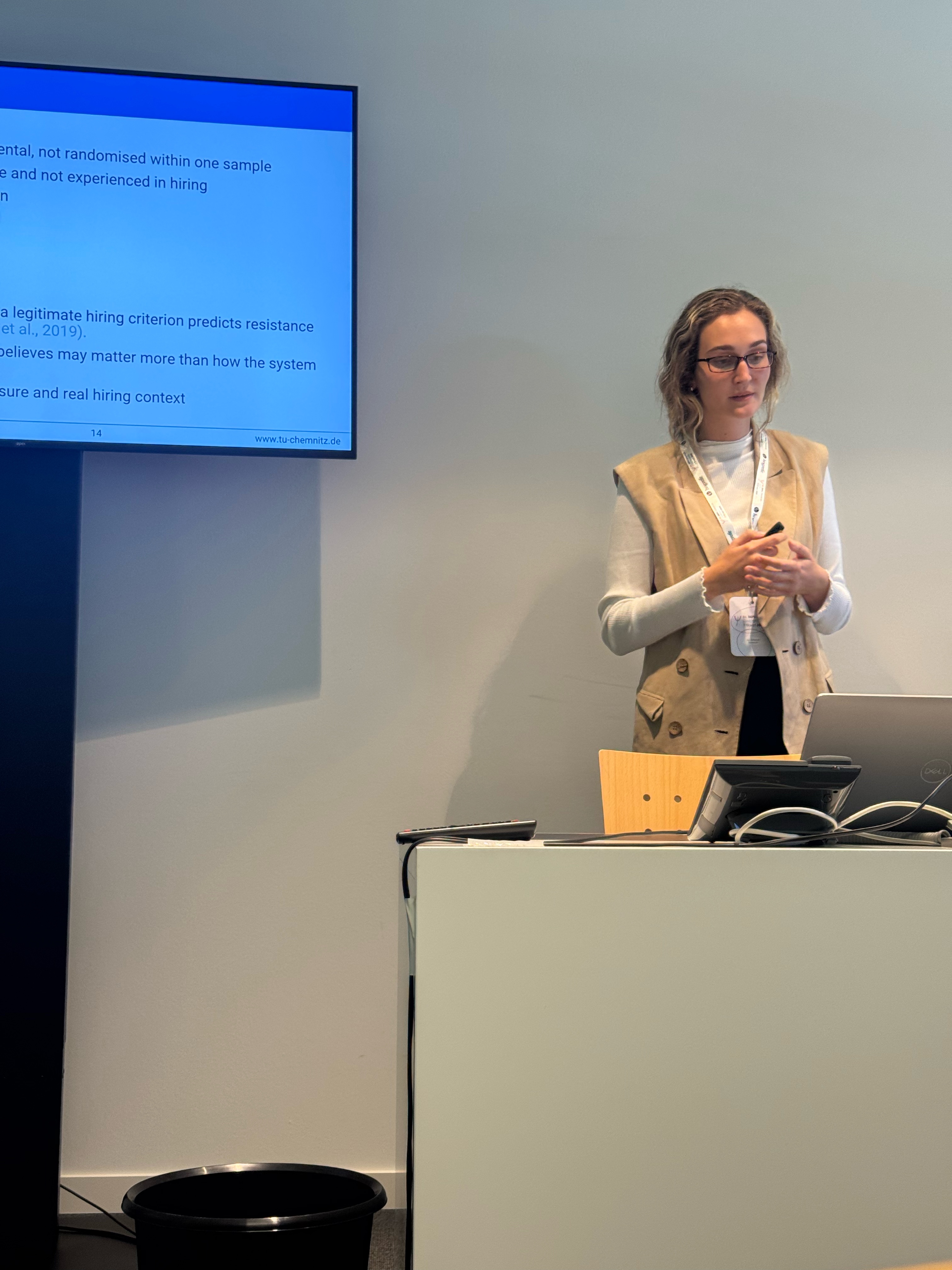
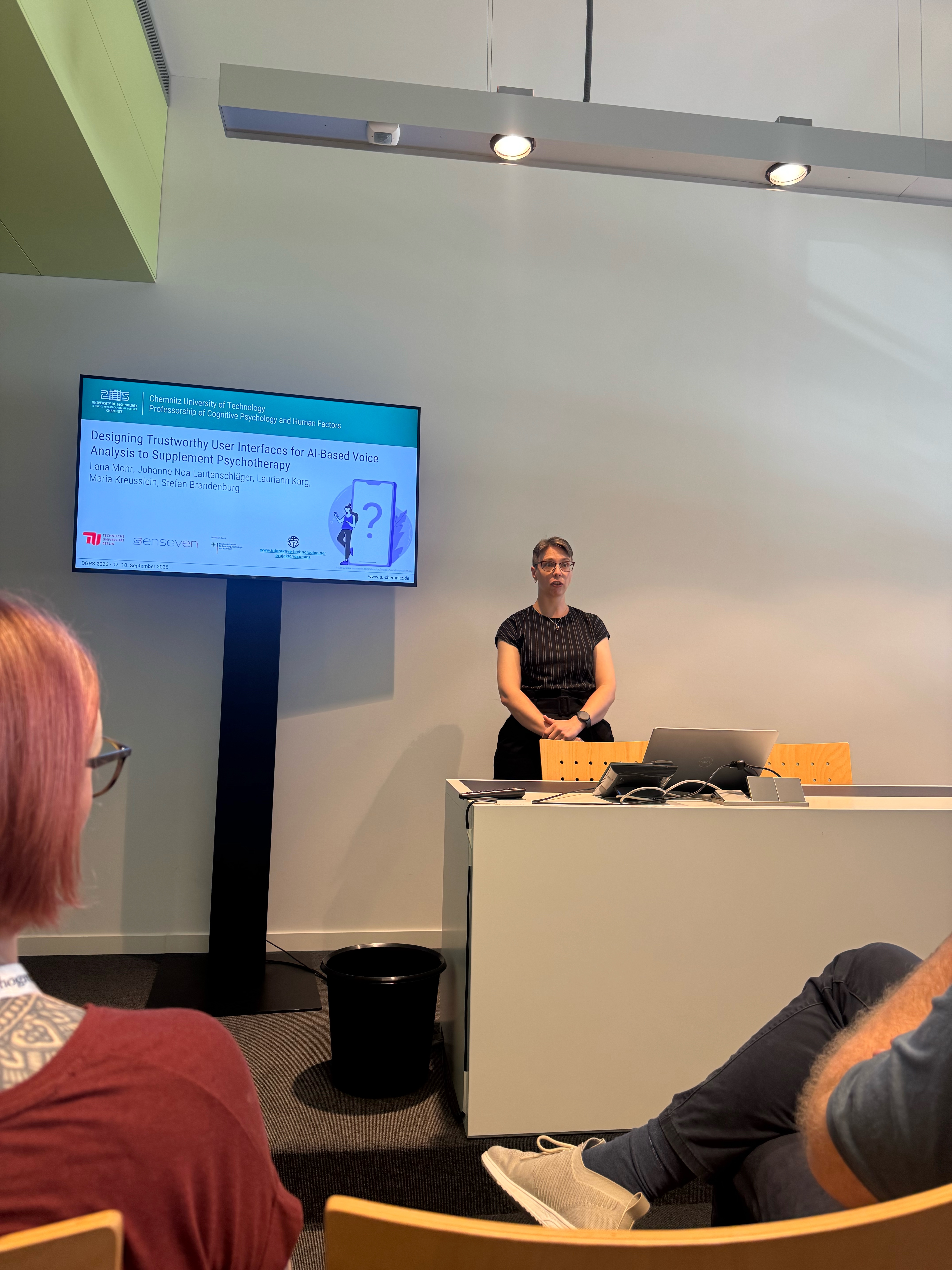
The conference offered numerous opportunities for professional exchange, new insights, and discussion of current research topics in the fields of human factors and human-AI interaction.
Information about Study Abroad…
…at Aalto University Finland
Dear HuFa, SeKo, and Psychology students,
There is an ongoing opportunity for a funded stay abroad of 1-2 months at Aalto University in Finland. You can direct any inquiries regarding this opportunity to Prof. Dr. Stefan Brandenburg.
A great insight can be found in the report by Julian Fabinc, who took advantage of the offer in the summer of 2024.
Your AHF Team
…in general
Dear HuFa, SeKo, and Psychology students,
Further information about study abroad opportunities (funding, etc.) can be found on the page studieren-weltweit.de.
Your AHF Team