Research
"Science without conscience is the ruin of the soul." (François Rabelais, 1494-1553)
The Chair is clearly positioned within the faculty's research priorities, supports the UN initiative PRME, and incorporates the 17 Sustainable Development Goals. The Chair actively promotes the United Nations (UN)-supported initiative Principles for Responsible Management Education (PRME) with its six principles purpose, value, method, research, partnership and dialogue. The Chair actively integrates ESD, Education for Sustainable Development, into research and teaching.
Sustainability-oriented capabilities include academic, education-related, professional, societal, private, entrepreneurial and governmental action. Competence development to realize sustainability is actively integrated into the research and education process in order to implement Education for Sustainable Development.
Sustainability-oriented transformation takes place in the context of urgency, pressure, scarcity, power, rules and uncertainty.
The challenges of sustainability and sustainable development are often situated in the following contexts:
- complex
- non-trivial
- multi- and interdisciplinary
- systemic
This requires adequate and also innovative concepts and solution approaches. Therefore, in addition to business and social science concepts, the following research priorities are explored in interdisciplinary collaboration.
- Strategic environmental and sustainability management
- Innovation and change concepts for environmental protection and the promotion of sustainable development
- Inter- and transdisciplinary sustainability research
- ESD - Education for Sustainable Development in business and social sciences
Specifically, we research the following:
- Strategies, business models, and management and control instruments for long-term environmental protection and the promotion of sustainable development (e.g., energy efficiency, sufficiency, consistency)
- Analysis of trade-offs and rebound effects as well as solution options for quasi-dilemmas and options for action/design in dilemmas, e.g., using systems and risk analyses and the systemic further development of corporate instruments (e.g., LCAs, etc.)
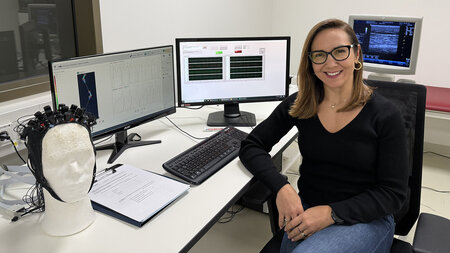
- Harmonizing people, the environment, technology and society through intelligent systems and structures (e.g., circular economy, bioeconomy, bionics) and on the basis of adequate frames (neurosciences)
Innovative and largely unexplored research fields can be addressed very well using qualitative methods. In addition, mixed methods are used at the Chair.
Principles of Sustainable Corporate Governance
- Value orientation
- Long-term orientation & future orientation
- Careful use of environmental resources
- Assessing and recognizing risks
- Consistent focus on quality
- Re-design of non-sustainable products & services
- Activating self-renewal forces after disruptions
- Balancing consistency, efficiency and sufficiency
- Independent and competent oversight
- Building trust & credibility
- Creating new worlds of work
- Communication & transparency
- Living leadership as a virtue
Corporate Social Responsibility (CSR) - Social responsibility and sustainability of companies consistently living
- Recognizing societal challenges
- Responsible corporate action
- Integrated social engagement
- Implementing sustainable strategies & instruments
|
Tools & Guidelines |
Concepts or Systems |
Systems Approaches |
|
|
Standards provide documents with requirements, guidelines or characteristics in order to achieve a purpose. Certification confirms certain characteristics. |
Means or instrument for achieving a specific goal. |
Fundamental categories, a set of different but coordinated tools to achieve multiple goals. |
Concepts or systems that focus on systemic influences, dependencies and impacts of interaction between and within a whole. |
|
EMAS (III) |
Working time models |
Audits / evaluations |
Cradle-to-Cradle |
|
ISO 9001, ISO 9004 |
Benchmarking |
Corporate citizenship & CSR |
IPP – Integrated Product Policy |
|
ISO 14001 |
Biodiversity management |
(Eco-)design |
Concepts and business model innovations for sufficiency & sustainable consumption |
|
ISO 14020 (Communication of environmental product information) |
German Sustainability Code (DNK) |
ESG criteria / ESG investment strategies / Principles for Responsible Investment (PRI) |
Rebound analyses |
|
ISO 14030 Green bonds |
GRI |
EFQM |
(Multi-agent) simulation |
|
ISO 14040/44 (Ecological footprint) |
Idea management / innovation management (DIN EN ISO 56000) |
Sustainability assessment, |
Systemic constellation work |
|
ISO 14045 (Eco-efficiency assessment of product systems) |
ILO |
Sustainability-oriented incentive systems |
TEEB
|
|
ISO 14064-1/-2, ISO 14064-3, ISO 14068, ISO 14080, ISO 14097 (Greenhouse gas management) |
Climate and environmental footprint |
Sustainability-oriented bionics |
|
|
ISO 14067 (Carbon footprint of products) |
Mission statement |
Sustainable Balanced Score Card |
|
|
ISO 15392, ISO 16813, |
Nudging |
Sustainable supply chain management |
|
|
ISO 20121 |
Risk management |
Sustainable value |
|
|
ISO 20400 |
Greenhouse gas management |
Environmental information system |
|
|
ISO 26000 |
Stakeholder dialogues |
UN Global Compact
|
|
|
ISO 31000 |
Environmental statement / sustainability report |
Impact analysis / impact assessment
|
|
|
ISO 50001 |
Continuing education / training |
Target analyses / analyses of trade-offs & dilemmas |
|
|
ISO 59000 family: ISO 59004, ISO 59010, ISO 59014, ISO 59020, ISO 59040, ISO TR 59031 (Circular Economy) |
|
|
|
|
SA 8000 / ISO 45001 |
|
|
|
|
BS 8001 (Principles of the circular economy) |
|
|
|