International Measurement Science Conference in Chemnitz
250 participants join MetroXRAINE 2026 at the Intersection of Virtual Reality, Artificial Intelligence, and Neurotechnology – tutorial day for TUC students
-
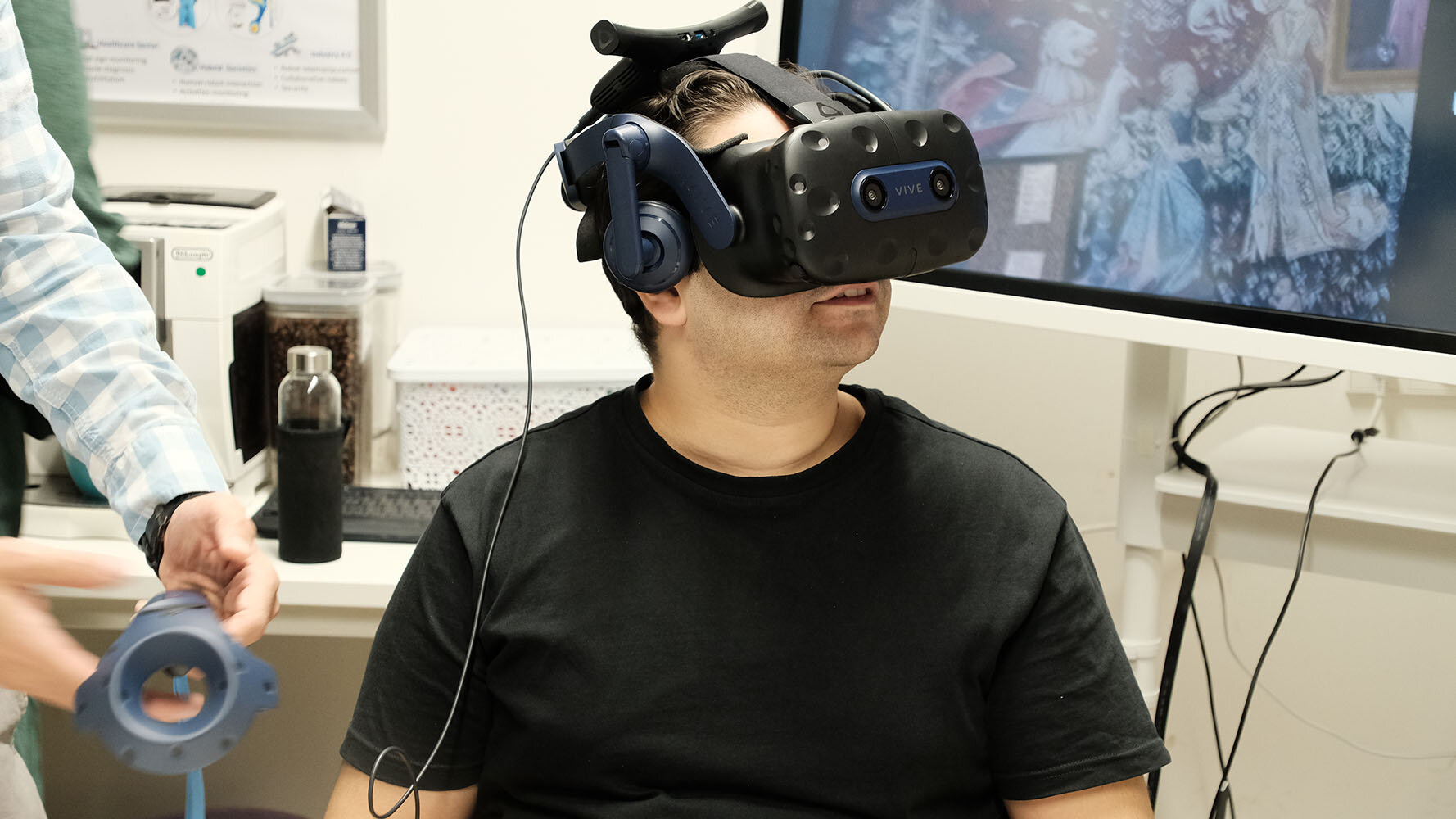
Sense it yourself at TUC University Library. Photo: Shi Ge
The 5th IEEE International Conference on Metrology for eXtended Reality, Artificial Intelligence and Neural Engineering (MetroXRAINE) will take place from 20 to 22 October 2026 in Chemnitz – for the first time in Germany. A free tutorial day at Chemnitz University of Technology opened the conference to students and the regional research community. "Reliable measurement is the foundation for trustworthy extended reality, artificial intelligence and brain-computer interfaces. We are delighted to welcome researchers from 29 countries to Chemnitz for the first MetroXRAINE in Germany – and to open this international community to our students through the School Day”, said Prof. Olfa Kanoun (Chair of Measurement and Sensor Technology, TU Chemnitz), one of the organizers of the conference.
After Rome (2022), Milan (2023), St Albans (2024) and Ancona (2025), the international MetroXRAINE community is meeting in Germany for the first time. Around 250 participants from 29 countries are expected at the Luxor Chemnitz congress centre. The focus will be on wearable sensors for health monitoring, brain-computer interfaces, extended reality for industry and telepresence, and AI in education. What connects all topics is the question of how reliably these technologies measure people, their bodies and their environment.
The conference is organised by Prof. Kanoun and Prof. Michael Kuhl (Mittweida University of Applied Sciences), together with Prof. Pasquale Arpaia (University of Naples Federico II) and Prof. Lucio Tommaso De Paolis (University of Salento). It is sponsored by the Institute of Electrical and Electronics Engineers (IEEE), the world's largest professional association for engineering. A total of 230 papers will be presented in more than 30 thematic sessions; accepted papers will be submitted to the IEEE Xplore digital library.
Four keynote lectures will frame the programme. Prof. Konstantinos Gryllias (KU Leuven, Belgium) will show how artificial intelligence, deep learning and digital twins detect faults in machines such as wind turbines early and predict their remaining service life. Dr. Paolo Bonato (Harvard Medical School and MIT Media Lab, USA) will speak about measuring motor behaviour to guide therapy for people with neurological conditions such as stroke or Parkinson's disease. Danilo Pau, Technical Director at STMicroelectronics (Italy), will explain why generative AI can run directly on small devices without the cloud. Finally, Prof. Frank H. P. Fitzek (TU Dresden) will present how future 6G communication networks enable robots to work together safely and precisely.
Researchers from TU Chemnitz also shape the scientific programme directly. Dr. Rim Barioul, Dr. Hiba Hellara, Dr. Oumaima Bader and Oumayma Kahouli from the Chair of Measurement and Sensor Technology organise the thematic session “Intelligent Wearable Sensor Systems for AI-Driven Health and Activity Monitoring” on Tuesday, 20 October, from 2:40 to 4:20 pm. It focuses on sensors worn on the body that, combined with artificial intelligence, continuously record health and movement data in everyday life.
Only today, 19.10.: Free tutorial day at University Library
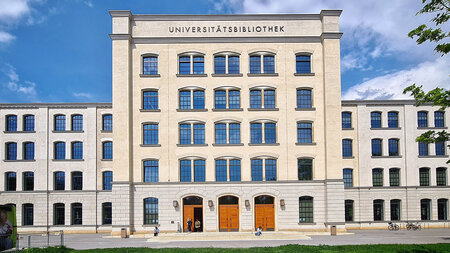
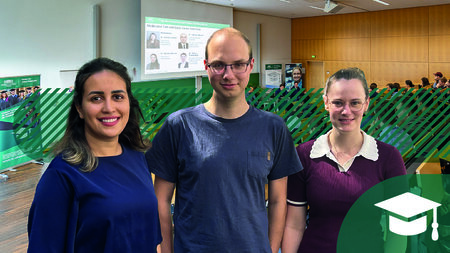
The conference is not only aimed at experts. On the day before the conference opened, the TU Chemnitz University Library hosted a full tutorial day for conference participants and for students of TU Chemnitz and Hochschule Mittweida. Four tutorials introduced one pillar of the conference each: Prof. Olfa Kanoun on how the structure of a sensor system determines measurement quality; Michael Spitzhirn (imk Industrial Intelligence GmbH) on human-centred digital twins for factory planning with XR and AI; Franziska Klimant and Jennifer Brade (TU Chemnitz) on telepresence robots and other technologies for distributed teams; and Prof. Pasquale Arpaia and Dr. Ludovica Gargiulo on recording and analysing brain signals with EEG.
In the afternoon, participants could choose between two hands-on sessions: analysing real EEG data for brain-computer interfaces, or building their own first virtual reality game with Tareq Al-Mustafa from TU Chemnitz.
Young researchers get their own stage: in the youth programme, master's students, doctoral candidates and researchers under 36 compete in a contest, and a Youth Forum poster session awards a Best Poster Prize. A panel by IEEE Women in Engineering offers a platform for female researchers to share experience and build networks. Special events address brain-computer interfaces, artificial intelligence in education, and data rights and AI. Beyond the IEEE proceedings, extended versions of selected papers can appear in special issues of the journals AI, Sensors and Instruments (MDPI) and Measurement Science and Technology (IOP).
Homepage "IEEE MetroXRAINE 2026": https://www.metroxraine.org
Contact: Prof. Dr. Olfa Kanoun, Chair of Measurement and Sensor Technology, E-Mail olfa.kanoun@etit.tu-chemnitz.de
(Author: Olfa Kanoun)
Detlef Gürtler
19.10.2026