Can international talent strengthen Germany's AI ecosystem?
TU Chemnitz succeeds in highly competitive DAAD "Academic Horizons" call
-
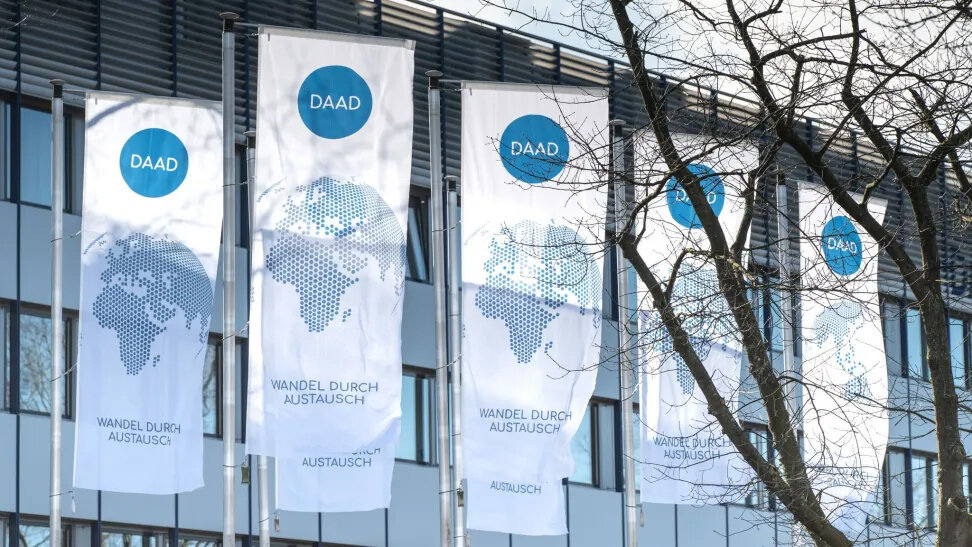
Photo: DAAD/Pankau
Only 20 projects nationwide were selected by the German Academic Exchange Service (DAAD) in the competitive "Academic Horizons" programme and Chemnitz University of Technology is among the winners, as the only higher education institution in Saxony to secure funding in this call. With a budget of 750,000 euros over 3.5 years, the project "AI GlobalMinds – Global Minds Advancing Next-Generation Sustainable AI for Innovation Leadership" stood out through its comprehensive integration concept, holistic AI education approach across the complete value chain, effective mobilization of existing DAAD partnerships and international networks, and strategic diversification of recruitment channels for Master's students and PhD candidates.
Running from May 2026 to December 2029, AI GlobalMinds addresses a critical challenge: Germany's growing shortage of qualified specialists in artificial intelligence. The project aims to diversify the recruiting channels for students and PhD candidates by creating structured international talent pathways, combining targeted recruitment from Chile, Tunisia and Serbia, and with academic qualification and practical integration into the German innovation ecosystem. TU Chemnitz will build new recruiting channels and advertising strategies to showcase its excellent education programs around AI from data acquisition and sensor technology, through AI methods and neuromorphic computing, to sustainable and Green AI applications in science and different economic sectors.
"AI GlobalMinds addresses a key challenge for Germany's innovation system," explains Prof. Dr. Olfa Kanoun, project coordinator at the Chair of Measurement and Sensor Technology. "The demand for AI expertise is growing rapidly, while qualified professionals remain scarce. By connecting international recruitment with structured qualification and integration, we create opportunities for both AI talents and Germany's innovation landscape."
From Sensors to Intelligent Systems: Comprehensive AI Education
What distinguishes AI GlobalMinds is its holistic approach to AI education. Rather than focusing on isolated algorithms, participants gain system-level understanding across the full AI value chain from sensor-based data acquisition to intelligent processing and real-world implementation in neuromorphic systems and robotics, with particular emphasis on sustainable and Green AI approaches.
“Neurorobotics represents the convergence of brain-inspired computing, embodied AI, and intelligent sensor systems,” explains Florian Röhrbein. “By bringing together international talent with diverse backgrounds in these complementary fields, we are building the interdisciplinary teams needed to advance intelligent systems that can truly interact with and learn from their environment — while also addressing energy efficiency and sustainability aspects that are crucial for the future of AI.”
The project brings together multiple faculties at TU Chemnitz: Electrical Engineering and Information Technology, Computer Science, and Mathematics alongside central institutions including the International University Center and Career Service.
Comprehensive Support: From Arrival to Career
"Successful international recruitment requires more than academic excellence it demands comprehensive support throughout the entire journey," emphasizes Katharina Wohlgemuth from the International University Center. "AI GlobalMinds provides exactly this: structured pre-arrival preparation, coordinated onboarding, buddy program, accelerated German language training, and continuous mentoring to ensure participants thrive both academically and socially in Chemnitz."
The project explicitly prepares participants for both academic and industry careers in Germany. "Germany's AI ecosystem needs qualified professionals across all sectorsfrom university research groups to innovative companies and applied research institutions," adds André Zwingenberger Claren from the Career Service. "Through targeted skills workshops, networking events with AI experts and industry representatives, and intercultural workplace training, we prepare AI GlobalMinds participants not just technically, but also for the realities and expectations of the German professional environment."
Building on established partnerships with universities in Tunisia, Serbia, and Chile, the project creates sustainable recruitment structures while strengthening international cooperation and diversifying TU Chemnitz's talent pipelines.
Background: Project "AI GlobalMinds"
AI development demands more than algorithms, it requires integrating data acquisition, hardware, and realworld implementation. AI GlobalMinds spans this full spectrum: from sensor technology through machine learning to sustainable Green AI applications. The project combines short-term orientation formats with longer study and research stays, allowing early identification of talent and gradual integration into academic and professional pathways in Germany. Students are introduced to research environments, work on practical topics, and gain experience in applying AI methods in realistic scenarios—from intelligent sensor systems to neuromorphic computing and autonomous robotics, with emphasis on energy-efficient and sustainable implementations.
At the same time, AI GlobalMinds strengthens existing international partnerships and contributes to the development of sustainable structures for recruiting and qualifying talent. By diversifying recruitment channels and building new pathways for international students and PhD candidates, the project supports Germany's long-term goals in innovation and artificial intelligence development.
Further Information: Prof. Dr. Olfa Kanoun, phone +49 (0)371 531-36931, email olfa.kanoun@etit.tu-chemnitz.de
(Author: Prof. Dr. Olfa Kanoun)
Mario Steinebach
26.05.2026