Insights at the Atomic Level: What Binds the World in its Innermost Core?
At the Transmission Electron Microscopy Center at Chemnitz University of Technology researchers explore the nanoscale to study and develop modern materials with new characteristics
-
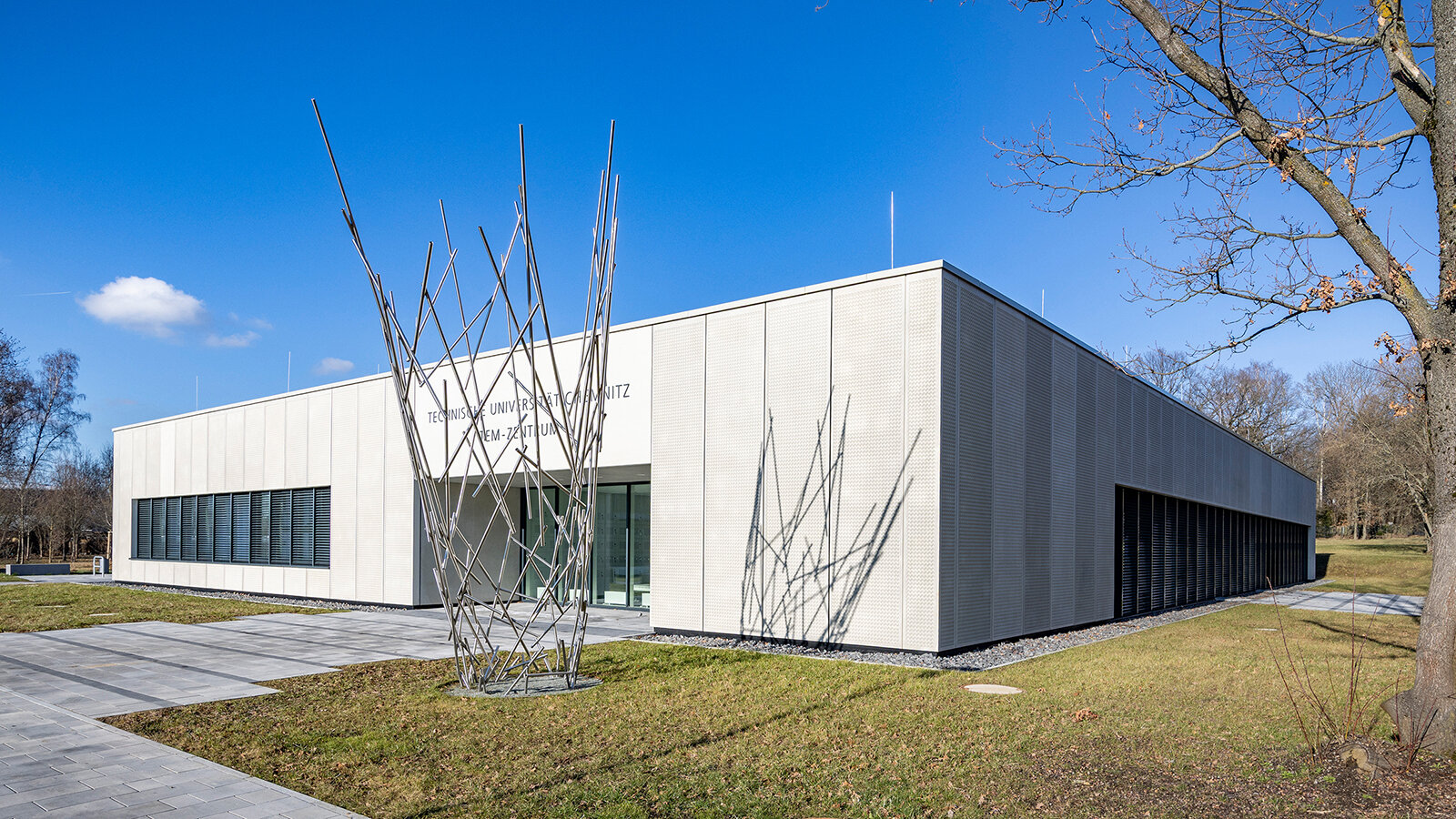
The newly constructed Transmission Electron Microscopy Center at Chemnitz University of Technology is located at the university campus at Erfenschlager Straße 73. The entrance is framed by the 6.5-meter-tall sculpture "Impact", which artist Stefanie Welk created as part of the "Art in Architecture" competition and which combines references to elements from electron microscopy and materials research. Photo: Jacob Müller -
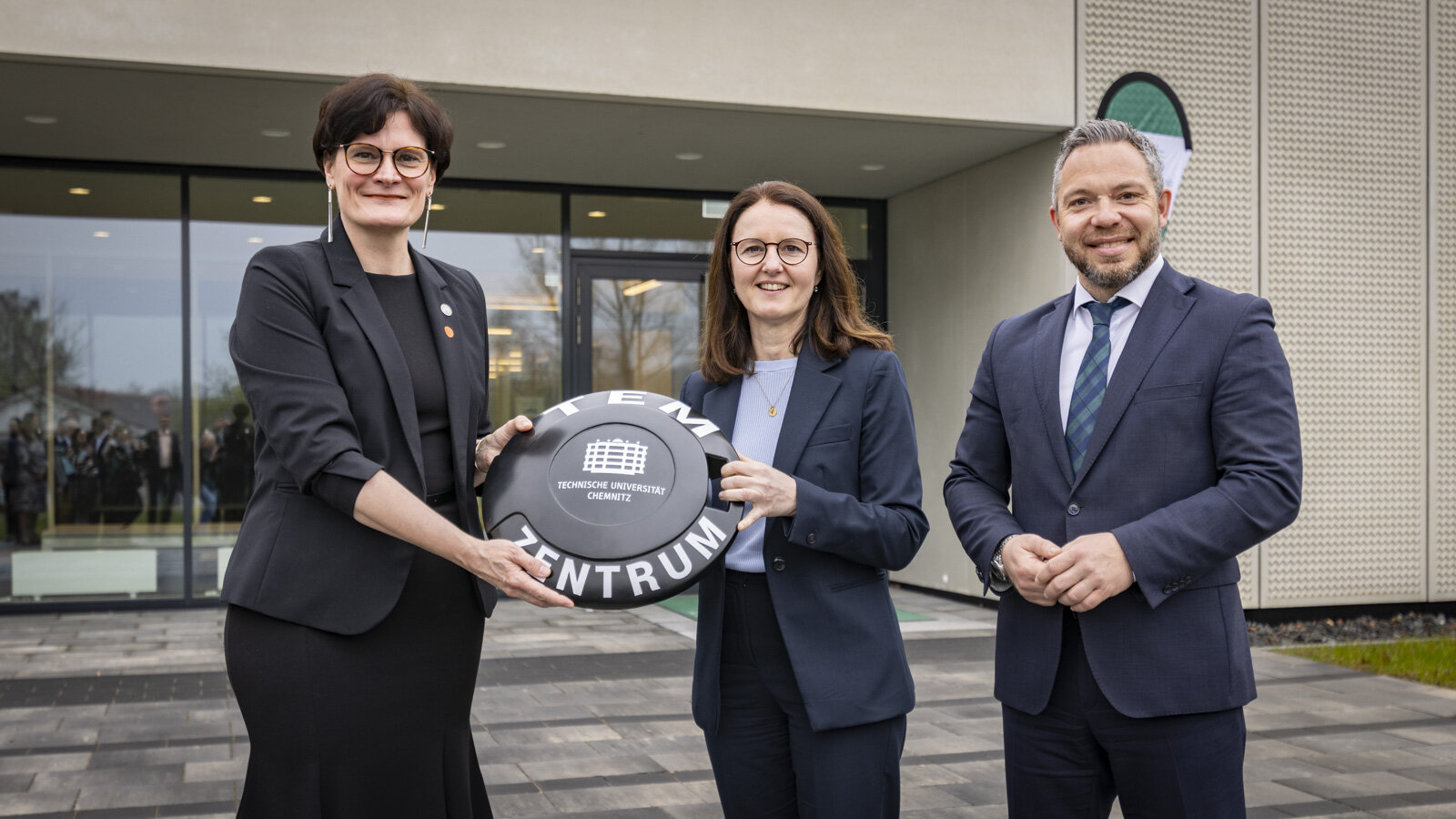
Saxony’s State Secretary for Finance, Sebastian Hecht, presented the key, symbolized by a large transponder, to Saxony’s State Secretary for Science, Prof. Dr. Heike Graßmann (center), and to the representative of the rector and prorector for research and university development at Chemnitz University of Technology, Prof. Dr. Anja Strobel. Photo: Jacob Müller -
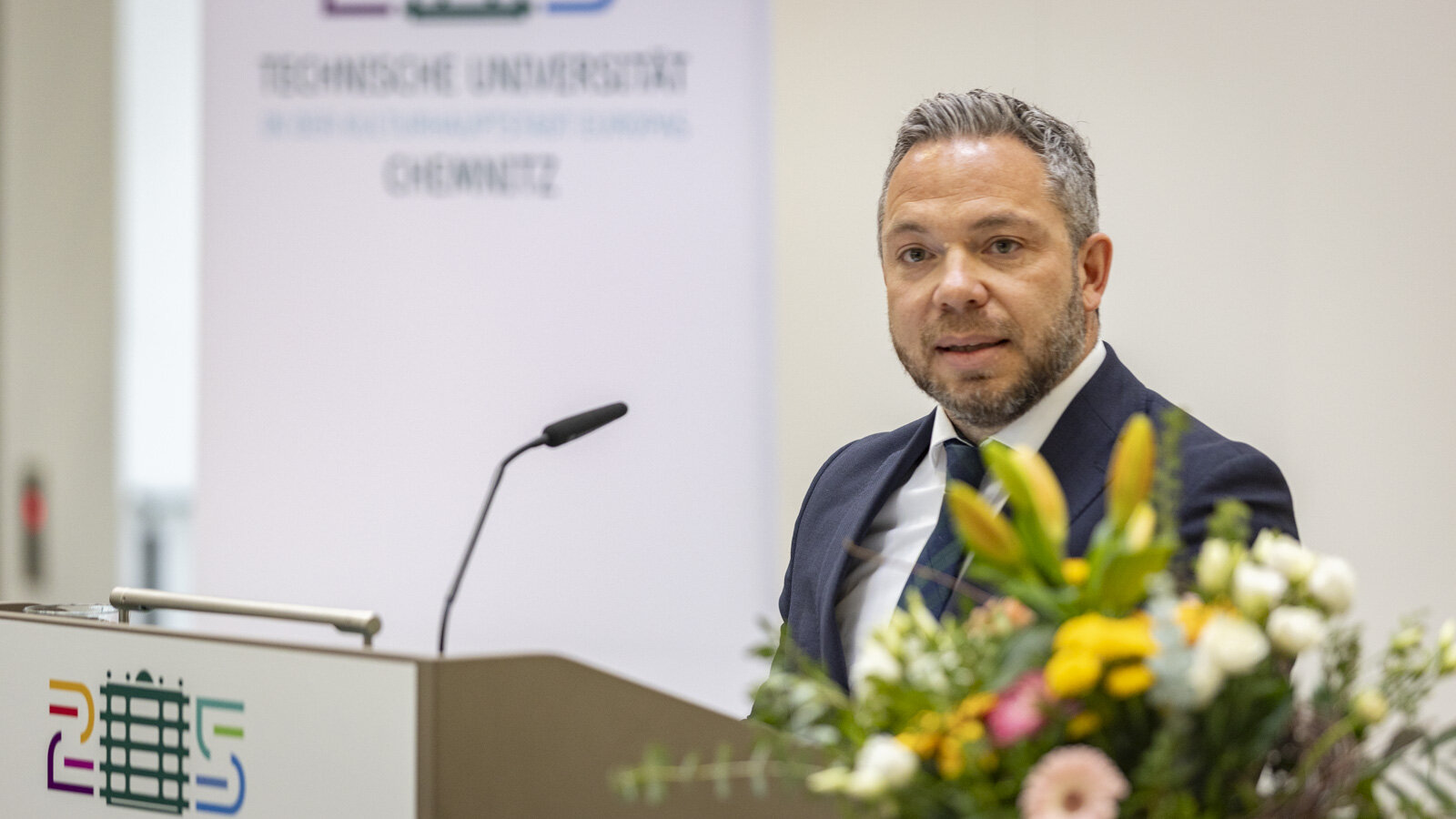
Saxony’s State Secretary for Finance, Sebastian Hecht: "This building is no ordinary new construction. Here, the core determines the shell. At its heart are highly sensitive transmission electron microscopes housed in specially shielded measurement rooms. The entire building was designed to meet these requirements and creates optimal conditions for top-level research. The EU and the Free State of Saxony are making research infrastructure of the highest international standard possible here. The investments of around 13 million euros in the construction and a further 7 million euros in the large-scale equipment represent a clear commitment to scientific excellence in Saxony." Photo: Jacob Müller -
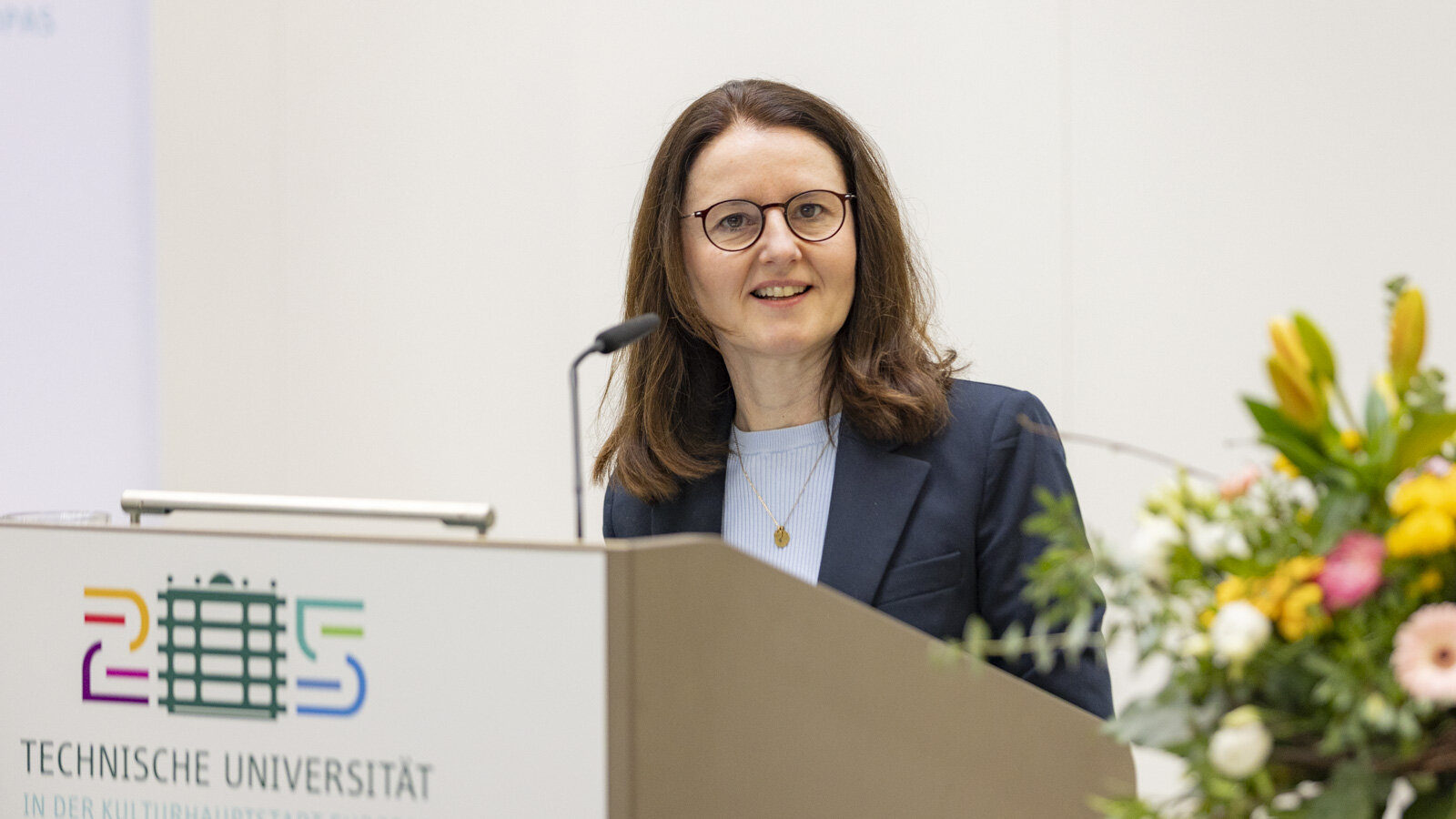
Saxony’s State Secretary for Science, Prof. Dr. Heike Graßmann: "The most important findings are made where you have to look closely – and the TEM Center at Chemnitz University of Technology is opening a new door to this." Photo: Jacob Müller -
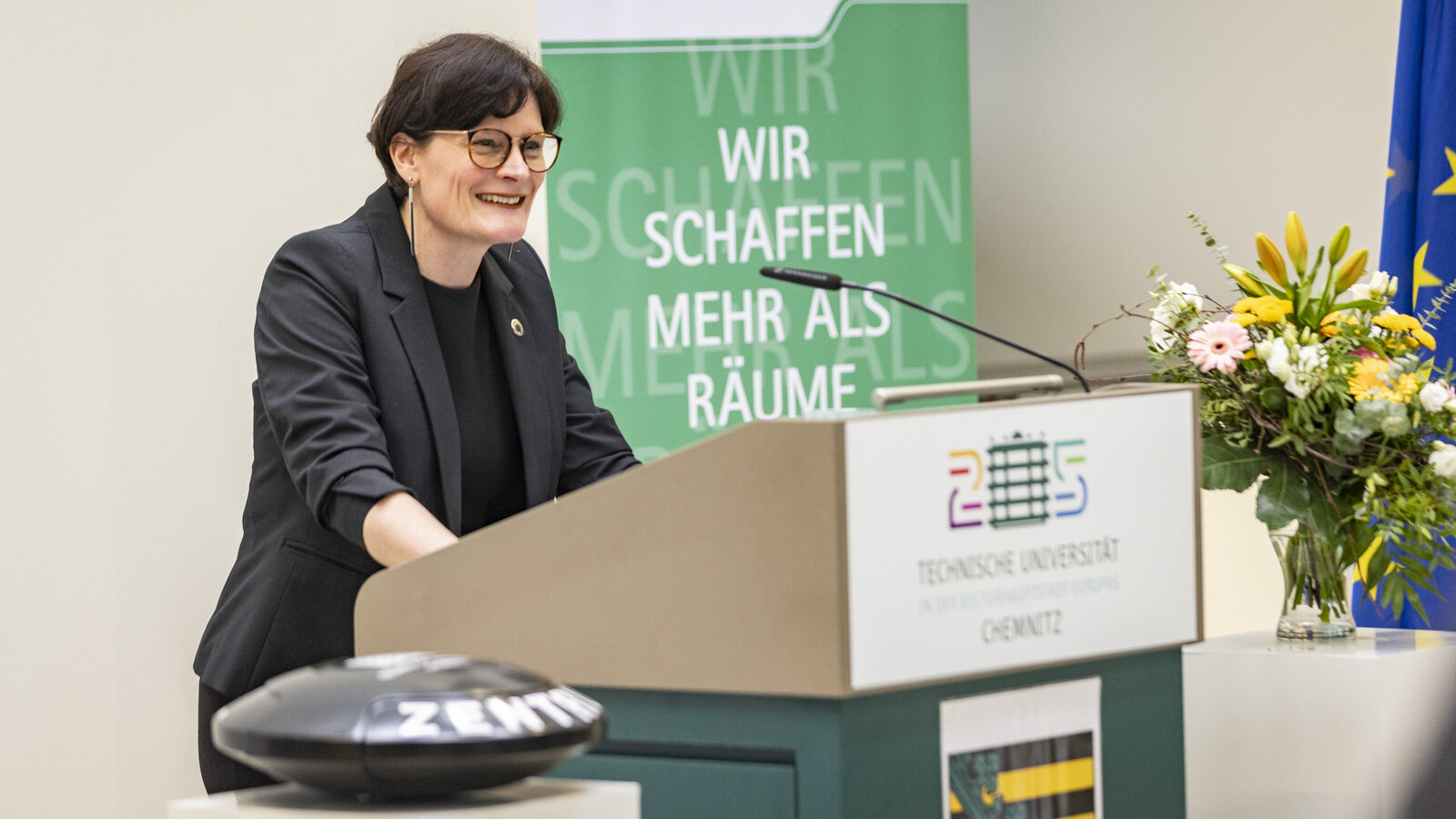
Prof. Dr. Anja Strobel, Deputy President and Vice President for Research and University Development at Chemnitz University of Technology, who received the key on behalf of the Rector, said: "The new Transmission Electron Microscopy Center brings together expertise from various research areas at Chemnitz University of Technology. It significantly strengthens our university’s STEM fields in research and teaching. The center creates highly attractive conditions for new interdisciplinary research projects and for recruiting and training the next generation of academics. It provides researchers and students with access to the latest technologies and methods in materials science." Photo: Jacob Müller -
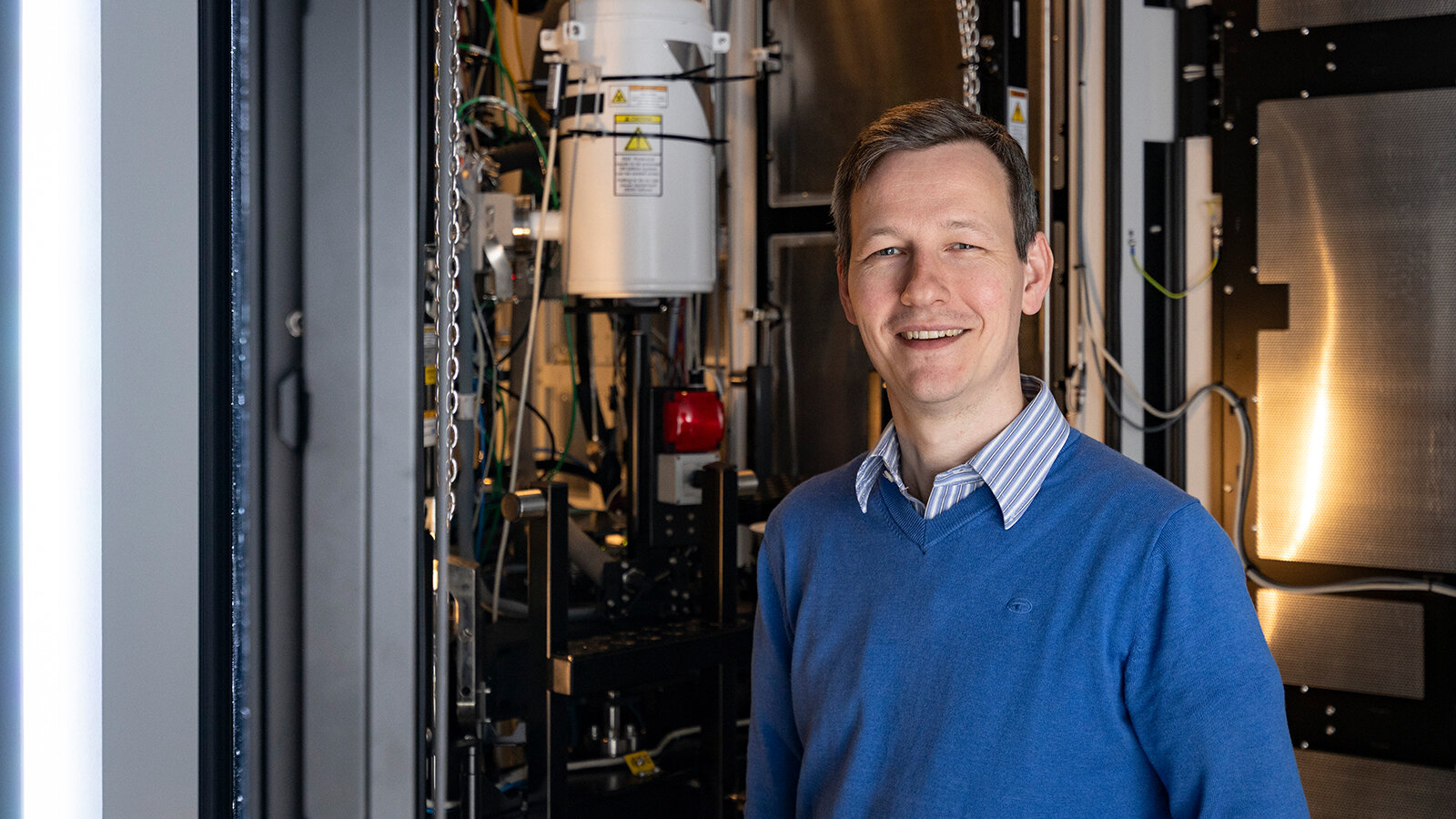
Prof. Dr. Andreas Undisz, Chair of Electron Microscopy and Microstructural Analysis and Director of the Transmission Electron Microscopy Center at Chemnitz University of Technology: "With our high-resolution microscopes, we can access the nanoscale world to understand how atoms interact with each other. In addition, we can investigate material surfaces and interfaces, which is important for semiconductor manufacturing and the production of medical implants, among other things." Photo: Jacob Müller -
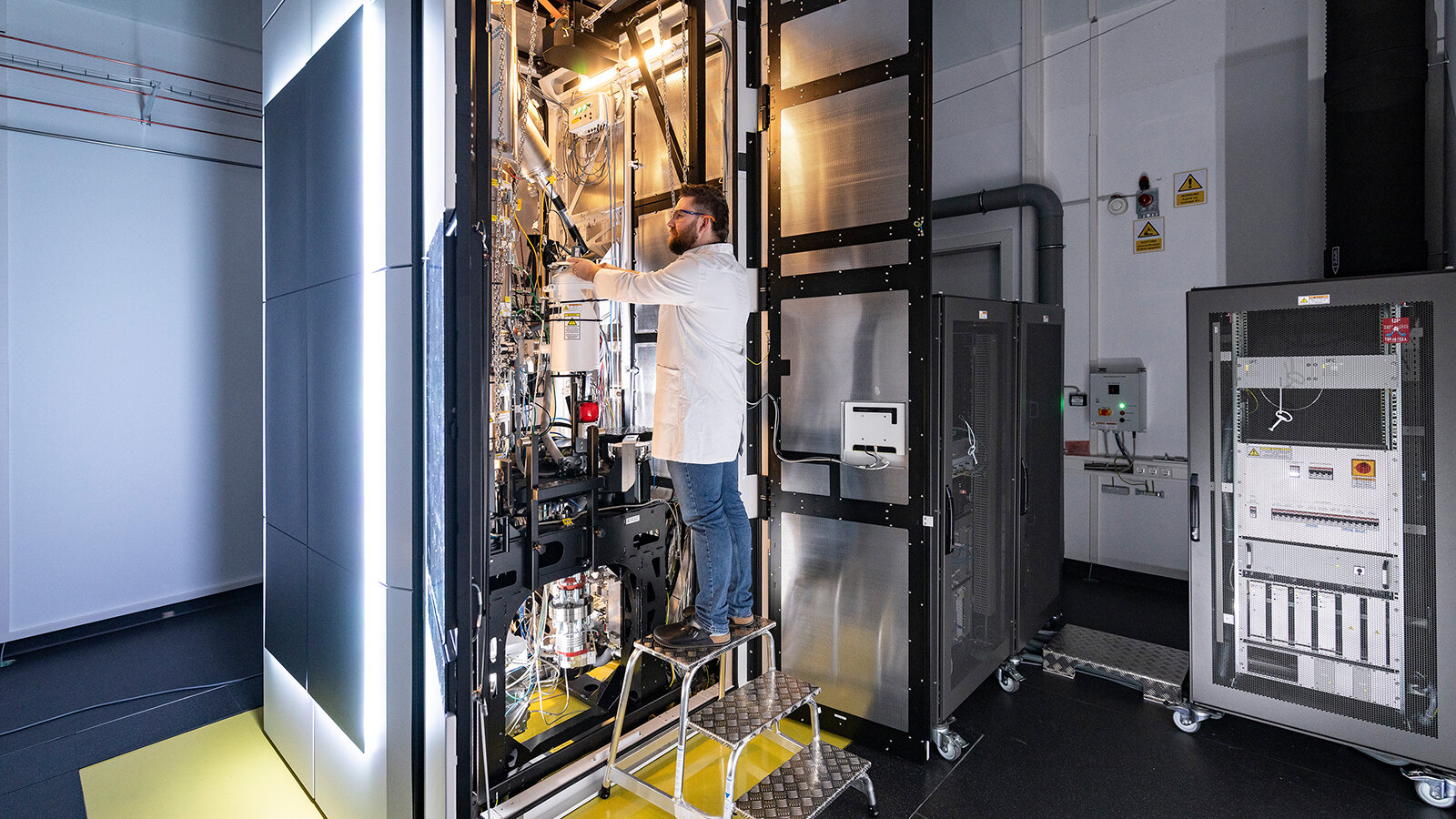
At the core of the new research building are two highly sensitive transmission electron microscopes. The largest is over four meters tall. Pictured: Paul Seidel, a technical staff member at the Chair of Electron Microscopy and Microstructural Analysis, prepares for a material analysis. Photo: Jacob Müller -
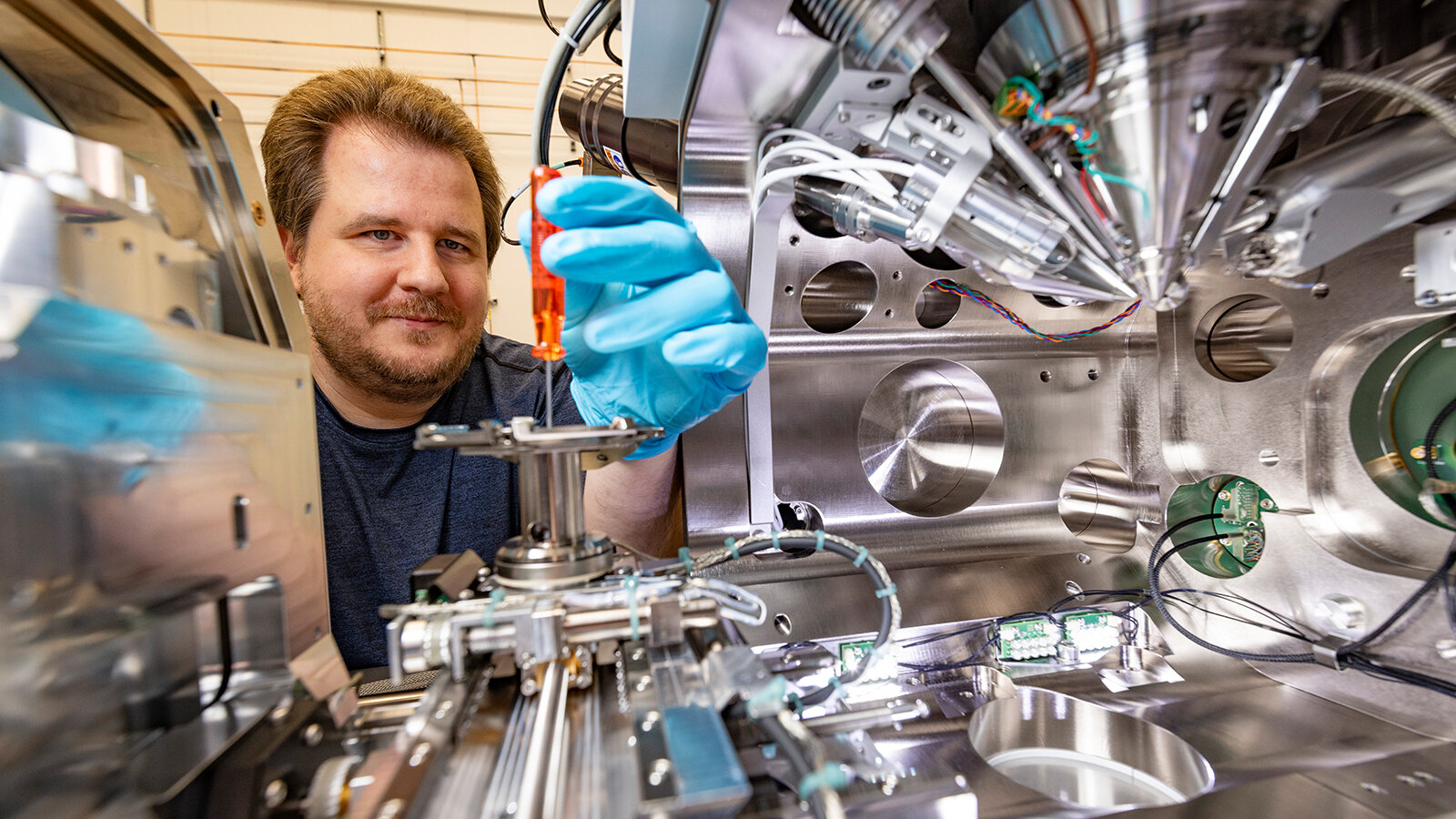
Nathanael Jöhrmann, a research scientist at the Chair of Materials and Reliability of Microtechnical Systems, prepares for a material analysis in a focused ion beam system at the TEM Center. Photo: Jacob Müller -
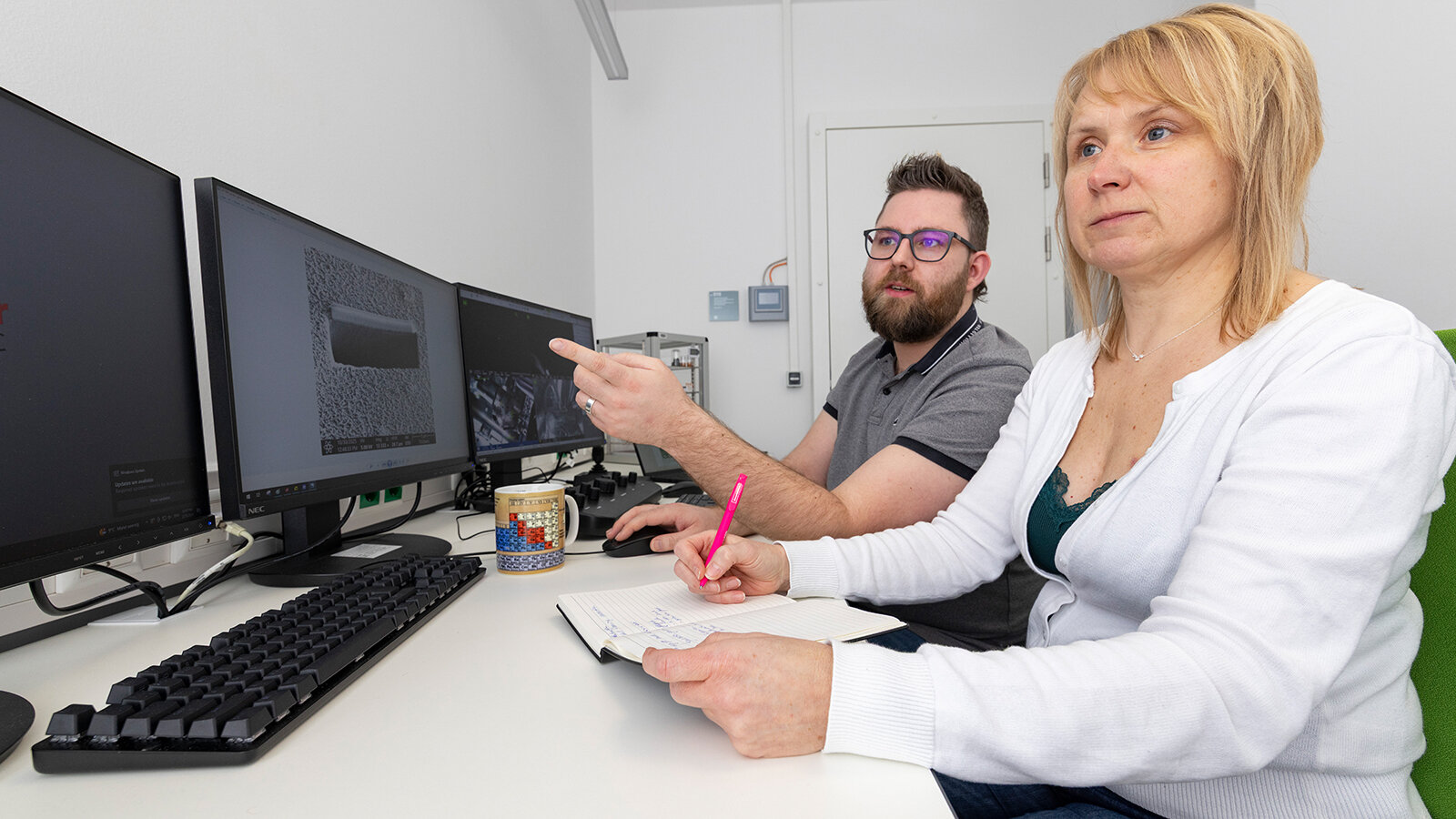
Doreen Dentel, a technical staff member of the Chair of Solid Surface Analysis, and Paul Seidel, a technical staff member of the Chair of Electron Microscopy and Microstructural Analysis, control the preparation of material samples for electron microscopic analysis from the operator room. Photo: Jacob Müller -
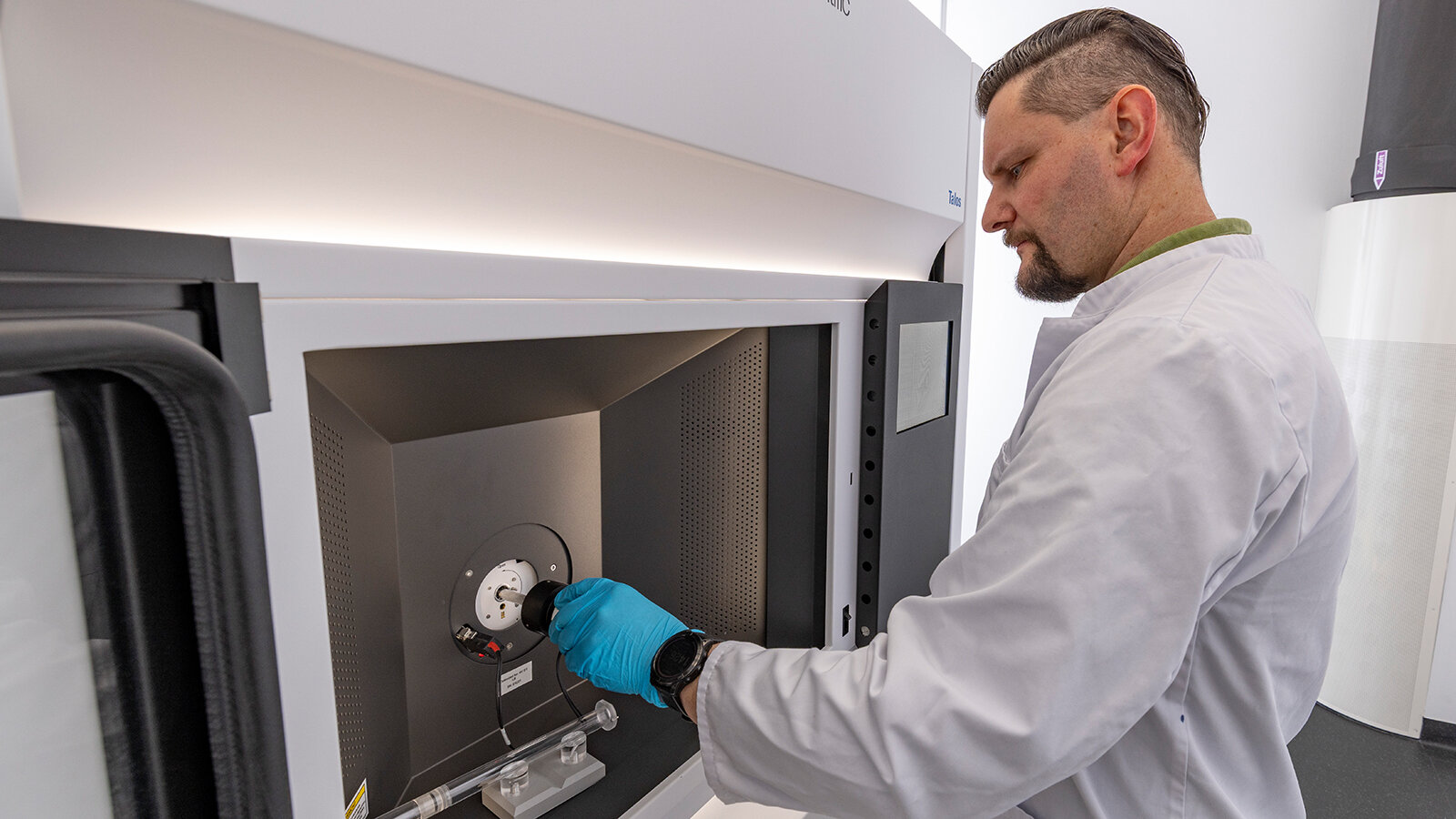
Dr. Marcus Böhme, a research scientist at the Chair of Materials Science, inserts a material sample into a transmission electron microscope. Photo: Jacob Müller -
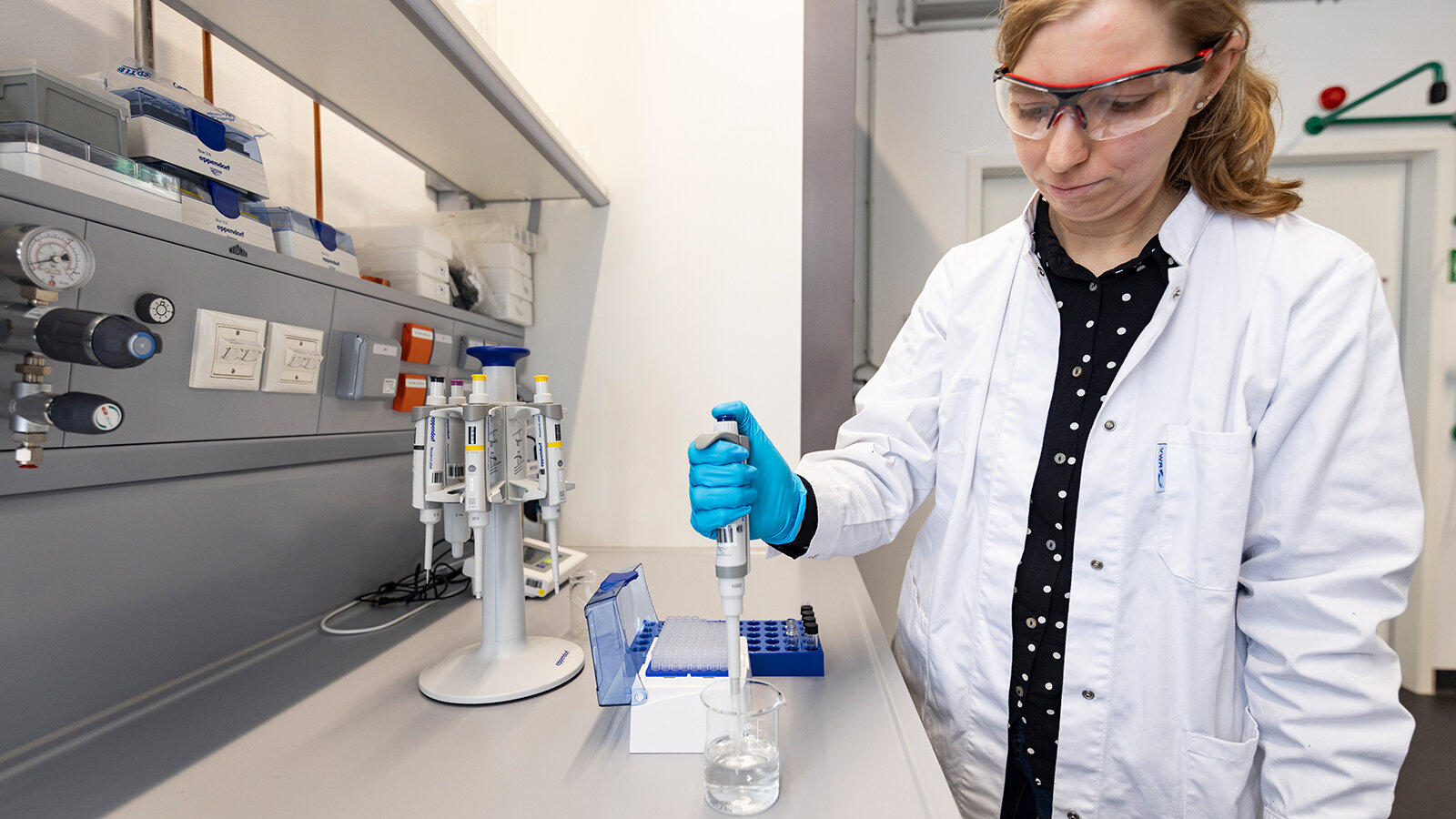
Ulrike Lohr, a research scientist at the Chair of Electron Microscopy and Microstructural Analysis, works in the sample preparation laboratory of the TEM Center. Photo: Jacob Müller -
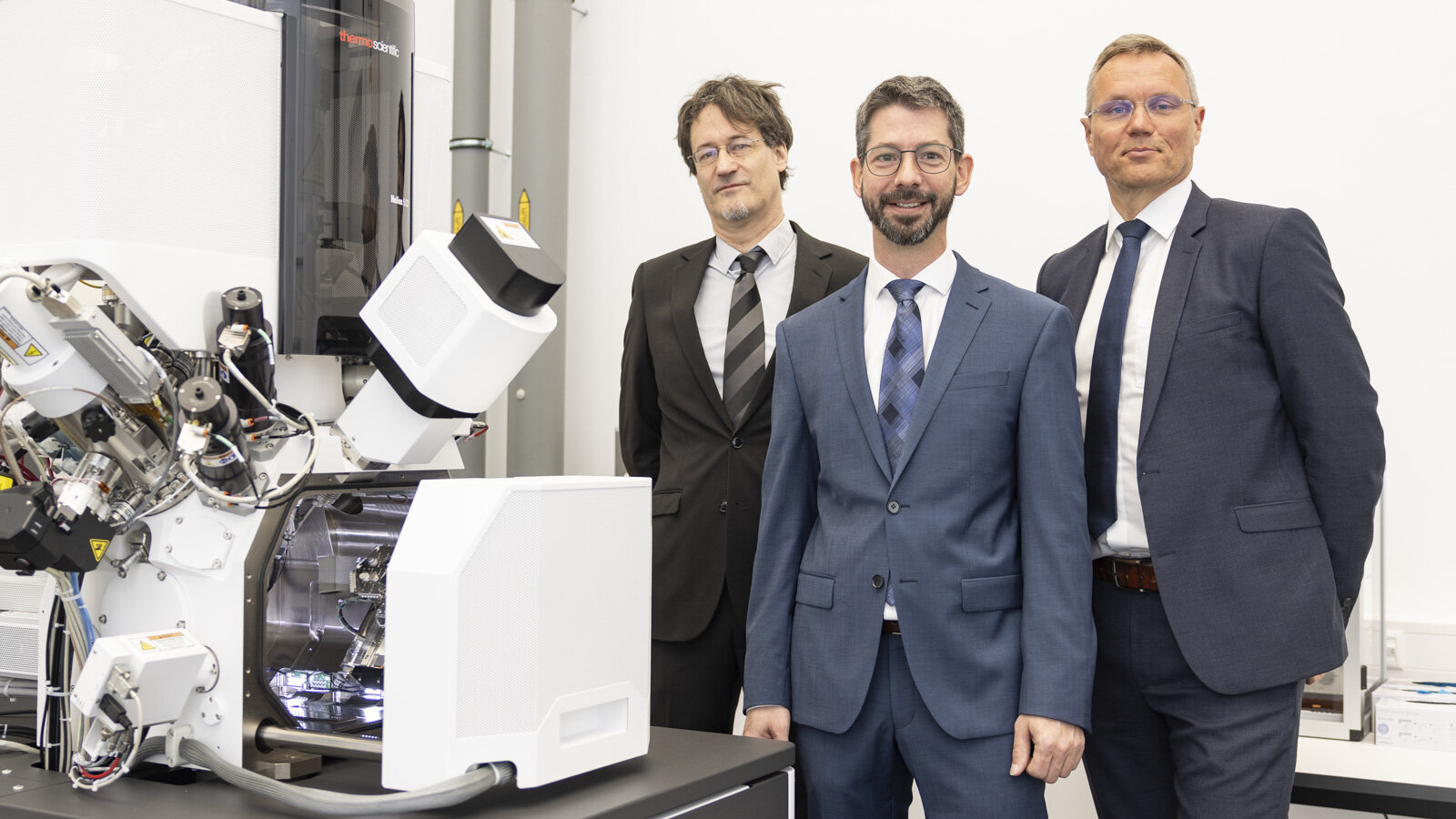
Funding for the large-scale equipment was successfully acquired by Professors Bernhard Wunderle, Martin Wagner, and Christoph Tegenkamp (from left) via the German Research Foundation and the Free State of Saxony. Photo: Jacob Müller -
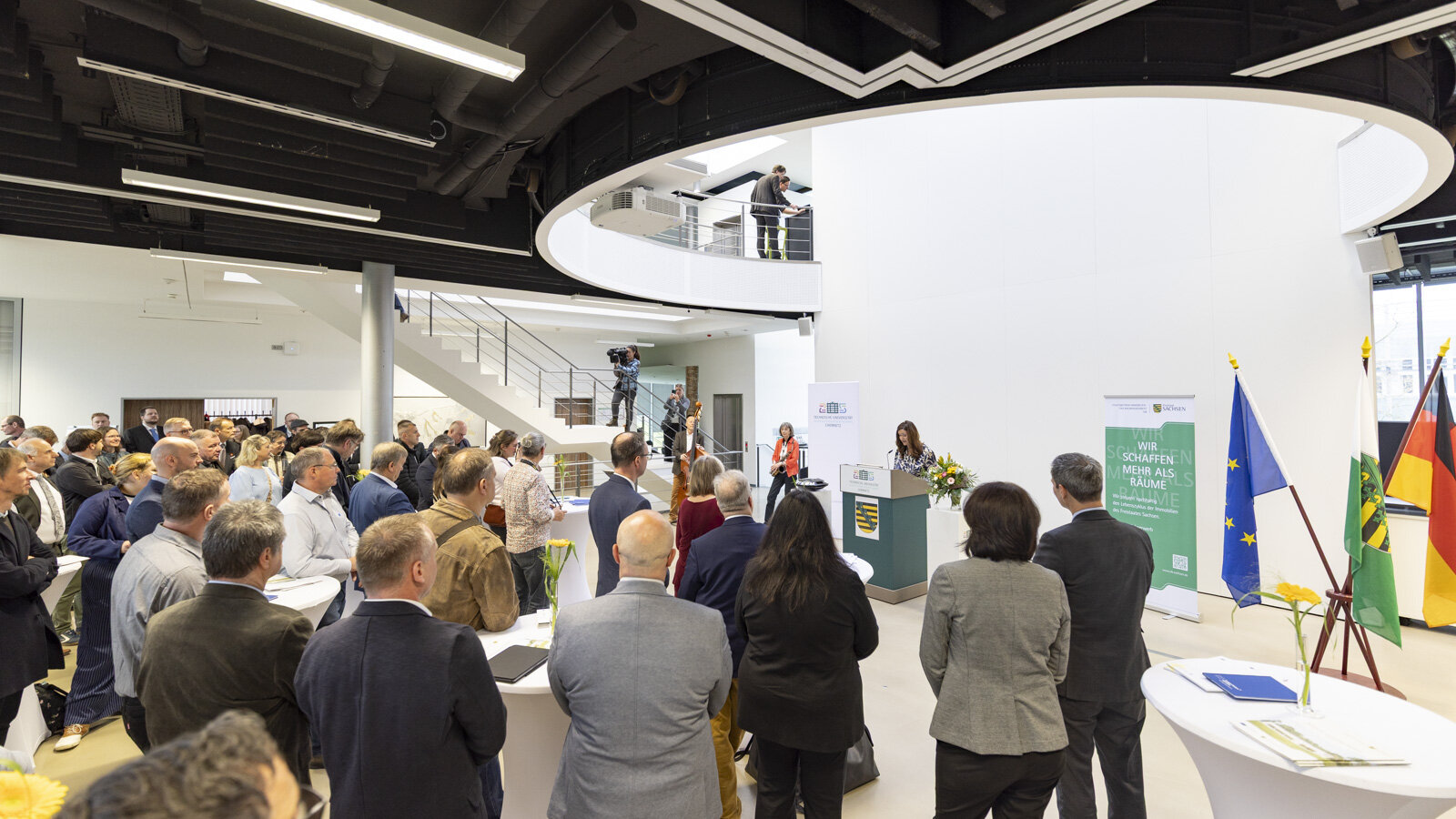
More than 100 guests attended the ceremonial opening of the new facility. Photo: Jacob Müller -
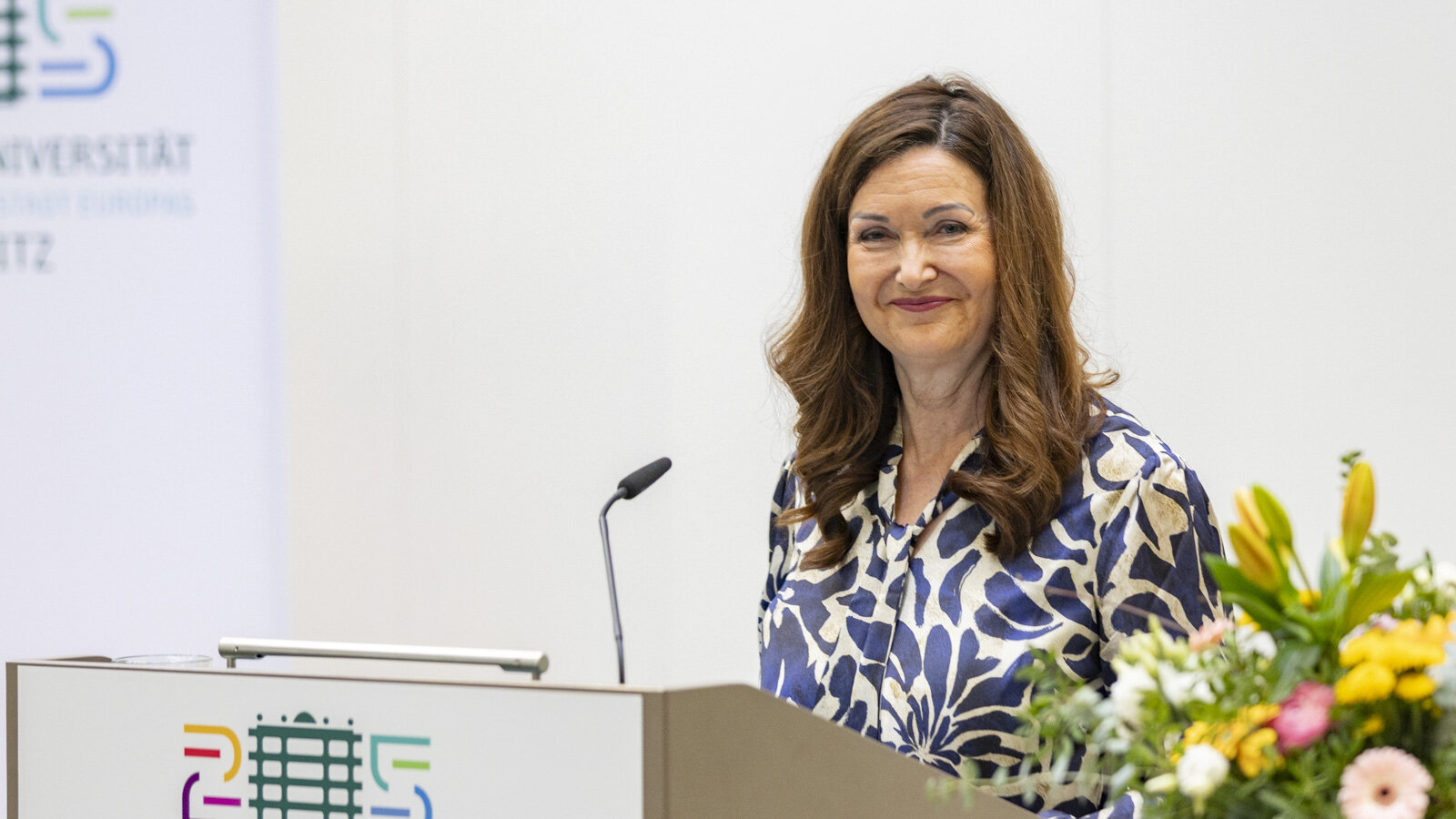
Heike Krenkel, head of the Chemnitz branch of the State-Owned Real Estate and Construction Management Office, warmly thanked everyone involved in the building of the transmission electron microscopy center at Chemnitz University of Technology. Photo: Jacob Müller -
The construction project was funded by the European Union and the Free State of Saxony. Graphic: Free State of Saxony
The question of "What binds the world in its innermost core?" was on Johann Wolfgang von Goethe's mind in "Faust." Many researchers at Chemnitz University of Technology also search for answers to this question. At the new Transmission Electron Microscopy Center (TEM-Center), officially opened on April 14th, 2026, at Erfenschlager Straße 73 in Chemnitz, researchers aim to visualize structures smaller than the wavelength of visible light. This will enable them to identify atoms, molecules, and the bonds of matter. To achieve this, they will utilize the top-tier research infrastructure.
High-resolution microscopes enable precise material analysis
"The core of the new, single-story building are two highly sensitive transmission electron microscopes that allow us to examine the structure and properties of materials at the molecular and atomic levels, and then translate these findings to new applications," says Prof. Dr. Andreas Undisz, the Chair of Electron Microscopy and Microstructural Analysis at Chemnitz University of Technology and head of the new center. For example, processes that lead to material damage can be examined in very detail, enabling more accurate conclusions to be made about the durability and performance of components.
A worthwhile investment at Chemnitz University of Technology
"With this new building and the two electron microscopes, Chemnitz University of Technology is once again at the forefront of global materials research. The complex technical features offered by this facility as a whole can be found at only a few other locations worldwide. In addition to the three faculties, partner institutions will also benefit. This makes Chemnitz University of Technology even more attractive to top researchers from around the world. Thus, we strengthen the entire scientific region of Southwest Saxony,” said Saxony’s Minister of Science, Sebastian Gemkow, in a statement from the State Ministry of Finance.
"We at Chemnitz University of Technology are delighted to celebrate the opening of the Transmission Electron Microscopy Center. This is an important investment in Chemnitz University of Technology and, by extension, in Chemnitz as a research hub, in our core competencies in materials science and intelligent systems, and in our university’s national and international reputation. We are very grateful to the Free State of Saxony and to everyone involved who actively supported the establishment of the center," says Prof. Dr. Gerd Strohmeier, President at Chemnitz University of Technology. Prof. Dr. Anja Strobel, Deputy President and Vice President for Research and University Development at Chemnitz University of Technology, who represented the Rector in receiving the key, added: "The new Transmission Electron Microscopy Center, which brings together expertise from various research areas at Chemnitz University of Technology, significantly strengthens our university’s STEM field in research and teaching and creates highly attractive conditions for new interdisciplinary research projects as well as for recruiting and training our next generation of academics by providing researchers and students with access to the latest technologies and methods in materials science."
Technological marvels explore the nano cosmos
The electron microscopes, which tower over four meters, capture images of the tiniest structures at the nanometer level. "To ensure these sensitive marvels of technology can operate optimally, they are housed in specially shielded, climate-controlled rooms and rest on a 1.4-meter-thick vibration-damping concrete slab," explains Undisz. This keeps mechanical, acoustic, electromagnetic, and thermal sources of interference at a distance. Experiments using the large-scale research equipment in the protected inner core of the building are conducted remotely from operating rooms. In-depth material analysis using the two transmission electron microscopes requires preparing material samples just a few nanometers thin. This process is semi-automated in an adjacent room using a focused ion beam system.
Researchers from over 20 professorships will work with the equipment in the future
The new center has the advantage of merging all of Chemnitz University of Technology’s high-resolution transmission electron microscopy equipment in one location. More than 20 professorships of the faculties of mechanical engineering, natural sciences, and electrical engineering and information technology will use the equipment for their transdisciplinary and interdisciplinary basic and applied research. They will also collaborate with non-university research institutions, such as Fraunhofer Society institutes, as well as companies.
Background: Transmission Electron Microscopy Center at Chemnitz University of Technology
Construction of the new research building began in September 2023 under the direction of the State Office for Saxon Real Estate and Construction Management. The building was designed by Heinle Wischer Partnership of Independent Architects mbB in Dresden. The sculpture "Impact", created by Stefanie Welk from Walldorf near Heidelberg as part of the "Art in Architecture" competition, frames the building’s entrance.
Approximately 13.1 million euros were invested in the construction of the building. Of this amount, approximately 7.4 million euros were provided by the European Regional Development Fund and around 5.7 million euros by the Free State of Saxony. The project was co-financed with tax revenues based on the budget approved by the Saxon State Parliament. The German Research Foundation (DFG) and the Free State of Saxony each provided 3.5 million euros for the large-scale equipment. Professors Christoph Tegenkamp, Martin Wagner, and Bernhard Wunderle successfully acquired the funding on behalf of the three participating faculties at Chemnitz University of Technology.
For further information, please contact Prof. Dr. Andreas Undisz, phone +49 (0)371 531-34528, email andreas.undisz@mb.tu-chemnitz.de.
(Translation: Ulrike Lohr)
Mario Steinebach
15.04.2026