Automated Power Line Inspection (APOLI)
The project Automated Power Line Inspection (APOLI) shall develop and prove a highly automated vision-based inspection system for electric power distribution systems. The inspection shall be done with an unmanned aerial system (UAS) and shall focus on the damage assessment of insulators, electric power poles, and transmission lines. The following inspection tasks shall be implemented:
- Detection of electrical short damages
- Crack and glass breakage detection
- Transmission line damage assessment
The research activities have to face novel concepts for navigation and mission control. Because conventional positioning and orientation sensors (e.g. GPS, IMU, compass) are not working reliably near high-voltage systems with strong electro-magnetic radiation. The UAS shall use a vision-based flight control with real-time detection of inspection objects and dangerous/unforeseen obstacles in the operation environment. An on-board mission control shall continuously supervise the flight path and guide the copter safely around the poles and along the transmission lines. The APOLI system shall be able to determine on-board the damage assessment of towers, cables, and isolators.
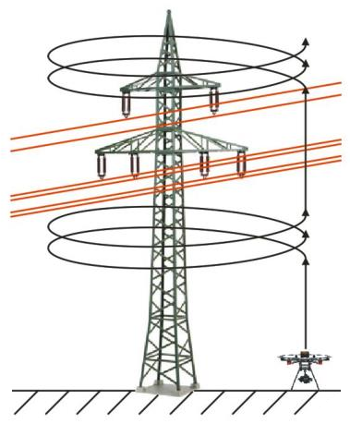
An UAS-based automated power line inspection system has significant advantages compared to conventional human expert-based examination. It realises automated, contact-less, and safe inspection of electric power distribution systems. The system allows high-resolution/high-accuracy inspection of all parts of power distribution systems in operation. This reduces costs due to downtimes and losses during power-down and power-up procedure. The aerial inspection enables damage assessment of poles and lines with hard or no accessibility and from view points different from ground. The application of high-resolution inspection sensors and the possibility of all-degree analysis provide a time- and cost-saving method which captures more damages and is more accurate/powerful in relation to ground-based visual assessment by expensive experts.
Link for the References used in the Project can be found below: