
Research
Professorship of Movement Science for Prevention and Rehabilitation
Understanding human movement – shaping health
How do people move, why does movement change over the course of a lifetime, and what can we learn from this about health and physical strain?
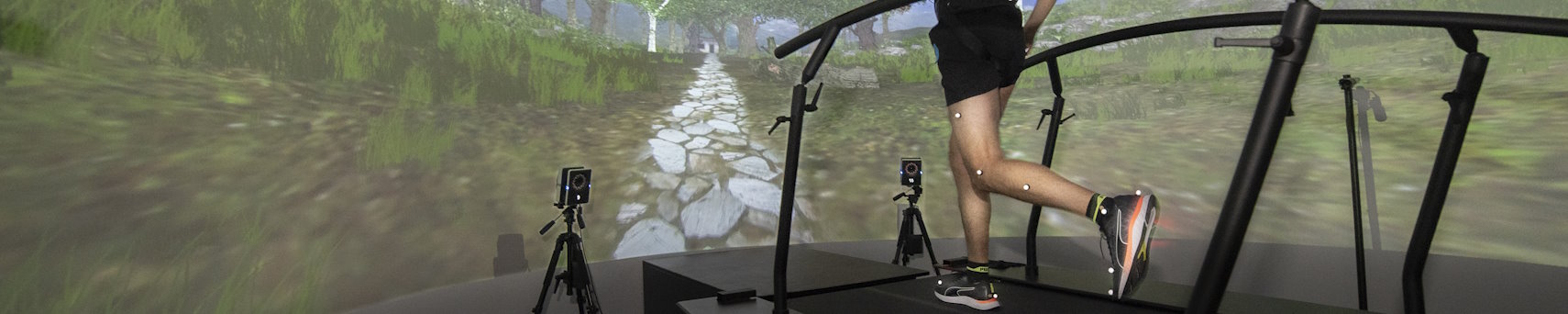
At the Professorship of Movement Science for Prevention and Rehabilitation, we investigate human movement at the interface of biomechanics, physiology and technology. We explore how biological factors, the environment and lifestyle influence movement – from the sensory perception of mechanical stimuli to the strain placed on the musculoskeletal system in everyday life, sport and rehabilitation.
To this end, we combine state-of-the-art 3D motion analysis, force, pressure and muscle activity measurements with new digital and AI-supported analytical methods. Our aim is to make movement measurable and comprehensible, and to use this to develop new approaches to prevention, rehabilitation and movement-related technologies.
Our research combines scientific principles with practical applications – in collaboration with students and partners from research, medicine and industry.
The professorship is divided into three main research areas:
Movement as a biomarker for the function of the neuromuscular skeletal system
Whether we can walk safely, stand up from a chair or maintain our balance depends on the intricate interplay between the brain, muscles and skeleton. Quantitative motion analysis enables changes in this interaction to be objectively recorded, thereby revealing limitations – such as those resulting from illness or advancing age – at an early stage. This allows timely therapies to be initiated, which ultimately contribute to more effective healthcare.
Movement and physical activity in everyday life
How does our everyday life shape the body over the course of a lifetime? We investigate physical activity, sedentary behaviour and various forms of everyday movement, as well as the strain these place on the human body. An evolutionary perspective helps us to better understand today’s movement habits and to identify starting points for a healthy and mindful life.
Assessment of the sensory capacity of the sole of the foot
The sole of the foot provides important information for posture and movement. How do we, as humans, perceive pressure and vibration stimuli on the sole of the foot? How do age, individual physical characteristics and mechanical stress influence sensory perception? A particular focus is on reduced foot sensitivity in diabetes and diabetic neuropathy: the aim is to record changes more accurately and to develop approaches for earlier assessment.