Das Video zum Studiengang
Überblick
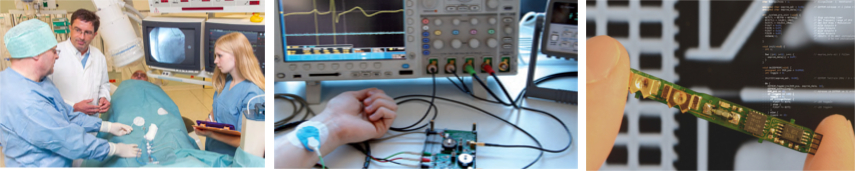
Der Masterstudiengang Biomedizinische Technik richtet sich an Absolventen des gleichnamigen Bachelorstudiengangs der TU Chemnitz sowie an Interessierte aus fachlich angrenzenden Studiengängen wie der Elektrotechnik und Angewandten Informatik.
Die Entwicklung innovativer, energieeffizienter und zukunftsweisender Medizinprodukte erfordert vielfältige Kenntnisse in den Fachgebieten Elektrotechnik und Elektronik, Mikrosysteme und Sensortechnik sowie Messdatenanalyse und -visualisierung. Zusätzlich sind grundlegende medizinische Kenntnisse über die Einsatzmöglichkeiten moderner Medizinprodukte und medizintechnischer Geräte unabdingbar.
Die besondere Ausrichtung des Masterstudiengangs Biomedizinische Technik auf die Kombination von Aspekten der Mikro- und Sensortechnik, der Informatik und Messdatenanalyse sowie der Medizin trägt den neuen Anforderungen Rechnung, die heute an Ingenieure der Medizintechnik gestellt werden, um innovative und zukunftsweisende Geräte für die Medizin entwickeln zu können. Der Studiengang fokussiert innovative und zukunftsweisende Themen wie AAL, Telemedizin, intelligente Mikroimplantate sowie Messdatenanalyse und Bildverarbeitung.
Die Kombination der Fachbereiche Elektrotechnik und Informatik zusammen mit einer auf diese Bereiche abgestimmten Grundlagenausbildung in der Medizin und der Anwendung medizinischer Geräte ist für den Masterstudiengang Biomedizinische Technik an der Technischen Universität Chemnitz ein Alleinstellungsmerkmal.
| Voraussetzung: | Bachelor Biomedizinische Technik der TU Chemnitz oder inhaltlich gleichwertiger Abschluss (ggf. Entscheidung Prüfungsausschuss) | |
| Regelstudienzeit: | 4 Semester | |
| Abschluss: | Master of Science (M.Sc.) | |
| Studienbeginn: | in der Regel Wintersemester | |
| Flyer: |
 .pdf
.pdf |
Berufliche Möglichkeiten
Die Medizintechnik ist eine der am stärksten wachsenden Branchen in Deutschland. Bedingt wird diese Entwicklung zum einen durch den demografischen Wandel und zum anderen durch die schnell voranschreitende Entwicklung in der Medizintechnik und Medizin. Wie in vielen anderen ingenieurwissenschaftlichen Bereichen besteht auch in der Medizintechnik eine Diskrepanz zwischen den Studenten sowie den Absolventenzahlen und der Nachfrage seitens der Industrie.
Für die Absolventen des Masterstudiengangs Biomedizinische Technik bedeutet dies eine hervorragende berufliche Perspektive. Die möglichen Aufgabenfelder sind extrem breit gefächert; sie umfassen unter anderem
- Forschung, Entwicklung und Konstruktion neuer innovativer Medizingeräte,
- Marketing, Produktmanagement und Vertrieb medizinischer Geräte,
- Entwicklung und Betreuung von Softwaresystemen im Gesundheits- und Medizinwesen,
- Medizinproduktberatung und Qualitätsmanagement in Unternehmen, Krankenhäusern, bei Zertifizierungsstellen und Prüfinstituten,
- Wartung und Instandsetzung von Medizingeräten im klinischen Umfeld.
Arbeitsmöglichkeiten bieten sich den Absolventen dieses Studiengangs in Unternehmen der Medizintechnikbranche, Forschungseinrichtungen und Krankenhäusern, aber auch in der Qualitätssicherung, Risikoanalyse und der Beratung.
Studienaufbau
Die Lehrgebiete des Masterstudiengangs Biomedizinische Technik sind in Module gegliedert. Jedes Modul ist eine in sich abgeschlossene Lehreinheit mit definierten Zielen, Inhalten sowie Lehr- und Lernformen wie z.B. Vorlesungen, Übungen, Praktika oder Seminaren.
Basismodule
Die Basismodule vermitteln im ersten Semester vertiefte Kenntnisse in den folgenden Bereichen:
- Sensorsysteme und Sensorsignalverarbeitung
- Softwareentwurf für eingebettete Systeme
- Technische Optik
- Visualisierung von Messdaten
- Monitoring von Vitalfunktionen
Vertiefungsmodule
Im zweiten Semester erfolgt die Wahl einer der zwei angebotenen Vertiefungsrichtungen
- Medizingerätetechnik und medizinische Mikrosysteme
- Bildverarbeitung und Telemedizin
Vertiefungsrichtung Medizingerätetechnik und medizinische Mikrosysteme
Der Schwerpunkt dieser Vertiefungsrichtung liegt im Bereich der Elektrotechnik.
Es werden erweiterte Kenntnisse zum Einsatz und zur Zuverlässigkeit von Mikrosystemen in der Medizin, zur Sensorsignalverarbeitung, Hochfrequenztechnik, zur medizinischen Bildgebung und zu medizinrechtlichen und ethischen Themen vermittelt.
Aus einem Block mit Ergänzungsmodulen werden im 2. und 3. Semester weitere Module in einem vorgegebenen Mindestumfang gewählt.
Vertiefungsrichtung Bildverarbeitung und Telemedizin
Der Schwerpunkt dieser Vertiefungsrichtung liegt im Bereich der Informatik.
Es werden erweiterte Kenntnisse zu Möglichkeiten der Messdatenspeicherung und -auswertung, zur Bildverarbeitung, zur medizinischen Bildgebung und zu medizinrechtlichen und ethischen Themen vermittelt.
Aus einem Block mit Ergänzungsmodulen werden im 2. und 3. Semester weitere Module in einem vorgegebenen Mindestumfang gewählt.
Modul Masterarbeit
- während des 4. Semesters
Bewerbung
Die Bewerbung für ein Studium erfolgt online über das Bewerbungsportal .
Auf den Seiten des Studierendenservice finden Sie weitere Hinweise zur Studienaufnahme .
Beratungsmöglichkeiten
Fachstudienberatung

Zentrale Studienberatung
Studien- und Prüfungsordnung
Studien- und Prüfungsordnung für den Masterstudiengang Biomedizinische Technik
Häufig gestellte Fragen (FAQ)
Obwohl der Wechsel nicht direkt vorgesehen ist, kann dieser formlos beantragt werden. Dazu genügt eine E-Mail an den Prüfungsausschussvorsitzenden. Ein Wechsel zurück in die alte Ordung ist dann aber nicht mehr möglich.
Der Prüfungsausschuss hat dazu folgende Beschlüsse bzw. Übergangsregelungen getroffen:
- Der Prüfungsausschuss beschließt, entweder das Modul „Betriebssysteme“ (565150) oder das derzeit Vertiefungsmodul „Sicherheit Verteilter Software“ (BBT5.8, 553130) anstelle des Schwerpunktmoduls „Techniken der IT-Sicherheit“ (BBT3.3, 555130) im Bachelorstudiengang anzuerkennen. Wenn man das Modul „Sicherheit Verteilter Software“ als Ersatz für „Techniken der IT-Sicherheit“ wählt, kann dieses nicht länger als Vertiefungsmodul gewählt werden. Dieser Beschluss gilt als Übergang bis zur entsprechenden Änderung/Novellierung der Studiendokumente.
- Der Prüfungsausschuss beschließt, das Modul „Einführung in die Künstliche Intelligenz“ (573030) anstelle des Pflichtmoduls „Interaktive Visualisierung skalarer Daten“ (MBT 1.5, 572010) im Masterstudiengang BMT anzuerkennen. Sollte das Modul „Einführung in die Künstliche Intelligenz“ bereits im Bachelor belegt worden sein, so wird das Modul „Hardware/Software-Codesign I“ (555070) stattdessen anerkannt. Dieser Beschluss gilt als Übergang bis zur entsprechenden Änderung/Novellierung der Studiendokumente.
- Der Prüfungsausschuss beschließt, das Modul „Neurocomputing“ (573180) anstelle des Vertiefungsmoduls „Interaktive Visualisierung von nichtskalaren Daten“ (MBT 3.1.1, 572030) im Masterstudiengang BMT anzuerkennen. Sollte das Modul „Neurocomputing“ bereits belegt worden sein, so wird das Modul „Virtuelle Realität“ (MBT 3.2.3, 571250) stattdessen anerkannt. In dieser Situation kann das Modul „Virtuelle Realität“ nicht länger als Ergänzungsmodul gewählt werden. Dieser Beschluss gilt als Übergang bis zur entsprechenden Änderung/Novellierung der Studiendokumente.
- Der Prüfungsausschuss beschließt, das Modul „Computergraphik I“ (571050) als Alternative für das Vertiefungsmoduls „Entwurf von Software für eingebettete Systeme“ (MBT3.1.3, 565050) im Masterstudiengang BMT anzuerkennen. Dieser Beschluss gilt als Übergang bis zur entsprechenden Änderung/Novellierung der Studiendokumente.“
Eine Anmeldung der Abschlussarbeit ist erst dann möglich, wenn die oben genannten Voraussetzungen erfüllt sind. Jedoch besteht in Abstimmung mit Ihrem Betreuenden die Möglichkeit sich bereits im Vorfeld mit dem Thema vertraut zu machen.
Sind Sie nach einer der Studienordnungen von 2021 immatrikuliert, dann gelten andere Zulassungsvoraussetzungen.. Um den schriftlichen Teil der Abschlussarbeit anmelden zu können, müssen Sie dort Module im Umfang von mindestens 130 LP (Bachelor) bzw. 84 LP (Master) nachweisen. Für das abschließende Kolloquium müssen Sie dann alle anderen Module bestanden haben.
Sie können eine bedingte Immatrikulation in Erwägung ziehen, sofern alle noch offenen Modulprüfungen angemeldet sind. Weitere Informationen zur bedingten Immatrikulation finden Sie auf den Seiten des Studierendenservices .
Richtig, man ist entweder im Bachelor- oder im Masterstudiengang immatrikuliert.
Hinweise zur bedingten Immatrikulation finden Sie auf den
Seiten des Studierendenservices
:
"Mit Beginn des Masterstudiums sind Sie nicht mehr im Bachelorstudiengang an der TU Chemnitz immatrikuliert.
Sie können sich nicht mehr für Prüfungen im Bachelorstudiengang anmelden.
Angemeldete Prüfungen können noch abgelegt werden.
Die Anmeldung zu einer Verteidigung/Kolloquium (wo vorhanden) sollte deshalb mit der Anmeldung der Abschlussarbeit erfolgen.“
Ja, bei einer bedingten Immatrikulation muss im ersten Semester des Masters der Nachweis des bestandenen Bachelors nachgewiesen werden. Wenn dies nicht gelingt, besteht die Gefahr einer Exmatrikulation ohne Bachelorabschluss.
§17 der PO regelt es wie folgt:
"Soweit dies nach dem Gegenstand der Prüfung sachgerecht ist, kann zum Prüfer auch bestellt werden, wer die Befugnis zur selbständigen Lehre nur für ein Teilgebiet des Prüfungsfaches besitzt."
Grundsätzlich unterstützen wir Mediziner als Zweitgutachter/ Zweitbetreuer. Wir weisen jedoch darauf hin, dass der Schwerpunkt der Abschlussarbeit stets ingenieurwissenschaftlich geprägt sein muss (Bestätigung durch Erstgutachter).
Wenn es sich beim Praktikum in einem Klinikum um eine mindestens zweiwöchige Tätigkeit handelte, in deren Rahmen der Einsatz aktiver medizintechnischer Anlagen (z.B. Geräte der Intensivmedizin, Stationäre Therapie und Überwachung, Herzkatheter-Labor, Dialyse, Bildgebende Diagnostik, Funktionsabteilungen, Labor, ...) im klinischen Umfeld kennengelernt werden konnte, kann dieses Praktikum nach Rücksprache mit den Modulverantwortlichen angerechnet werden. Ein Praktikumsbericht ist dennoch notwendig.
Ein im klinischen Bereich geleisteter Bundesfreiwilligendienst oder eine abgeschlossene Berufsausbildung im pflegerischen bzw. pharmazeutischen Bereich kann auf Antrag ebenfalls als Klinisches Praktikum anerkannt werden.
Ein reines Pflegepraktikum kann nicht angerechnet werden.