Workshops of the Faculty of ET/IT
The workshops of the Faculty of ET/IT carry out a wide range of tasks required to support teaching and research within the faculty.
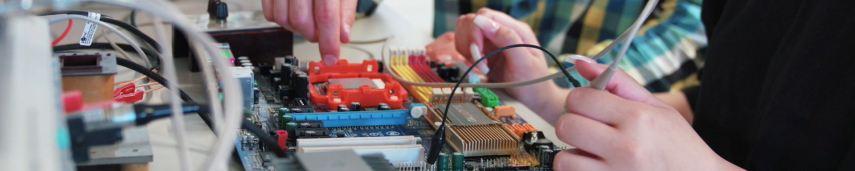
Among other things, various materials can be machined using different machine tools, welding work can be carried out and surfaces can be painted. Complete control cabinets or individual sections can be wired, electrical assemblies can be designed, electronic devices can be modified and small batches of printed circuit boards can be assembled.
Our staff are also happy to assist with planning, implementation and troubleshooting.
A wide range of electrical and electronic components is also available to university staff. In addition, the workshops of the Faculty of ET/IT work closely with the vocational training programme for electronics technicians for devices and systems.
The workshops currently employ twelve trainees.
Soldering Courses
The workshop offers practice-oriented soldering courses for its students and staff. The courses cover basic and advanced skills in working with electronic components and printed circuit boards. Further information on the soldering courses
Insights into the Workshops
-
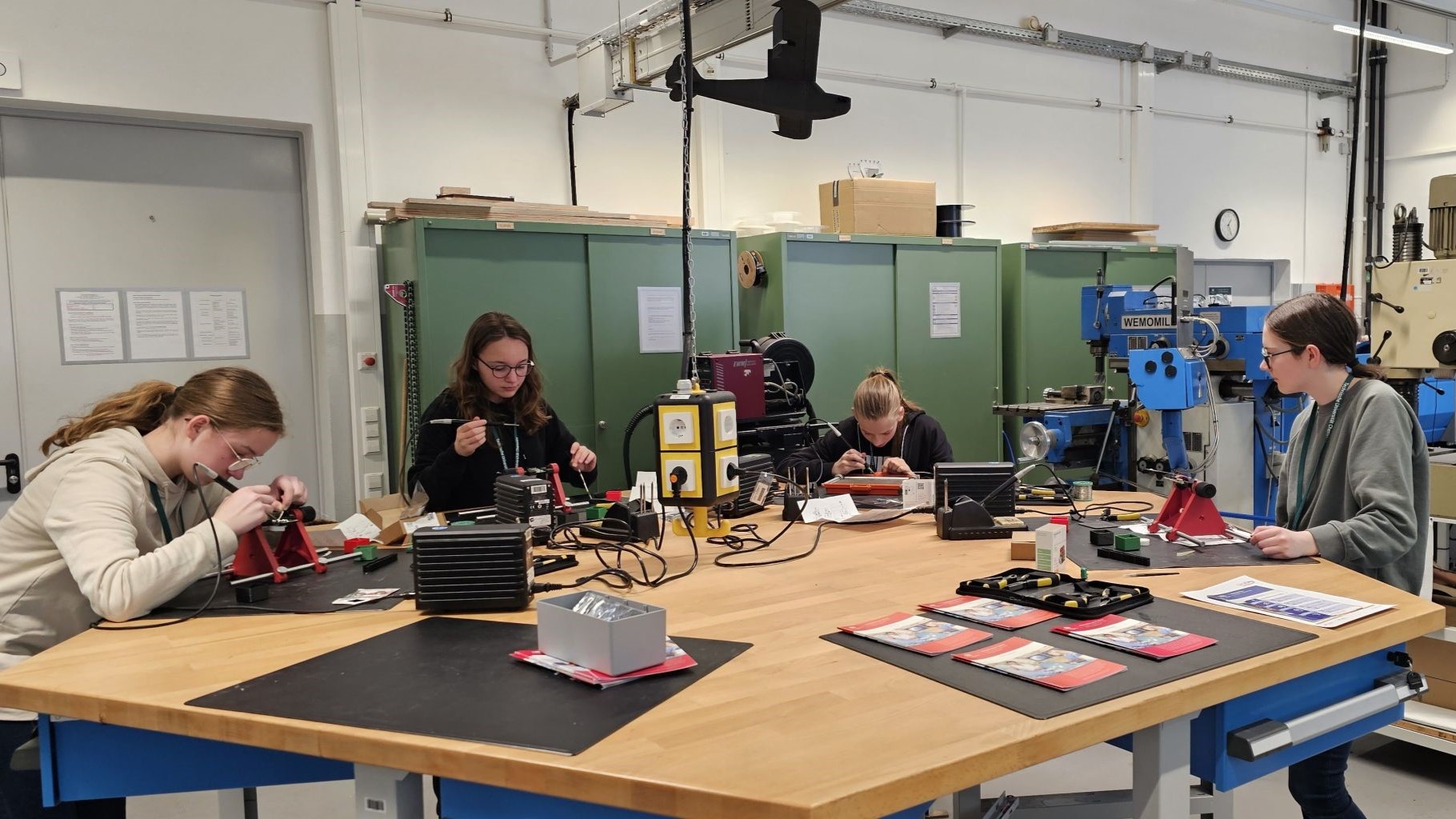
On the occasion of Girls’Day 2024, Lars Gebhard and Marc Opitz showed interested school students how welding and soldering work as part of their activity “Verstehen, was verbindet!”. The participants were able to take the figures they made home with them afterwards. (Photo: Susann Kappler) -
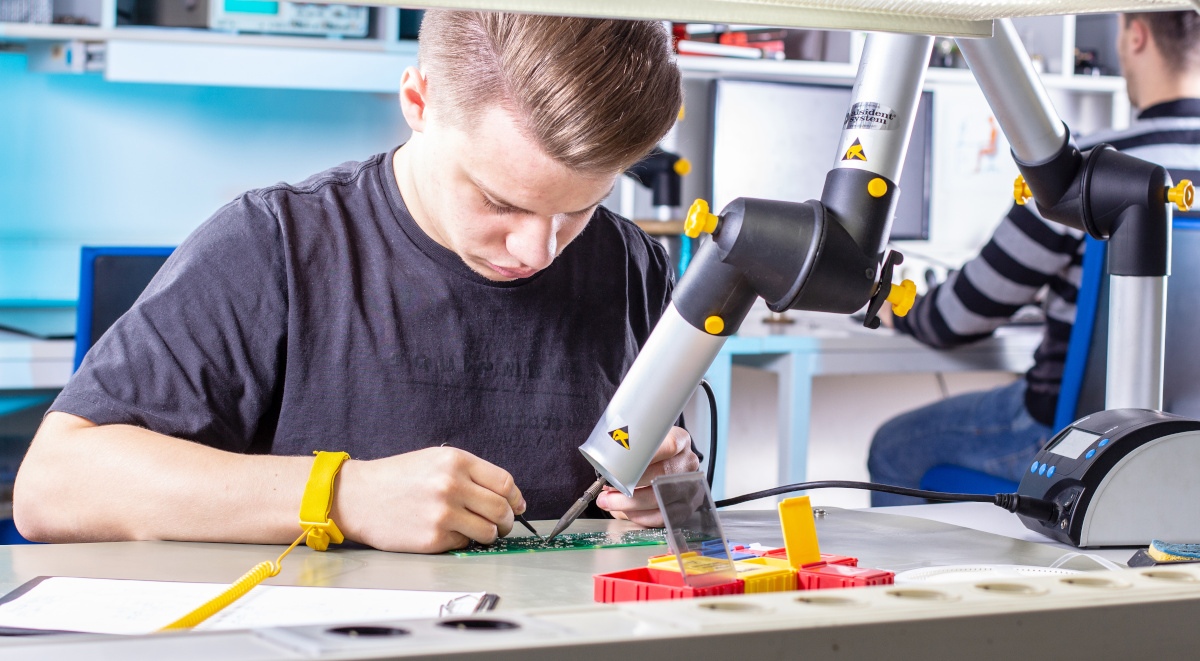
Training programme: Trainee Sarmatzki, soldering SMD components and featuring a solder extraction system, an ESD protection armlet, a tweezer, and a soldering station. -
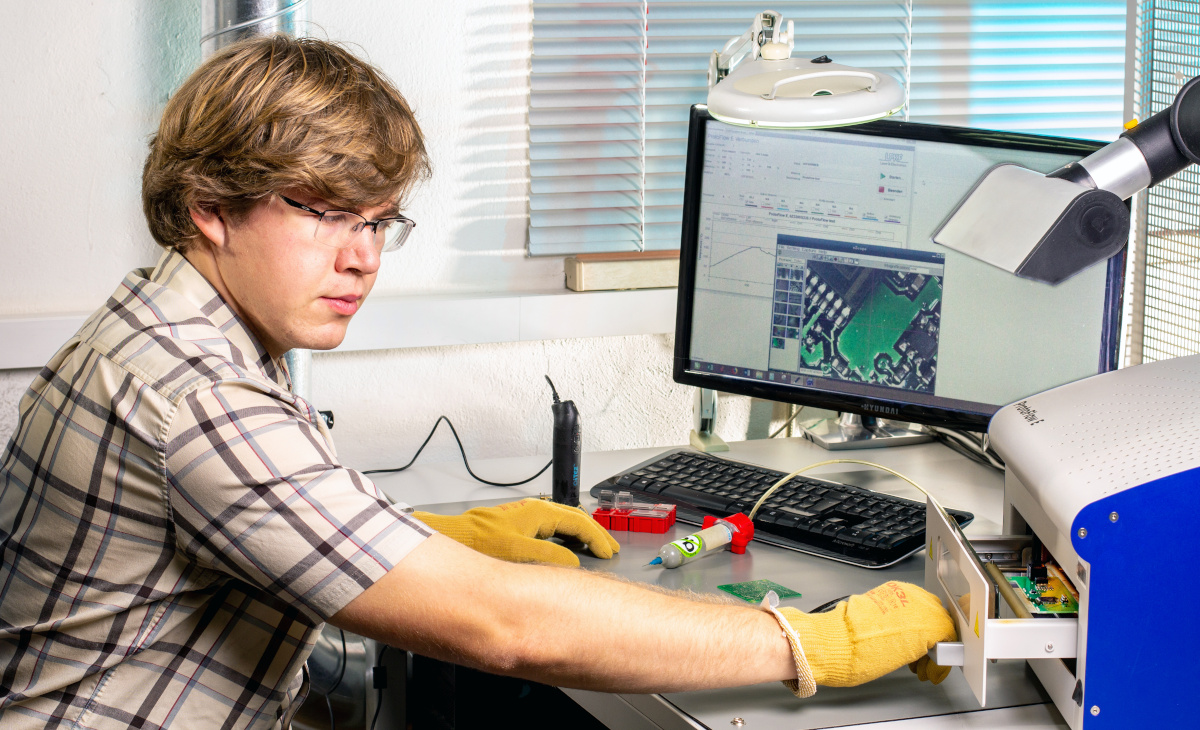
Training programme: Trainee Müller, assembling SMD components using a solder dispenser/reflow oven and USB microscope. After a brief instruction, this working place can also be used by university staff. Or an order is placed in such a way that the workshop staff or trainees will assemble your PCB. -
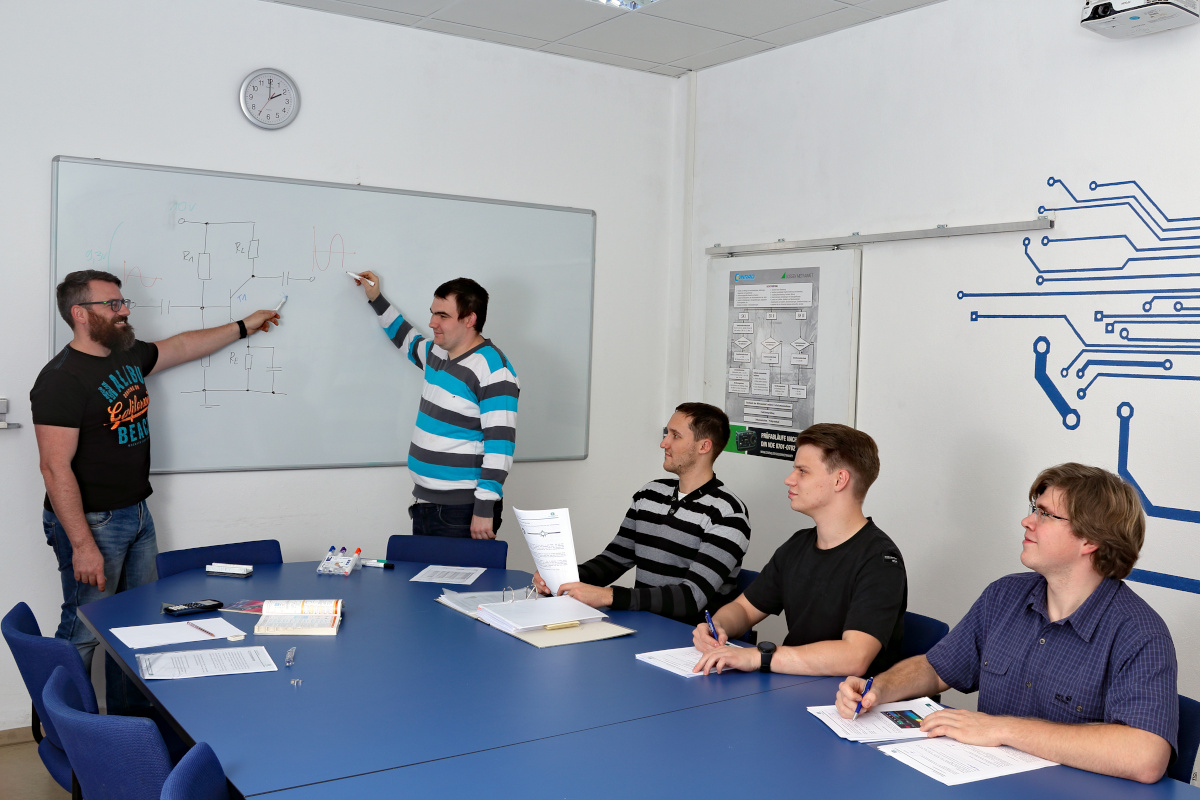
Training programme: Instructions for a transistor circuit during the second teaching year, by Lars Gebhardt. -
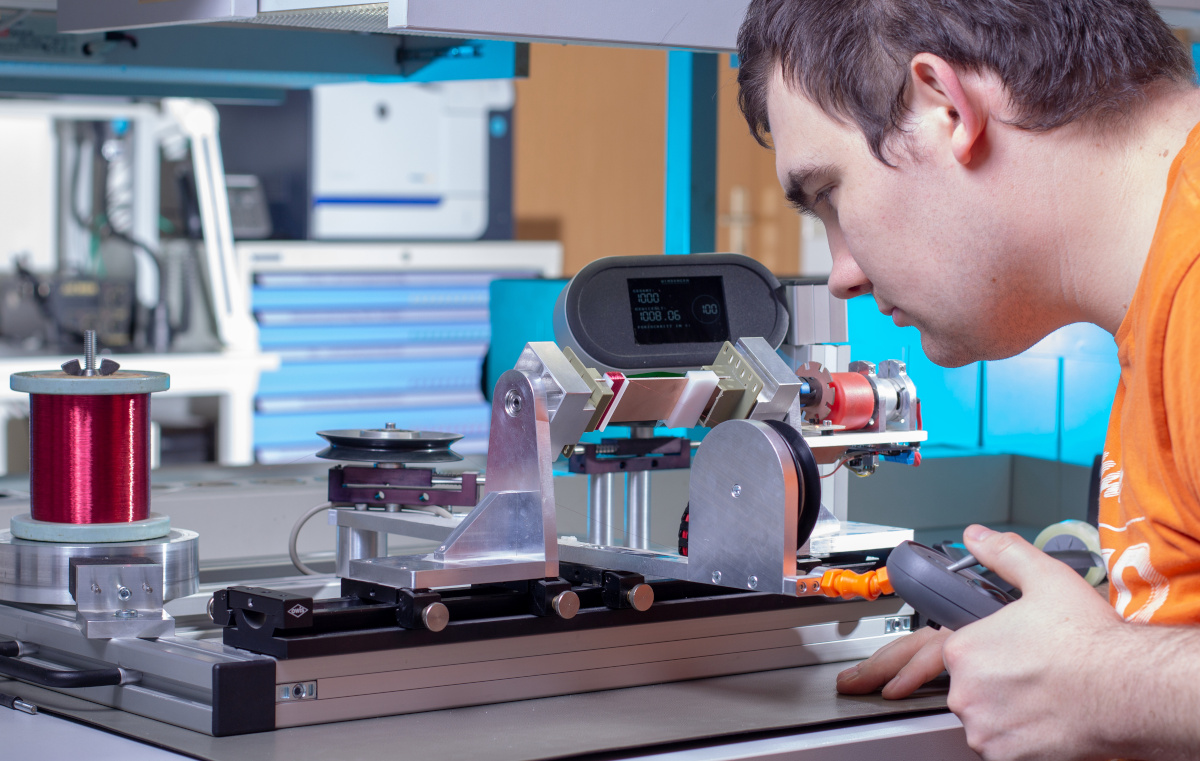
Training programme: Trainee Oberück, working at the self-made coiling machine. By placing an appropriate order, we are able to manufacture coils featuring wire diameters of 0.05mm up to 1.5mm. -
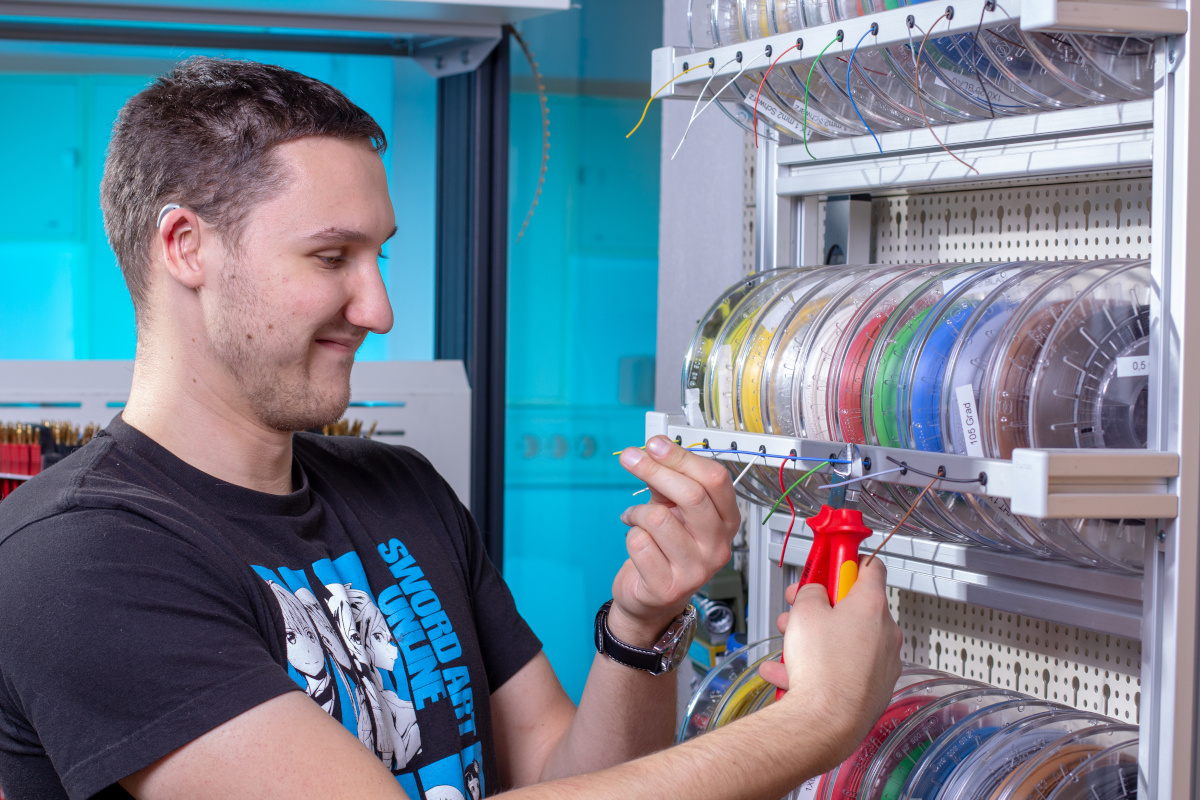
Training programme: Trainee Richter, working at a wire dispenser. The wires can be cut to any length and can be equipped with arbitrary connectors, depending on the order. -
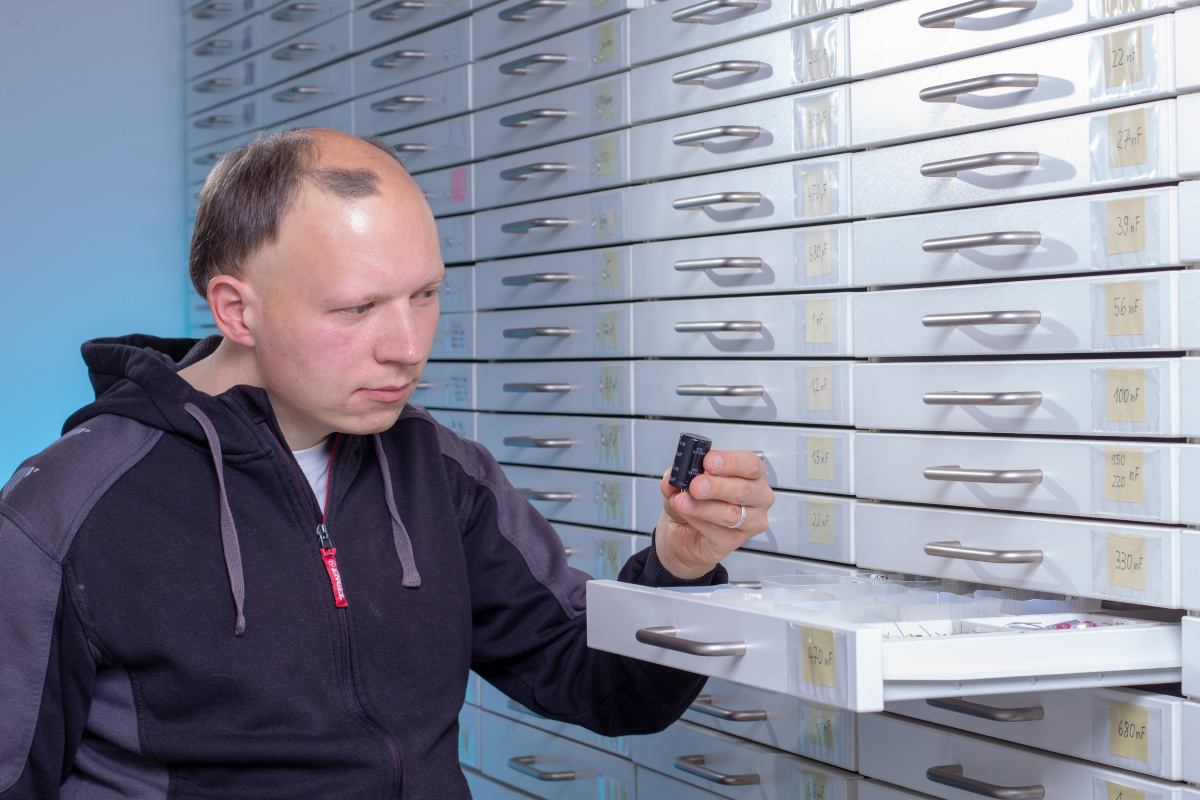
Workshop: Employee Alexander Lippmann, working in the component collection. To be able to process all orders continuously, we keep a small pool of electronical components and devices, and we can also quickly supply components to university staff. The pool features various transistors, resistors, diodes, capacitors, connectors, heatsinks, ICs as well as buttons and switches. -
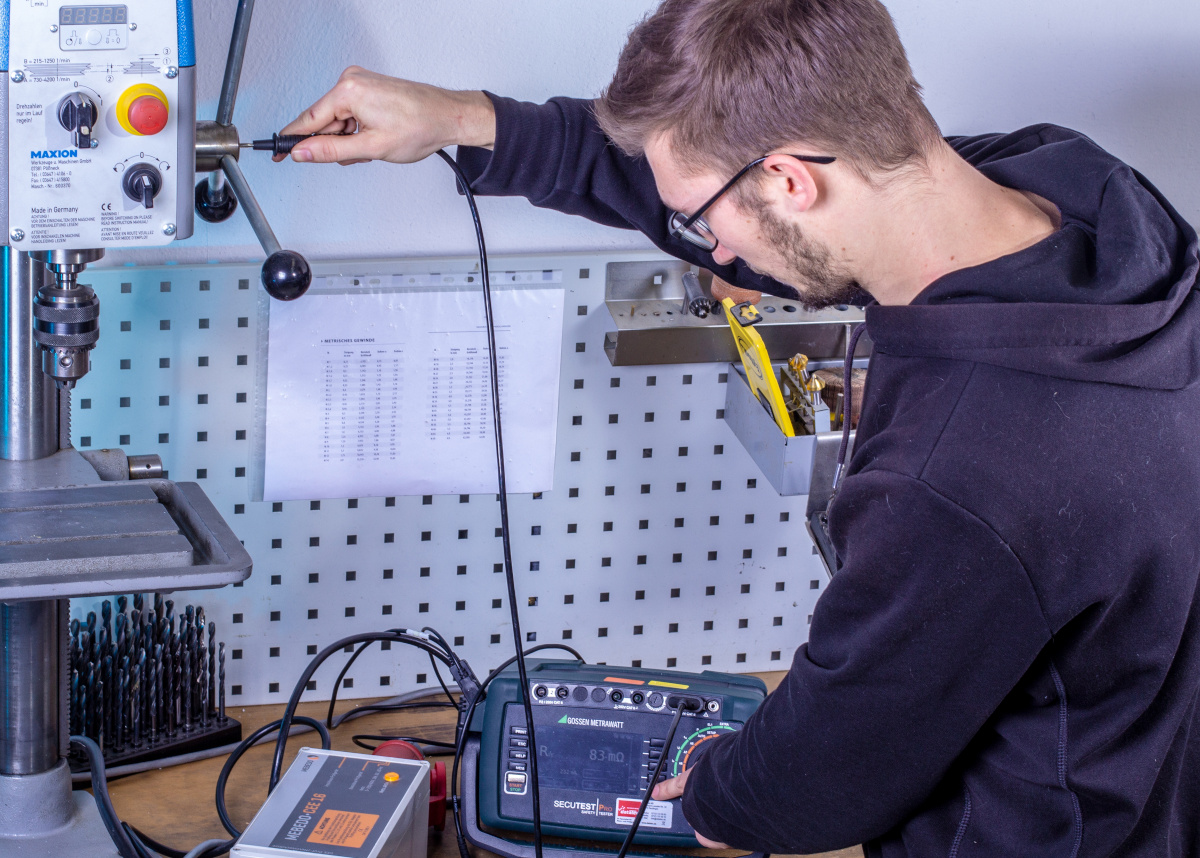
Workshop: Employee Marc Opitz, checking a device at a box column drill using norm DIN VDE 0701 0702. -
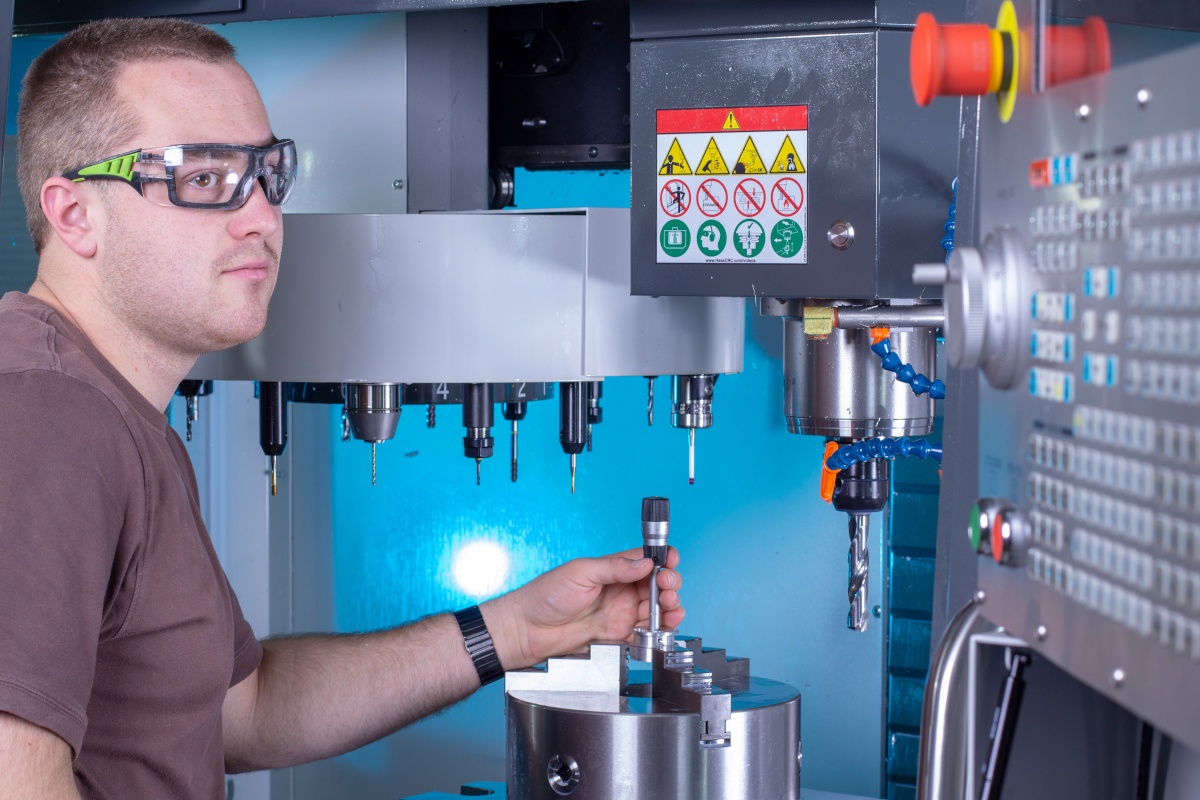
Workshop: Employee Toni Scheibe, working on our new 3-axis CNC milling machine (vertical machining center) and measuring mills. Highly complex 3-D parts, made of aluminium, steel, stainless steel or plastic, can be manufactured on this machine. -
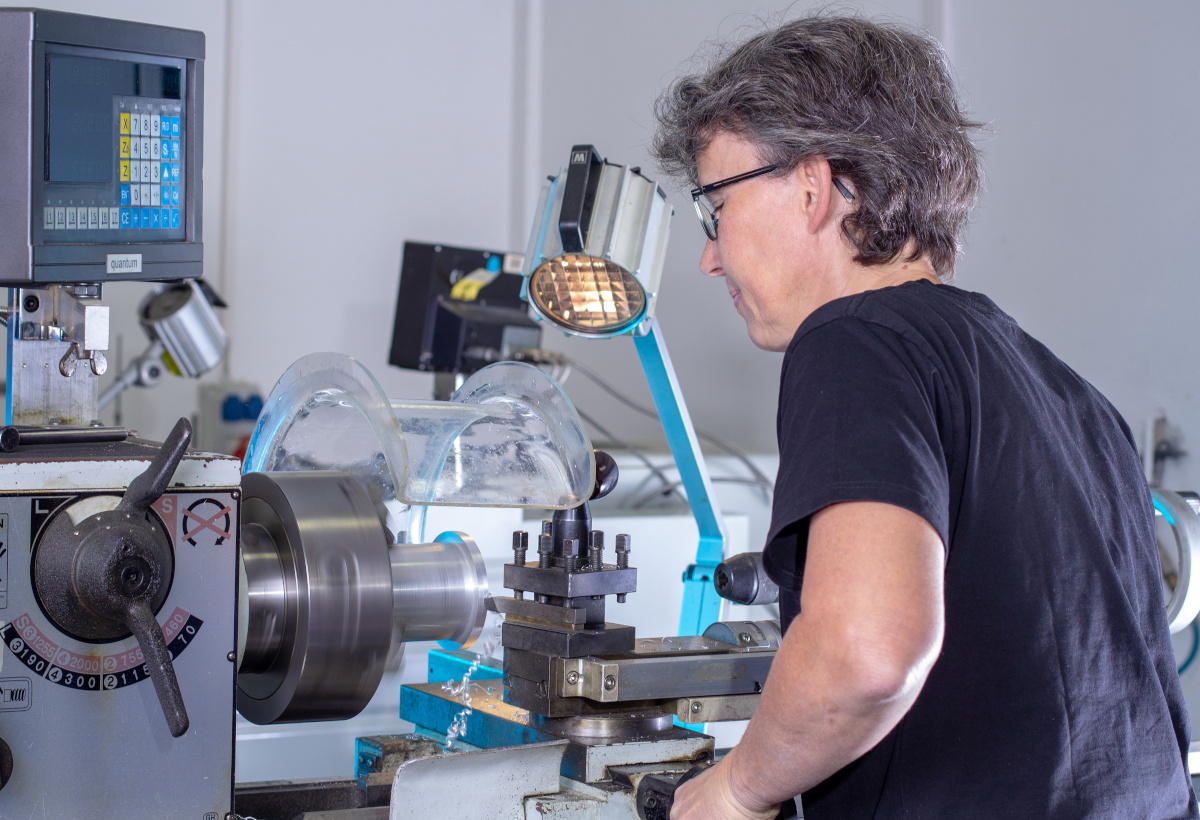
Workshop: Employee Anett Stark, working on an aluminium part using a lathe. -
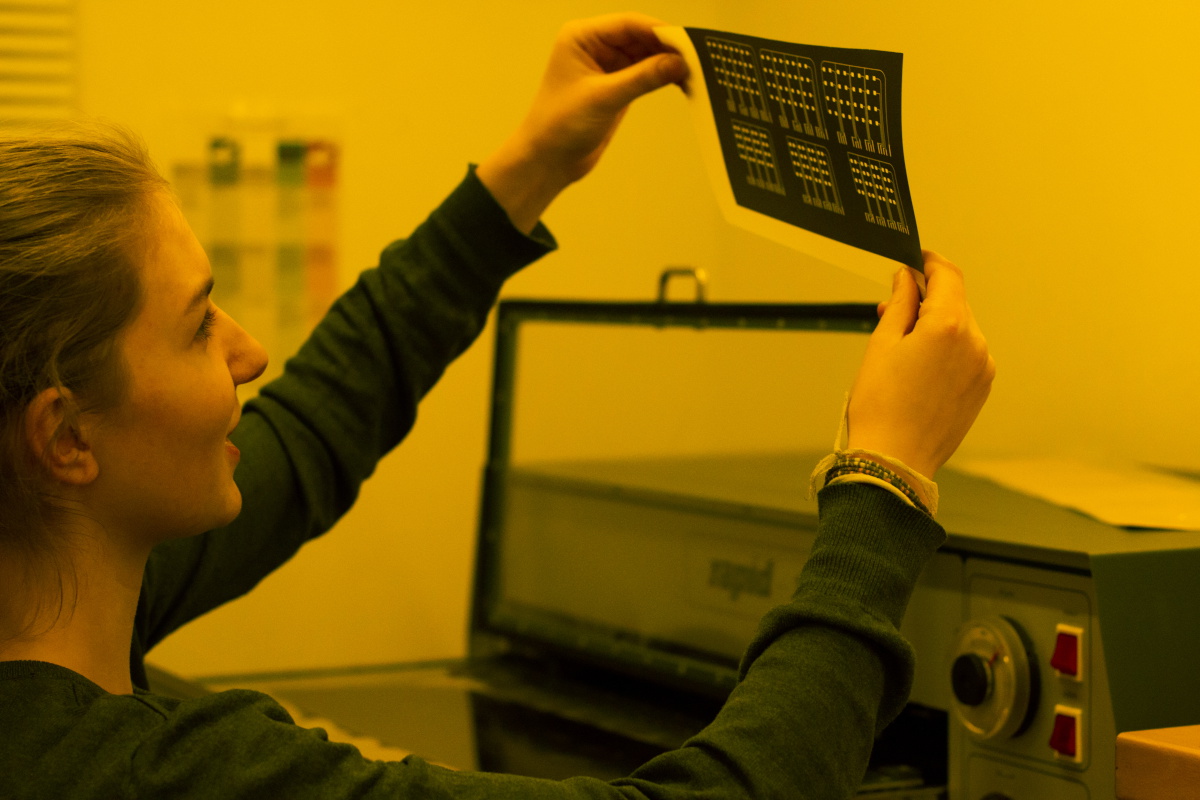
Training programme: Trainee Höß, working in the PCB fabrication. She is holding a layout sheet, which is transferred lithographically (UV light) onto a photosensitive layer on raw PCB material later.