
Home
Civil wars rage across the African continent, forcing waves of civilians to flee the violence in the hope of reaching a safer haven. In the Middle East, a region already on the verge of collapse after years of sectarian struggles and outside military interventions, the Islamic State grows like a malignant tumour. In the Far East, tensions grow as emerging powers and superpowers struggle for domination in the South China Sea and the Indian Ocean, and even in Europe old frozen conflicts have re-emerged as the Russian bear flexes its claws.
In an increasingly multipolar world, the European values of liberal democratic approaches and pacifism are being drawn into question. Is it time for a more realistic and honest approach to the refugee crisis, or can a solution be found that does not sacrifice our humanitarian ideals? Will the crisis prompt a UN resolution? Is it even possible to circumnavigate the Russian veto in the Security Council, by means of diplomacy or trickery, as needed to peacefully resolve the situation, or will sovereign states and alliances remain the major arbiters of peace... or war? Will economic sanctions and diplomatic interactions really suffice to save the Ukraine?
Although the nature, cause and course of these conflicts vary, the nature of our responses must face the same dilemma - do we strive for an idealistic, or a realistic approach. Do we rely on our ideals to guide our policy, or do we forsake them for an approach that promises realistic results. Perhaps the only way to deal with the world as it is, without losing the ideals refined over millennia, or risking the stability we have achieved, is to think in terms of idealism as the goal we strive towards, while realism dictates the road we take to reach it.
Start in winter term 2026/2027: Chemnitz University of Technology invites all “Firstis” cordially to the Enrolment and Initiation Celebration Act on October 9, 2026 – registration possible until the day before …
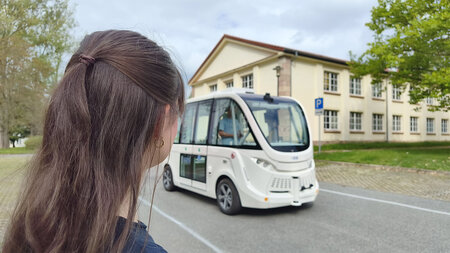
Joint studies by TU Chemnitz and TU Berlin investigate how vehicle mode, speed, and braking behaviour influence interactions with an automated shuttle …
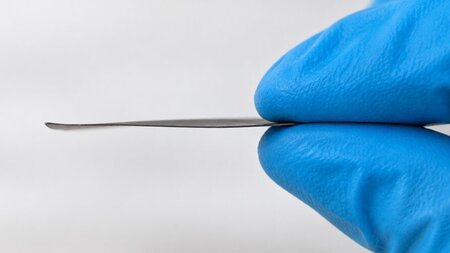
Researchers at TU Chemnitz have developed a flexible nanocomposite film that can both generate electrical energy and measure pressure. …
EFRE project "MARS – Modeling Labor Market Shifts in Südwestfalen" at the Chair of Microeconomics of Chemnitz University of Technology has started …
O2DCs are chemically programmable 2D crystals for electronics and quantum …
New students are greeted each year at the beginning of the winter semester in a cherished …
The TUCgraduate Day brings together prospective doctoral candidates, doctoral researchers, …
Get with us in the mood of Christmas with our festive program for young and old alike.