Jump to main content
Department of mechanical engineering
Laboratories
Department of mechanical engineering 

The labs for numerical und experimental works

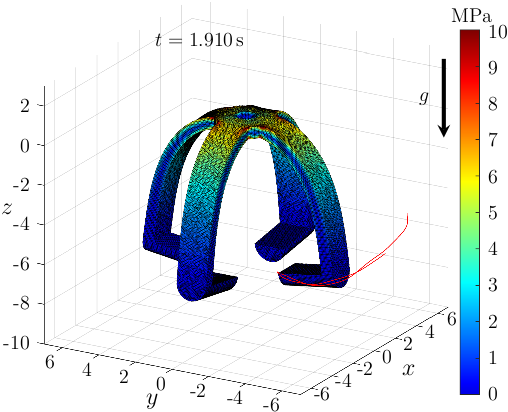
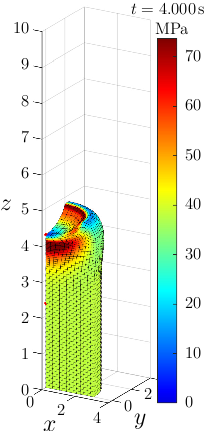
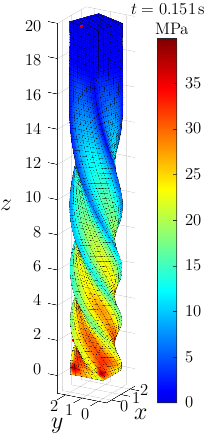
Dynamic FE simulation of thermo-mechanical coupling in flexible structures und fluids
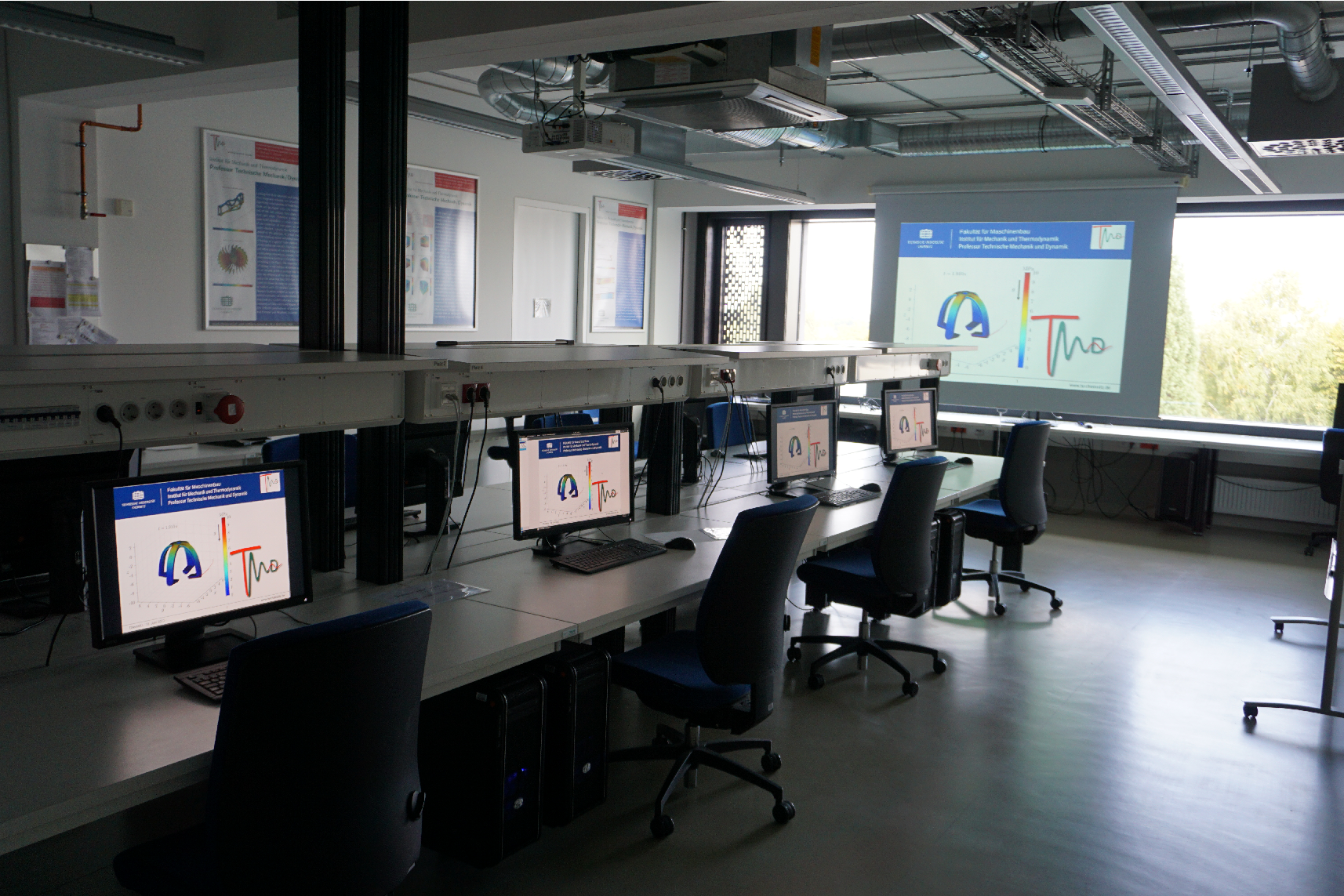
The numerical simulation laboratory is where the numerical practicals for our courses are held. Here, students implement program solutions to eigenvalue problems, linear equations of motion in matrix form, as well as linear and nonlinear finite element methods in space and time for rigid and deformable bodies. The students are given a starting routine, which is completed in the course. In this way, students learn the basic procedure for solving motion equations of all kinds and can better understand the background of commercial software packages. However, the development of new algorithms for finite element (FE) simulation of new problems can also be learned in student projects.
The development of new algorithms for mechanical problems in student projects and research projects is the second way in which our workstations are used in the numerical simulation laboratory. These are new developments that have not yet found their way into commercial software packages, but are necessary for novel problems and for further development. In this laboratory, the staff of the professorship have the opportunity to carry out dynamic long-term simulations efficiently and without interruption.

Test rig of a rotating heat pipe: Research into innovative cooling devices for rotating bodies
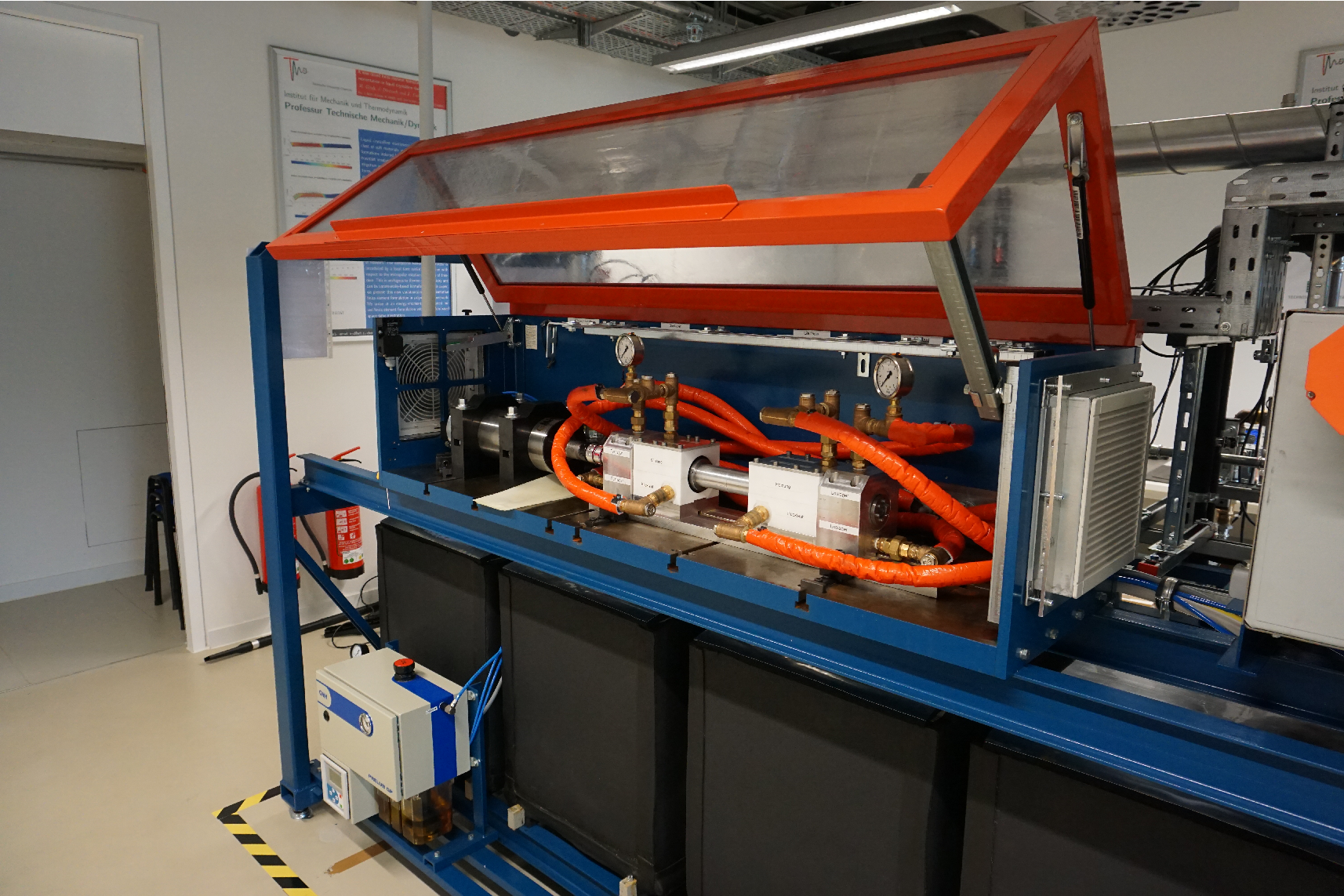
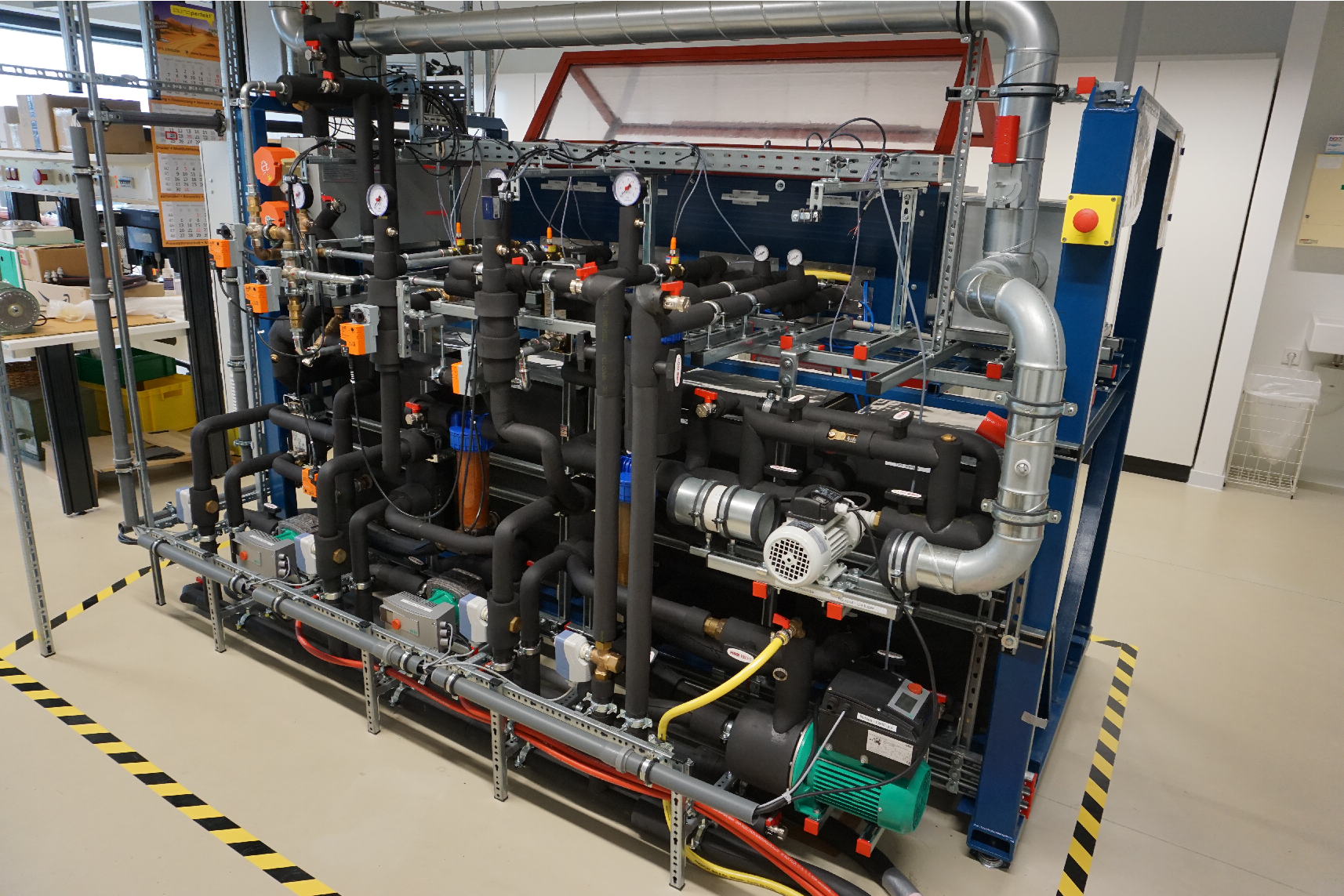
A rotating heat pipe is being constructed in the applied mechanics laboratory to research an innovative cooling method for rotating bodies. The heat pipe consists of a hollow shaft with an inner cone made of light metal or copper. The bearing consists of a hydrodynamic plain bearing based on distilled water. Heat is introduced into the pipe on one side using distilled water. On the other side of the pipe, the heat is also dissipated from the pipe into a heat sink via distilled water. The heat source is ultimately a heating unit and the heat sink a cooling unit, which regulate the temperature of the distilled water tanks. The pipe is driven by a machine tool spindle with oil mist lubrication, water cooling, and a maximum speed of 40,000 rpm. The operation of the pipe is protected by a safety glass cover (see illustration).
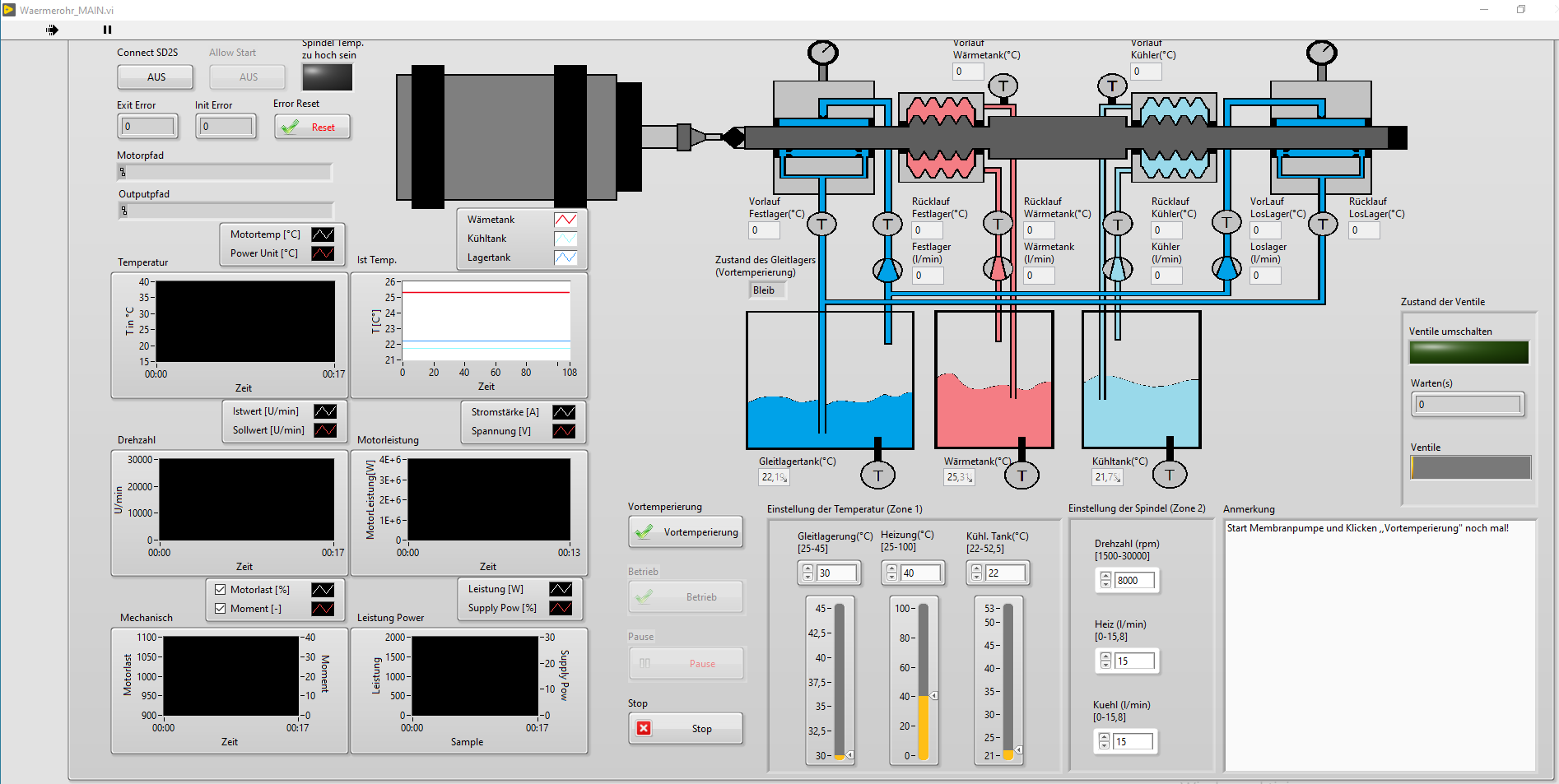
The complex hydraulics required are visible on the rear of the heat pipe. Four tanks of distilled water are provided for operation. The distilled water is intended as a base fluid for nanoparticles, so that the use of nanofluids can also be investigated on this test bench. The tanks are connected to the heat pipe by pipes via valves and pumps. One tank is intended for the hydrodynamic slide bearing of the tube and two tanks for heating and cooling, respectively. A fourth tank is necessary for cooling the spindle. The control and monitoring of each individual component is carried out electronically via a single laboratory computer (see figure). The software was developed by staff and students.

Dynamic investigations of rigid and flexible structures as well as nanofluids
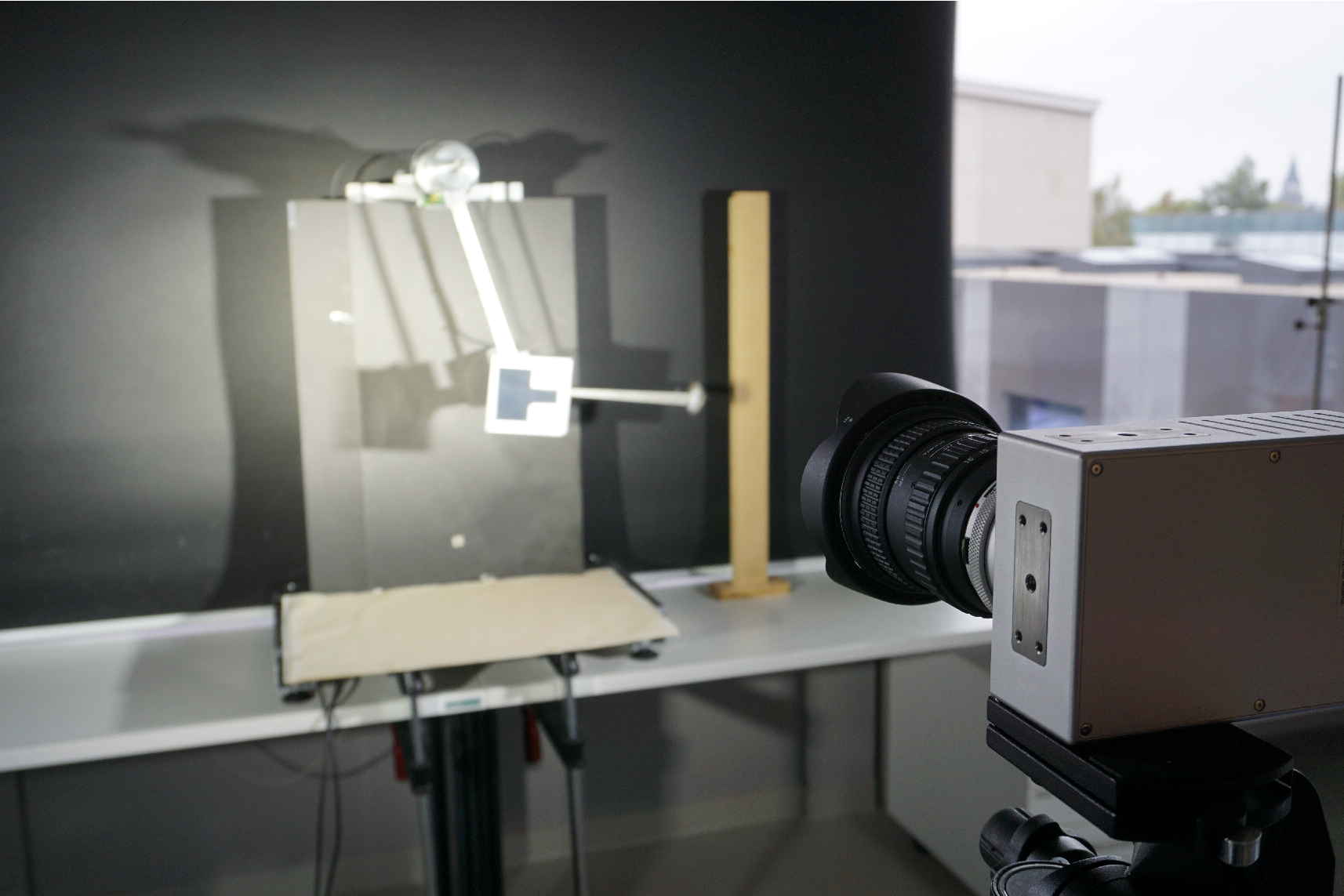
The applied dynamics laboratory investigates linear and nonlinear vibrations in quasi-rigid and flexible bodies as well as nanofluids. Students designed and researched a double pendulum test rig to describe the vibrations of quasi-rigid bodies and to experimentally validate numerical dynamic simulations with variational and physically consistent simulations. With this test bench, the movements of the double pendulum are recorded using a high-speed camera and converted into generalized coordinate trajectories using software developed in-house.
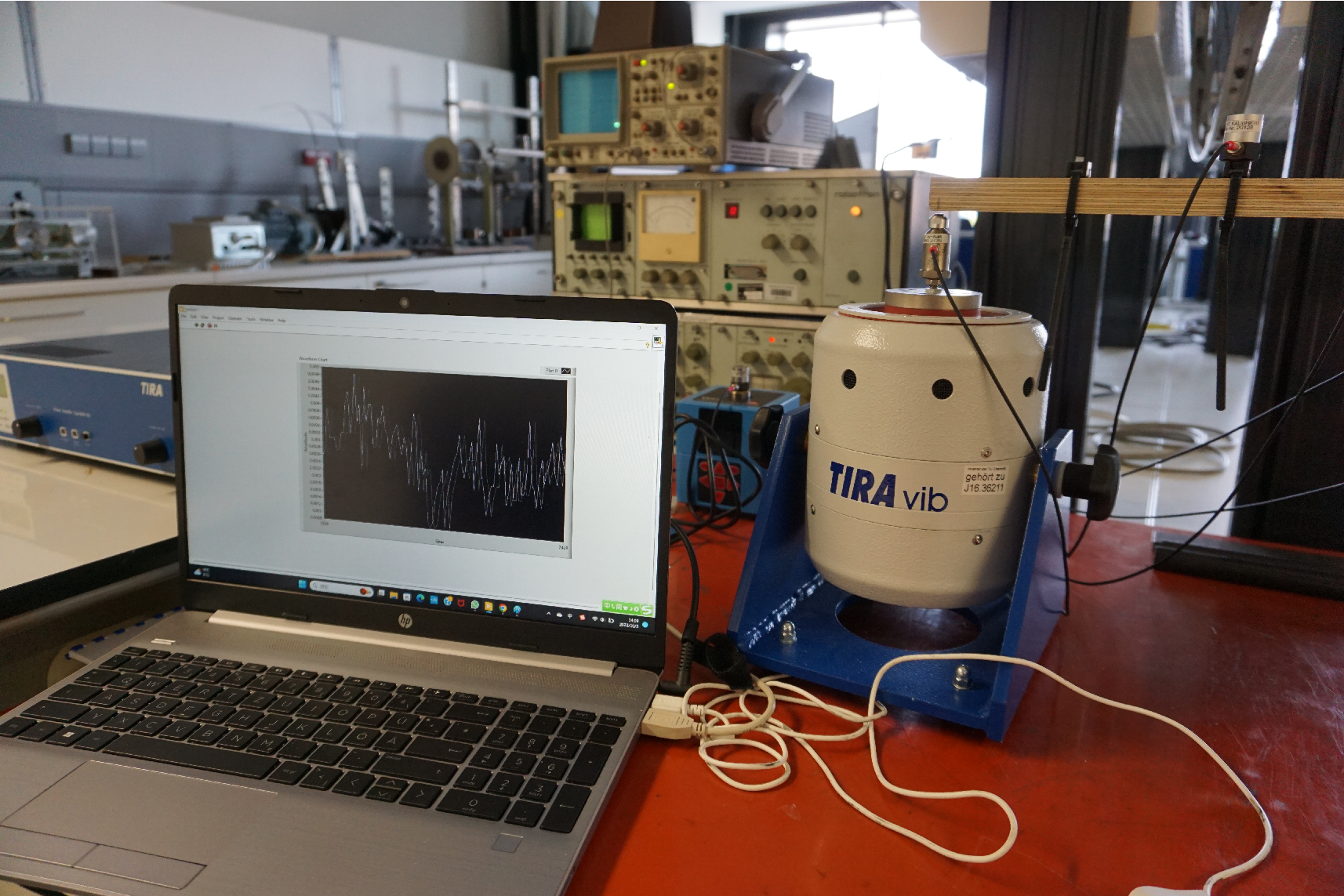
Vibrations in flexible bodies made of wood and fiber composite materials are investigated using a beam test bench with fixed bearings. Here, damping models for natural and artificial fibers can be developed. The vibrations are recorded using piezoelectric acceleration sensors and excitation is introduced via a vibration pot connected to a function generator. The measurement data is recorded via Labview using a laptop.
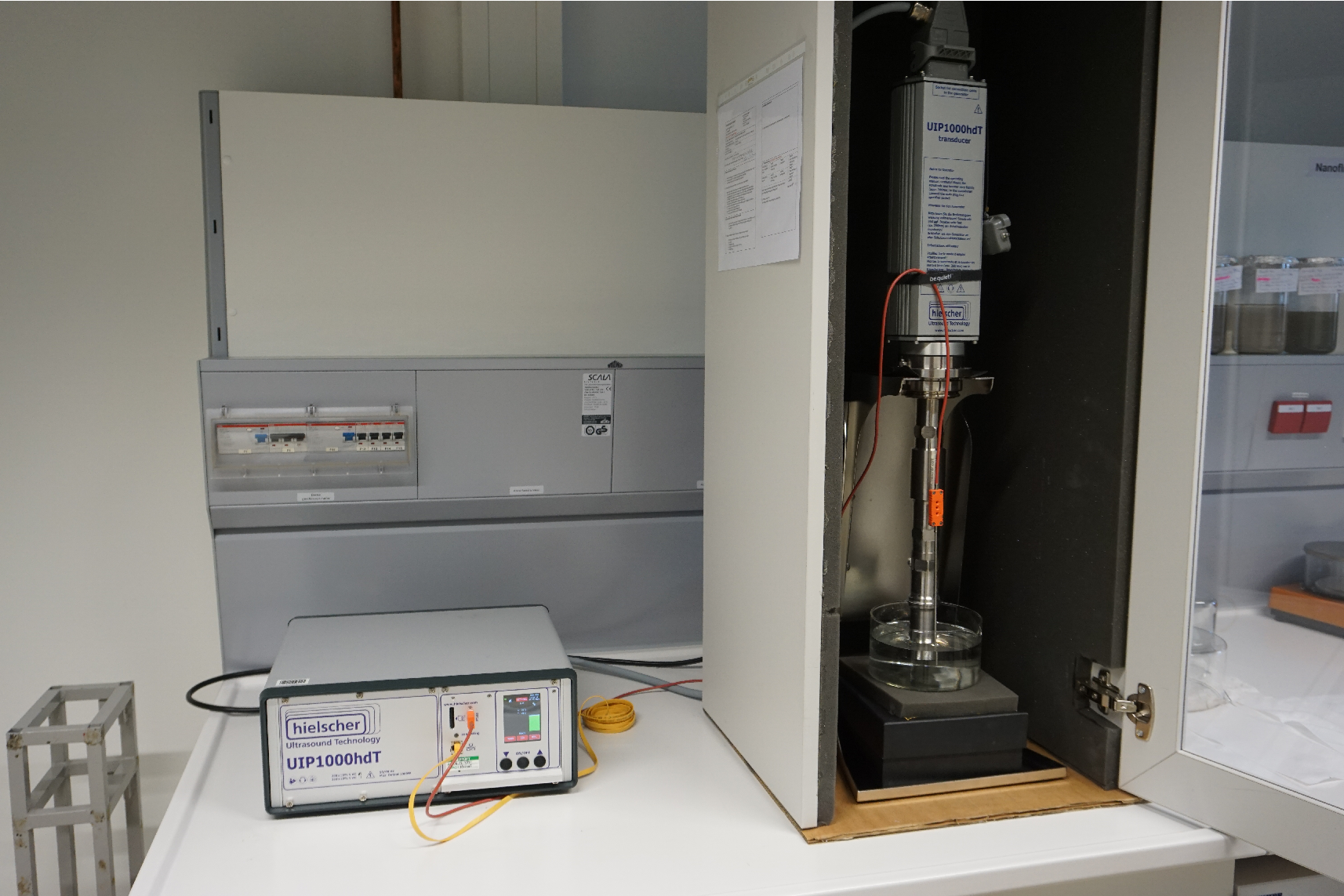
In this laboratory, nanofluids are also produced using an ultrasonic homogenizer and are to be investigated in a test bench developed in-house. Nanofluids can optimize the behavior of a hydrodynamic plain bearing and improve heat conduction in a rotating heat pipe. For this purpose, fluid vibrations with nanoparticles are to be investigated experimentally this new test bench.

Development and construction of dynamic test benches and computing systems for simulations
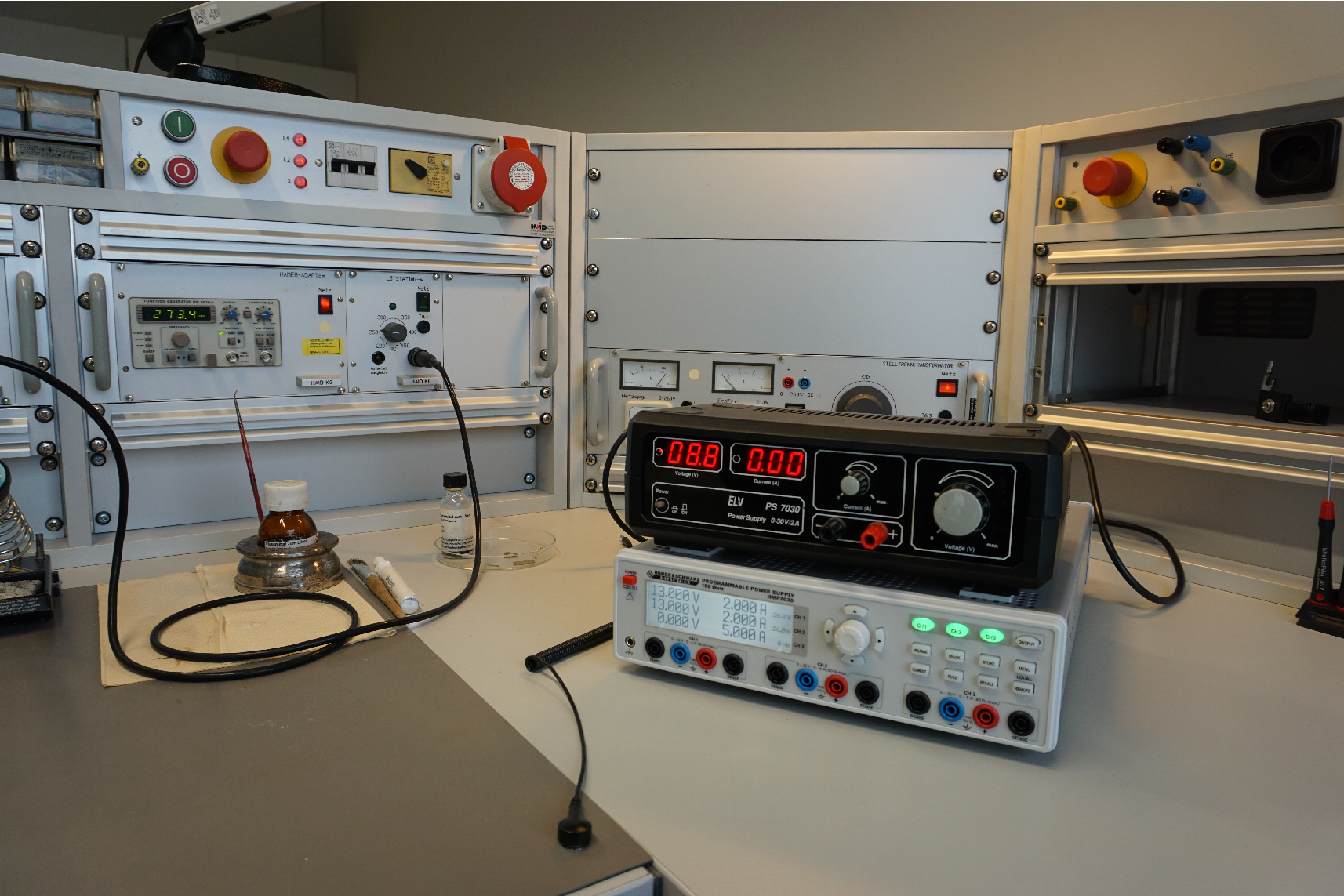
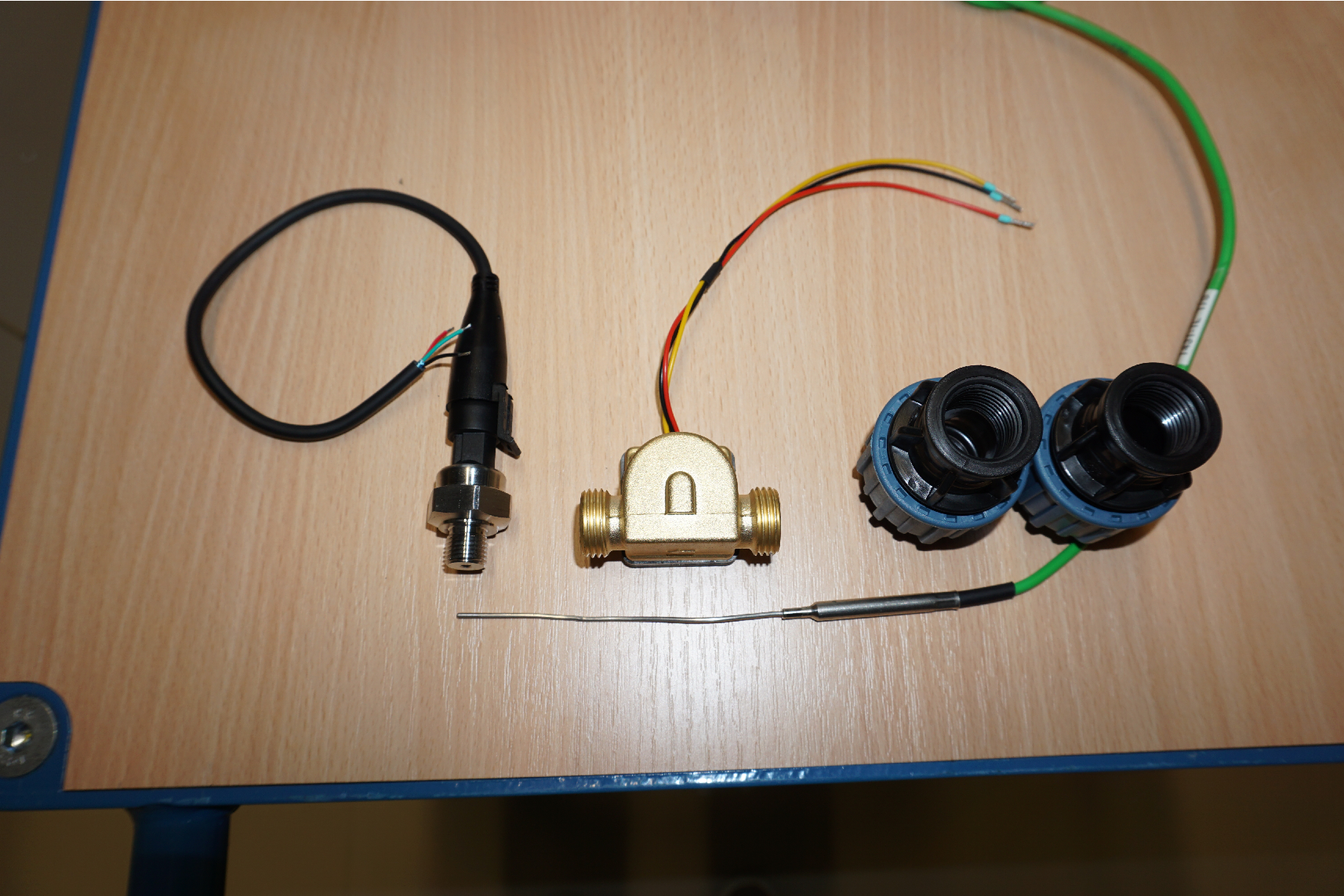
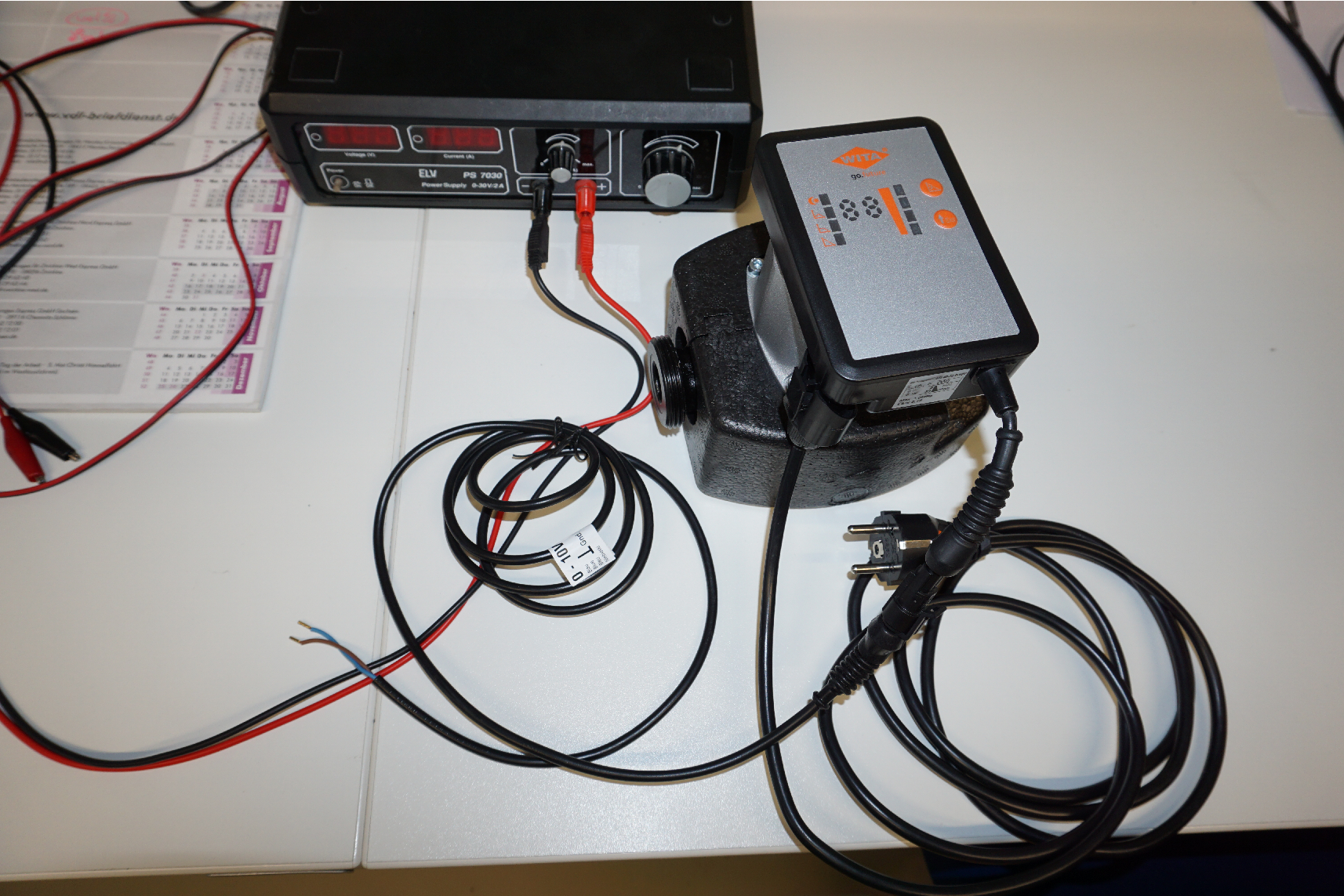
New test benches are developed and constructed in the measurement and testing technology laboratory. These are predominantly mechatronic systems in which electrical sensors and actuators must be installed and tested. These developments are carried out by staff and students and are mainly addressed in student projects. The workstations for the numerical simulation laboratory are also assembled from individual components in this laboratory. Currently, a new test bench for researching the dynamics of nanoparticles in fluids is being developed as part of a student project in the field of mechatronics (see figure). Nanoparticles can help to minimize friction and to increase heat conduction in fluids.

Social Media

Connect with Us: