News

At the 12th International Conference on High Temperature Ceramic Matrix Composites (HTCMC-12), held in San Diego (USA) from May 31 to June 5, 2026, Jonas Stiller presented his latest research findings. HTCMC is considered the world’s largest conference in the field of ceramic matrix composites and regularly brings together researchers and industry representatives from around the globe.
In an invited talk titled “Thermoset Injection Molding as a Shaping Technology within the Liquid Silicon Infiltration (LSI) Route for the Manufacturing of C/C-SiC Composites,” Jonas Stiller also presented the findings of his research in the context of the EU SAFER project. The presentation focused on the potential of thermoset injection molding as a shaping technology within the LSI process chain and the opportunities it offers for the efficient production of geometrically complex components.

On February 19, 2026, the partners of the SAFER research project met at VŠB – Technical University of Ostrava. The partners from Germany and the Czech Republic came together for an in-person meeting to review the latest research results, discuss ongoing challenges, and coordinate the next steps of the project.
Life cycle assessment (LCA) was a key topic of the meeting. The results presented indicate that the service life of brake discs decreases by approximately 10% when recycled powder is used as an additional matrix component. One reason for this reduction is that the mechanical properties of the components do not reach the level achieved by materials produced exclusively from primary raw materials. In contrast, incorporating self-healing properties can extend the service life of the brake discs by approximately 25%.
The SAFER consortium would like to thank VŠB – Technical University of Ostrava for hosting the meeting and all participants for the constructive exchange and valuable contributions to the development of durable and sustainable ceramic composite materials.

At the XIX Conference of the European Ceramic Society from 31.08. to 04.09.2025 in Dresden, scientific assistant Jonas Stiller presented our internally ventilated ceramic brake disc demonstrator (C/C-SiC) that is the result of the EU project SAFER. The speech titled “Lost Epoxy Cores Enable Enhanced Design Flexibility in Shaping of C/C-SiC Composites” received a good feedback by the expert’s audience.
A special highlight was the “Universal Druckluft Orchester” (Universal Compressed Air Orchestra), a one-man band that made the researchers dance after the conference dinner. The ECerS conference was framed by the 100th DKG Annual Meeting on Sunday and the Working Group on Reinforcement of Ceramic Materials on Friday at Fraunhofer IKTS.

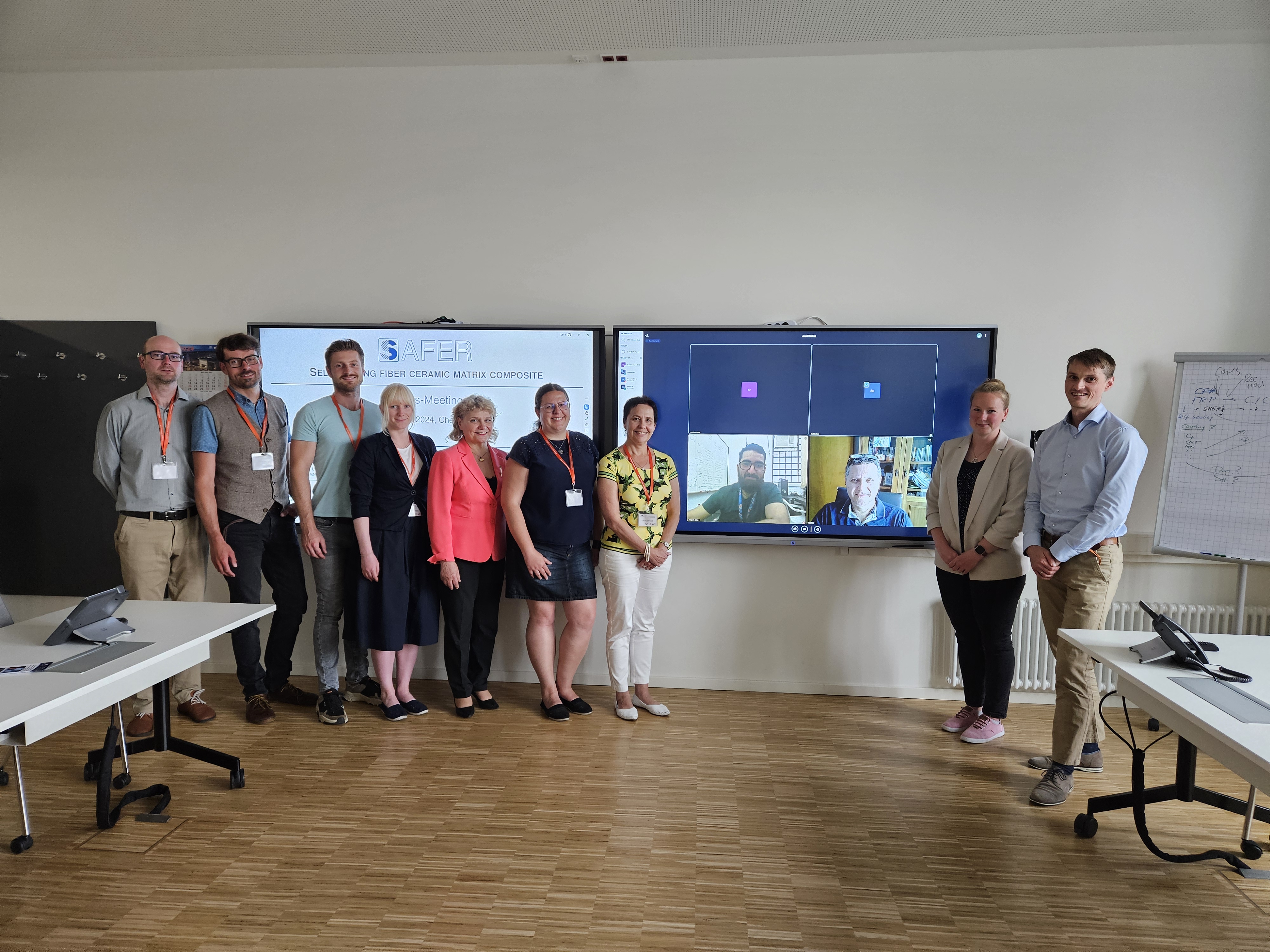
On June 24, 2025, the fourth coordination meeting of the EU project SAFER take place at Chemnitz University of Technology. Project partners from the Czech Republic, Brazil, and Germany joined the hybrid meeting to review current project results, discuss existing challenges, and identify areas requiring further investigation.
A major focus of the meeting was the optimisation of the injection moulding process. The investigated samples showed high porosity, with insufficient material compaction during processing discussed as a possible cause. These material inhomogeneities are also relevant to further investigations of the brake discs. Although the brake discs were successfully ground using diamond abrasives and prepared for subsequent testing, a more uniform material quality must be ensured to obtain reliable results on the test bench.
The project partners also discussed the development of self-healing mechanisms. The discussions addressed the conditions required for effective self-healing and how the different matrix constituents respond to the temperatures and environmental conditions encountered during manufacturing. Understanding these effects is important for further optimising the material composition and manufacturing processes and improving the self-healing properties of the brake discs.
The SAFER consortium thanks all participants for the constructive exchange and their valuable contributions to the development of durable and sustainable ceramic composite materials.

At the beginning of April 2025, the Institute of Materials Science and Engineering welcomed participants to the 24th edition of the Materials Technology Colloquium at the Central Lecture Hall and Seminar Building of Chemnitz University of Technology. The event covered a wide range of topics, including surface engineering, materials development, joining and manufacturing technologies, additive manufacturing, composites and hybrid materials, material behaviour and analysis, as well as human-centred digitalisation. These topics attracted around 220 participants.
Jonas Stiller presented research on the use of sacrificial cores in the manufacturing of black ceramics, a topic being investigated within the EU-funded SAFER project.
The organisers rewarded the considerable efforts involved in preparing the event with unique pralines inspired by the colloquium and Chemnitz's role as European Capital of Culture 2025. The evening event offered further culinary highlights and provided an opportunity to reconnect with familiar faces and enjoy a sociable evening together.
A particularly interesting lecture on the transformation of Chemnitz over the past 30 years, compared with other European industrial cities, provided an excellent programme for the evening.
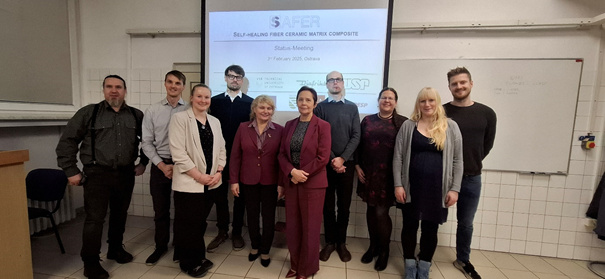
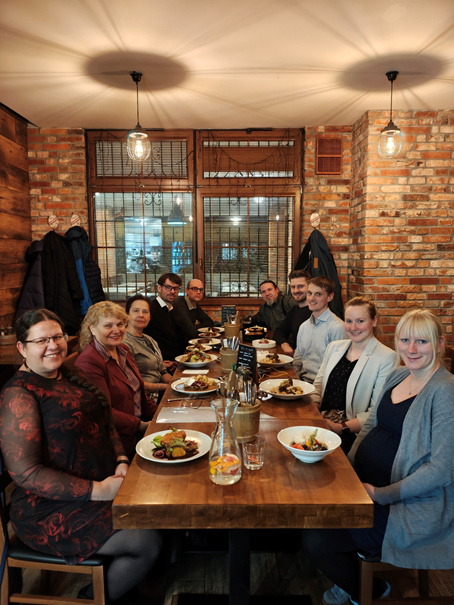
On February 3rd, 2025, the third coordination meeting of the EU project SAFER took place at VŠB – Technical University of Ostrava. Project partners from Brazil, Germany, and the Czech Republic came together to reflect on current progress, present key research results, and coordinate the next steps.
The meeting focused on self-healing mechanisms, manufacturing technologies, and the integration of Responsible Research and Innovation (RRI) aspects. In-depth technical discussions addressed the latest findings in material development and their implementation in application-oriented solutions.
A particular highlight was the presentation of the CAD model for the brake disc demonstrator. The model clearly illustrated the project’s core developments and served as a foundation for further considerations regarding component design, manufacturing, and functionality.
The day concluded with a joint dinner in a relaxed atmosphere, providing a valuable opportunity for informal exchange and further strengthening of international collaboration.
The SAFER consortium would like to thank the Technical University of Ostrava for the excellent organization and all participants for their active contribution to the success of the meeting.
Further information on the EU-Project SAFER are published on LinkedIn.
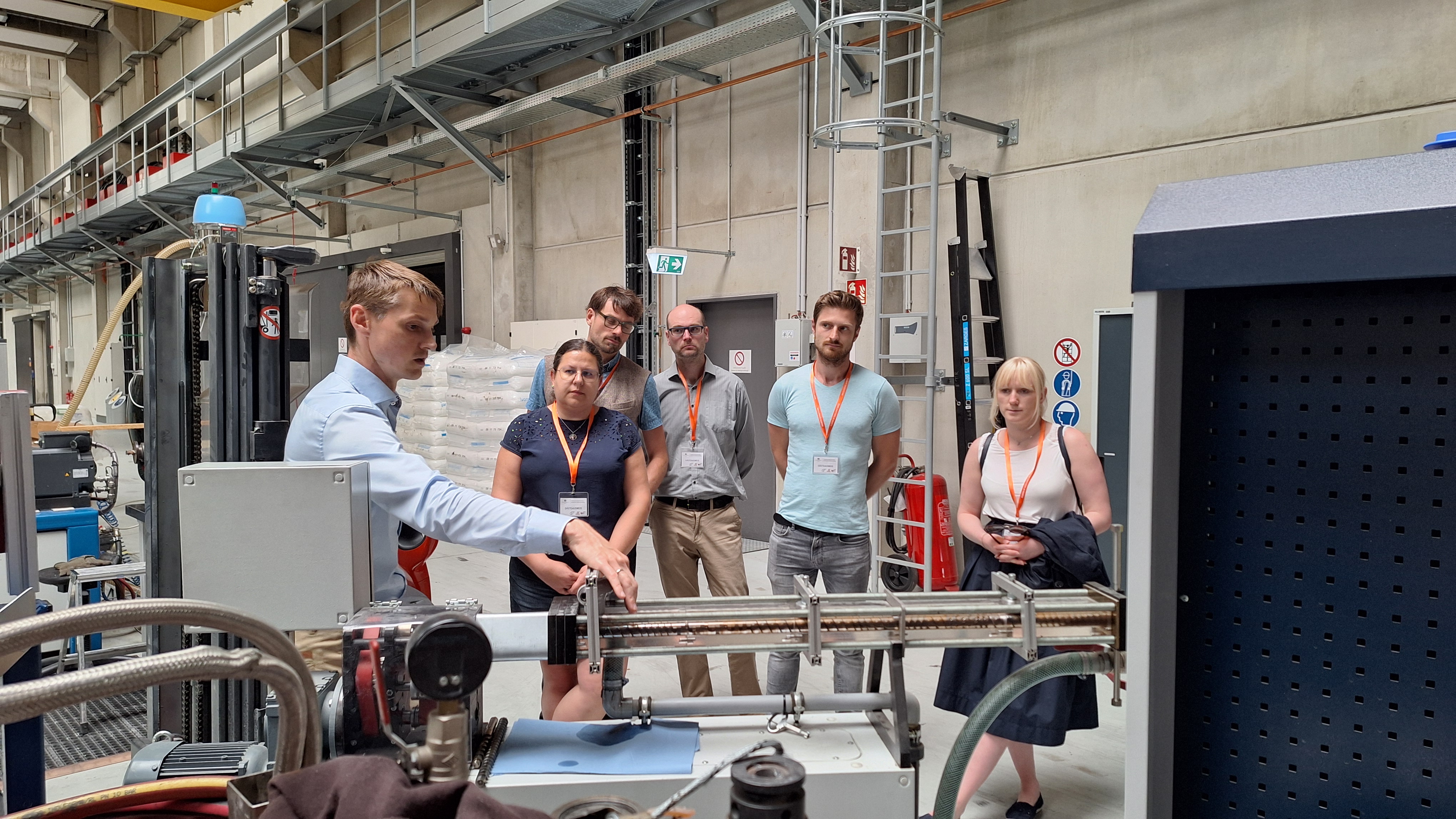
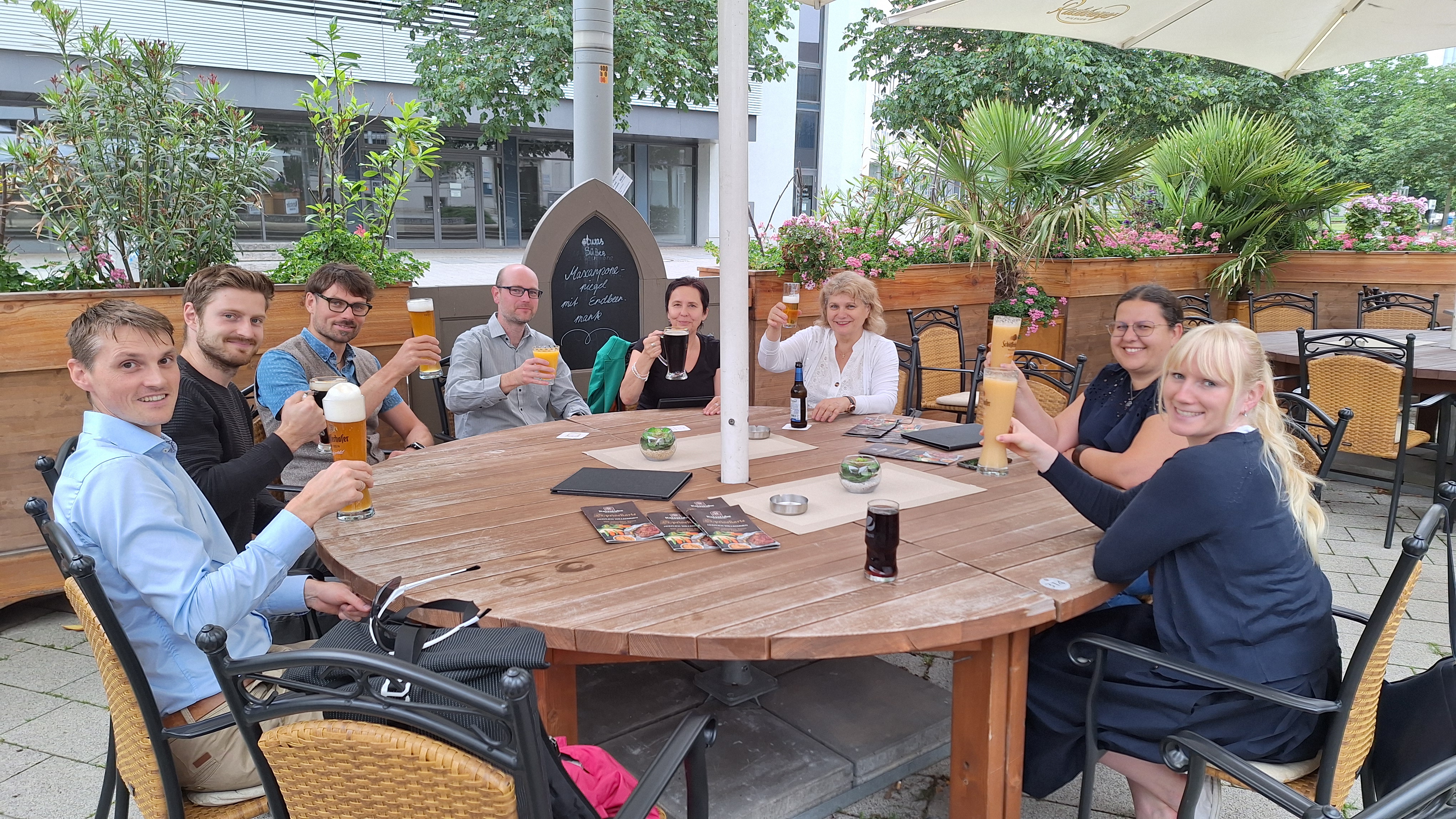
On 20 June 2023, a productive meeting of the EU project "SAFER" took place at Chemnitz University of Technology. The meeting provided an excellent opportunity to exchange ideas and discuss various project contents, focusing on key areas such as the self-healing of non-oxide ceramic composites (CMC) with special consideration of matrix and carbon fibres, the use of recycled materials, and life cycle assessment.
The consortium presented the current status of the project as well as innovative methods to enhance the durability and longevity of the CMC materials through self-healing mechanisms. Discussions also included the implementation of recycled materials to promote sustainability and reduce environmental impact. The assessment of the environmental footprint of our materials and processes was also discussed to ensure high sustainability standards.
As part of the visit, the SAFER-project team had the opportunity to tour the facilities of the Department of Lightweight Structures and Polymer Technology, including their state-of-the-art halls and laboratories. The tour provided the team with valuable insights into the practical applications of research as well as the advanced capabilities available at the university.
The productive day was rounded off with a relaxed dinner, where the team had the opportunity to discuss possible collaborations and next steps in a more informal setting.
We look forward to the continued progress and success of our project!
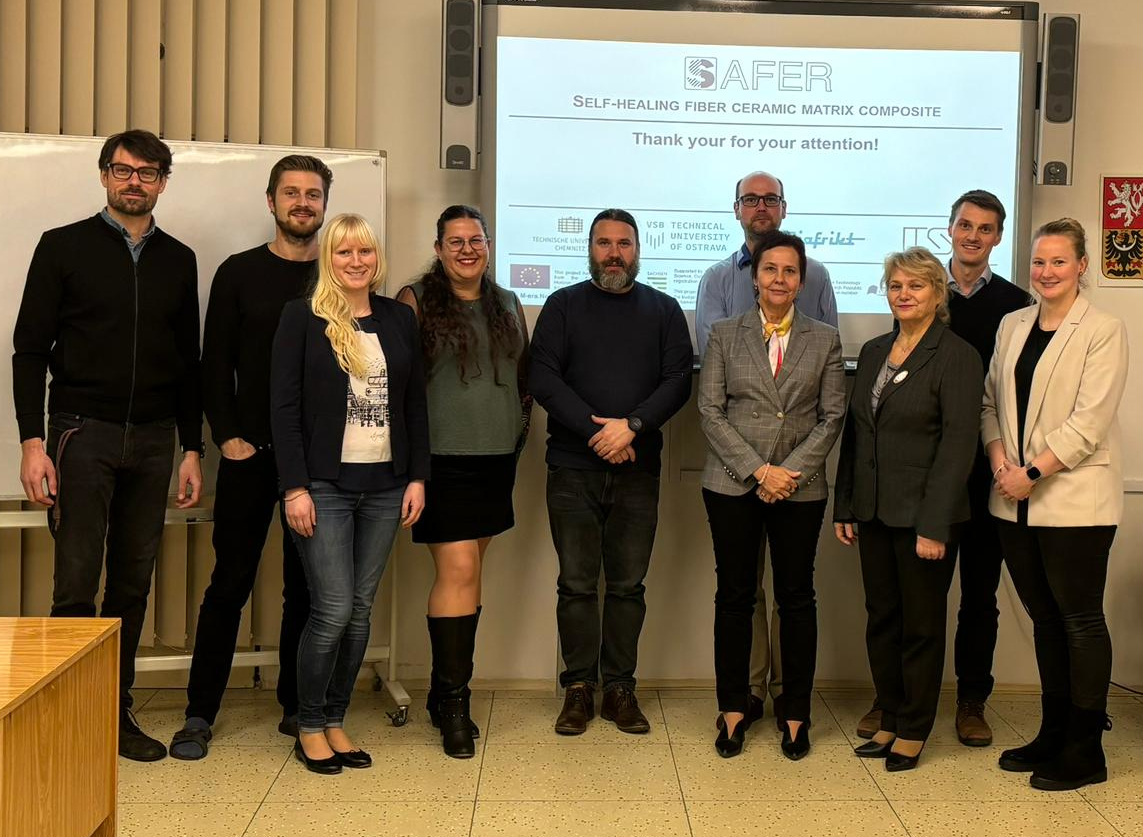
On 27 November 2023, our four partners in the EU project “SAFER” came together in a hybrid meeting at the University of Ostrava. The consortium presented the current status of the project and discussed the self-healing of fibres and matrix as well as the production of the non-oxide ceramic matrix composites (CMC). The next day, the consortium visited the factory of project partner Diafrikt in Potštejn. The company's expertise was demonstrated during the tour of the production hall.
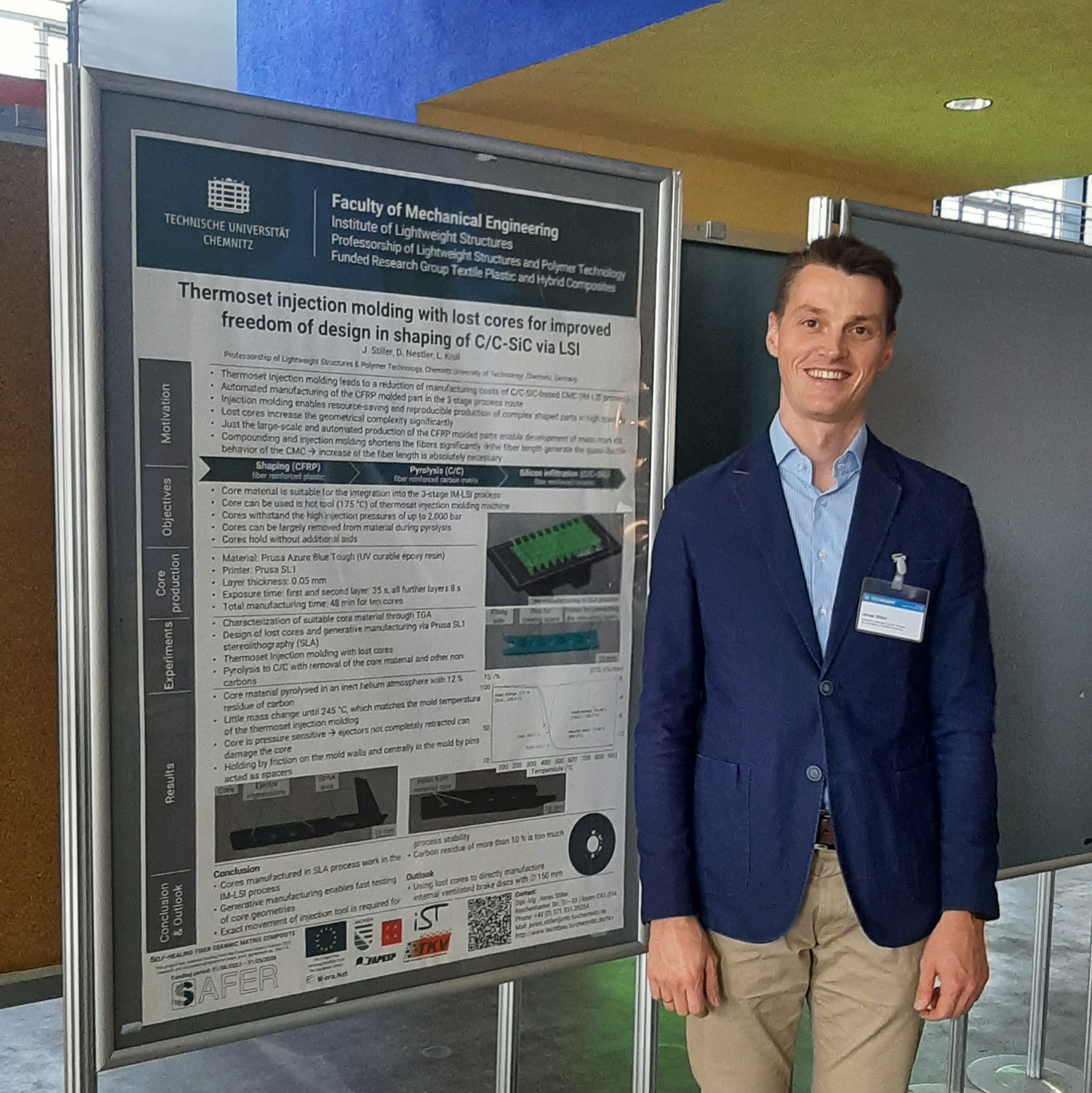
Jonas Stiller (Chemnitz University of Technology) presented our first research results at the 28th Technomer in Chemnitz (Germany).
He introduced his poster entitled "Thermoset injection molding with lost cores for improved freedom of design in shaping of C/C-SiC via LSI" to an interested audience of experts.
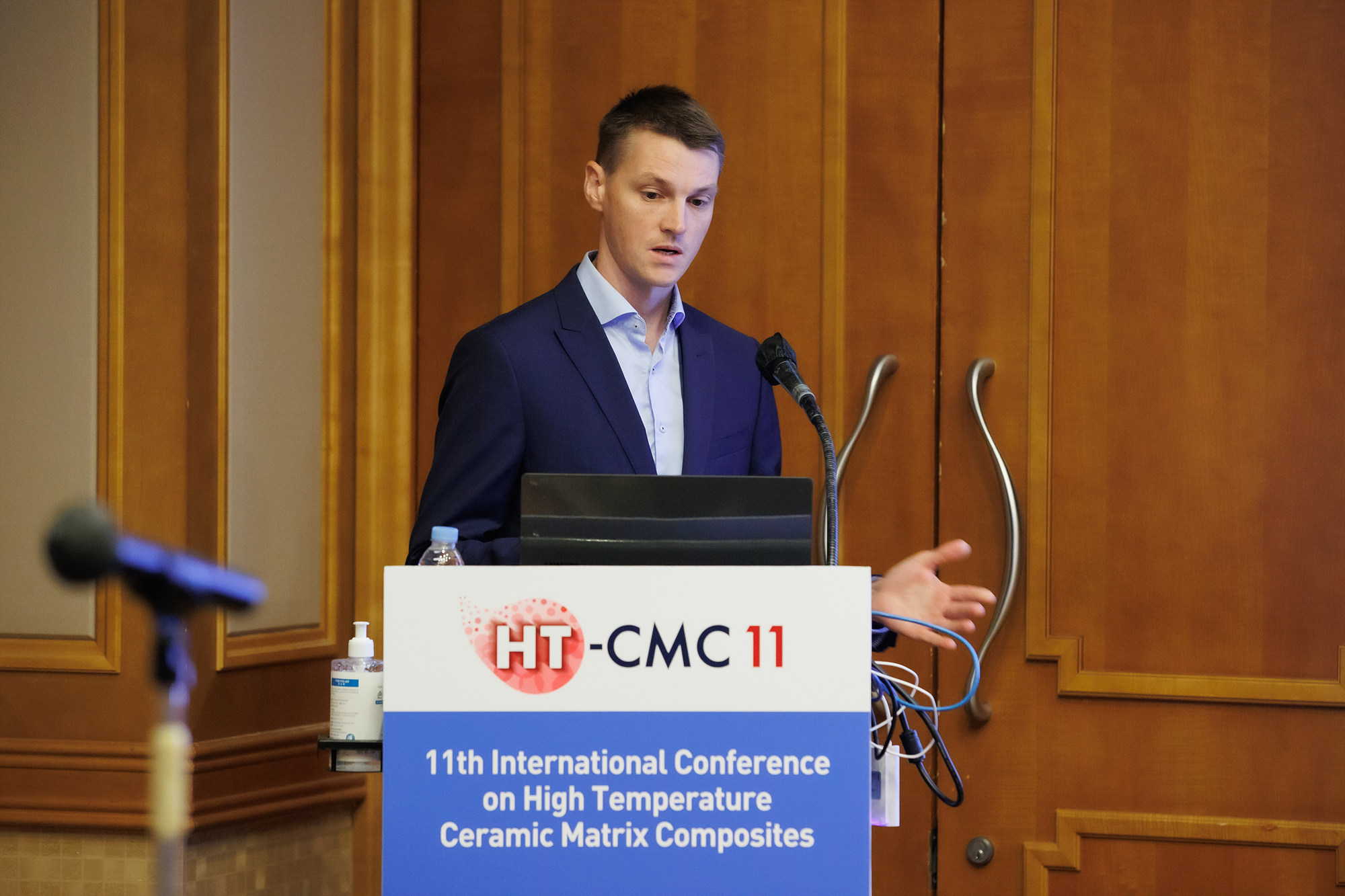
Jonas Stiller (Chemnitz University of Technology) presented our first project results at the 11th International Conference on High-Temperature Ceramic Matrix Composites in Jeju (South Korea). He gave a talk about "Thermoset injection molding with lost cores for improved freedom of design in shaping of C/C-SiC via LSI".
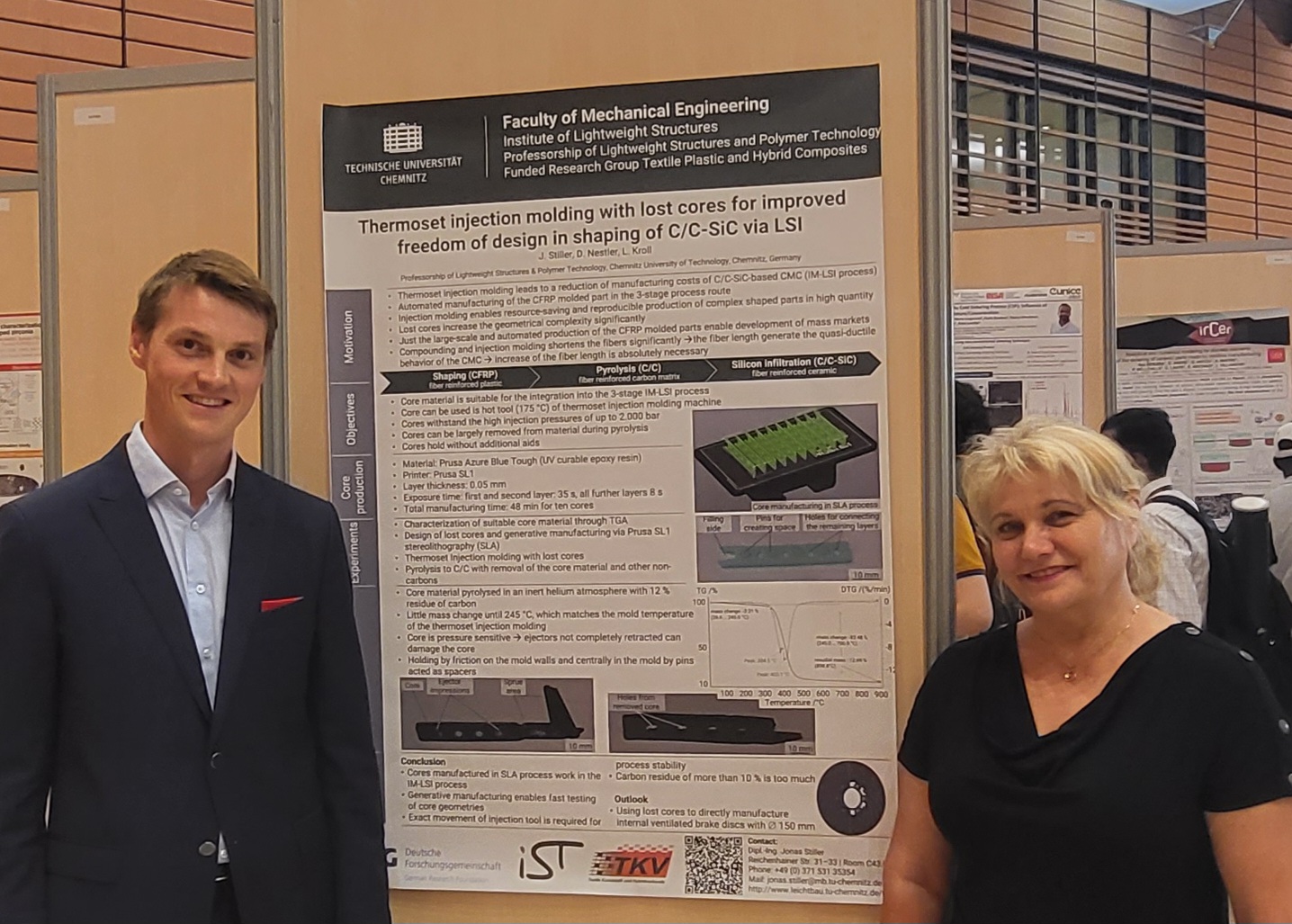
Jonas Stiller presented our first research results at the XVIIIth Conference of the European Ceramic Society in Lyon (France). He introduced his poster entitled "Thermoset injection molding with lost cores for improved freedom of design in shaping of C/C-SiC via LSI" to an interested audience of experts.
The ECerS conference takes 4 days and is the largest meeting of ceramic scientists from industry and research in Europe with over 1.200 attendees. During this time, Prof Daisy Nestler and Jonas Stiller (both Chemnitz University of Technology) held interesting technical discussions.
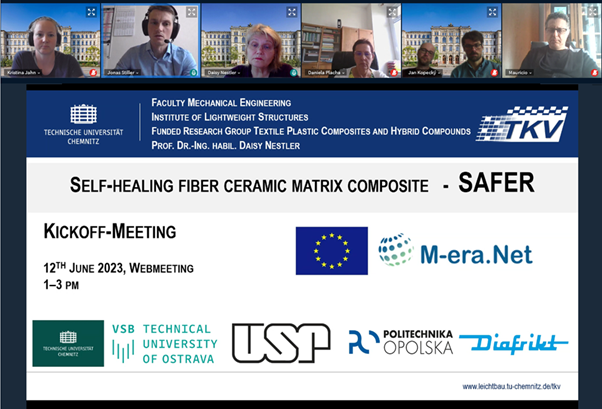
On 12 June 2023, the virtual kick-off meeting of the EU project "SAFER - Self-Healing Fiber Ceramic Matrix Composite" took place, attended by the four project partners:
- Technical University of Ostrava (VSB)
- University of Sao Paulo (USP)
- Diafrikt Components s.r.o (DC)
- Chemnitz University of Technology (TUC) with the Department of Lightweight Structures and Polymer Technology (SLK)
SAFER project partners are looking forward to collaborating on the research and development of non-oxide ceramic matrix composites (CMCs) with self-healing capabilities. Prof. Daisy Nestler is the coordinator of the project.