Wir leben in einer Welt, die durch Diversität, Mobilität und digitale Kommunikation zunehmend vernetzt ist. Transnationale Beziehungen prägen unseren Alltag, kulturelle und soziale Kontexte verändern sich fortlaufend. Diese Dynamiken werfen wichtige Fragen auf:
Wie können wir 'Kultur(en)' heute verstehen? Wie beeinflussen grenzüberschreitende Praktiken unsere Identitäten, unser Zusammenleben und unsere Kommunikation?
Diesen und ähnlichen gesellschaftlich relevanten Fragen widmen wir uns in Forschung und Lehre mit wissenschaftlicher Neugier. Dabei betrachten wir Kultur nicht als festes System, sondern als etwas Wandelbares, das sich im Austausch, in Aushandlungen und durch Machtverhältnisse ständig neu formt. Zentrale Themen unserer Arbeit sind unter anderem:
► Kulturen und Kulturalisierungen
► Digitalität und digitale Kulturen
► Intersektionalität und Diversität
► Migration und Mobilität
► Post- und Dekoloniale Perspektiven
► Epistemische Gerechtigkeit
In unseren Studiengängen – dem ► Bachelor Interkulturelle Kommunikation sowie dem ► Master Interkulturelle Kommunikation / Interkulturelle Kompetenz – legen wir großen Wert auf die Verbindung von Theorie, Forschung und Praxis. Unsere Lehrangebote sind interdisziplinär ausgerichtet und bieten Raum für kritische Reflexion, empirische Forschung und persönliche Lernerfahrungen. Die Studiengänge bereiten dabei auf eine Vielzahl von ► Berufen und Arbeitsfeldern vor.
Ein besonderes Anliegen ist uns die Förderung internationaler Erfahrungen, etwa durch Auslandsaufenthalte oder Praxisphasen, die eng mit der wissenschaftlichen Auseinandersetzung verbunden werden. Wir laden Sie herzlich ein, gemeinsam mit uns aktuelle gesellschaftliche Entwicklungen zu hinterfragen, interkulturelle Phänomene zu erforschen und an einer offenen, vielfältigen Wissenschaft mitzuwirken.
Wir freuen uns auf den Austausch mit Ihnen – im Studium, in der Forschung und darüber hinaus.
Wenn Sie sich über Voraussetzungen, Bewerbung und Studienorganisation informieren möchten, laden wir Sie ein, einen Blick in unsere FAQ‑Sammlung für Studieninteressierte zu werfen.
Neuigkeiten aus der Professur
Beratungs- und Begrüßungsveranstaltungen für die Erstsemester in BA Interkulturelle Kommunikation und MA Interkulturelle Kommunikation/Interkulturelle Kompetenz
 05. Oktober 2026, 13:00–15:00 Uhr
Raum: C10.U04 (alt: 2/NK004)
Mentoring im Rahmen der Orientierungs-Woche des Fachschaftsrats und Begrüßung mit Fragerunde durch Lehrende des Fachbereichs Interkulturelle Kommunikation
12. Oktober 2026, 13:45–15:15 Uhr
Raum: C10.106 (alt 2/N106)
Teamvorstellung des Fachbereichs Interkulturelle Kommunikation und Fragerunde mit den Fachstudienberater:innen
Fragen zu den Veranstaltungen beantwortet Miriam Schreiter.
Microcredential Critical Intercultural AI Literacy
Zum Wintersemester 2026/27 wird erstmals der Microcredential-Kurs „KI kritisch lesen: Interkulturelle Perspektiven auf Künstliche Intelligenz“ angeboten. Es ist Teil des Zertifikatsprogramms Critical Intercultural AI Literacy, das sich an Studierende aller Fakultäten richtet.
Im Mittelpunkt stehen dabei Fragen nach Wissen, Macht, Normalitätsvorstellungen und unterschiedlichen Praktiken der KI-Nutzung.
Das Besondere an unserem Ansatz: Statt eines starren Skillsets erwerben die Teilnehmenden die Grundlagen dafür, KI reflektiert und situationsangemessen zu nutzen und die eigene KI-Literacy auch nach dem Kurs weiterzuentwickeln.
Weitere Informationen und Anmeldung über OPAL.
Fragen zum Kurs beantwortet Miriam Schreiter.
30.09.2026: Roundtable: Gender & (Forced) Migration Studies under Pressure
Gender & (Forced) Migration Studies under Pressure: Zehn Jahre nach dem langen Sommer der Migration
Chair(s): Mareike Gebhardt (University of Muenster, Germany); Madeleine Sauer (Chemnitz University of Technology, Germany)
Presenter(s): Anna Amelina (Chemnitz University of Technology, Germany); Pauline Endres de Oliveira (Humboldt University Berlin, Germany); Rieke Schröder (University of Muenster, Germany); Janna Wessels (University of Amsterdam, Netherlands)
https://fluchtforschung.net/6-konferenz-des-netzwerks-fluchtforschung/
29.09.2026 | Vortrag im Rahmen des 43. Kongress der Deutschen Gesellschaft für Soziologie in Mainz
Miriam Schreiter stellt unter dem Titel „KI reflektiert nutzen – Einblicke in das Zertifikatsprogramm Critical Intercultural AI Literacy“ das derzeit an der Professur Interkulturelle Kommunikation der TU Chemnitz entwickelte Zertifikatsprogramm vor. Weitere Informationen und das Programm unter: https://kongress2026.soziologie.de
Anna Amelina bei IRIS-Konferenz in Birmingham
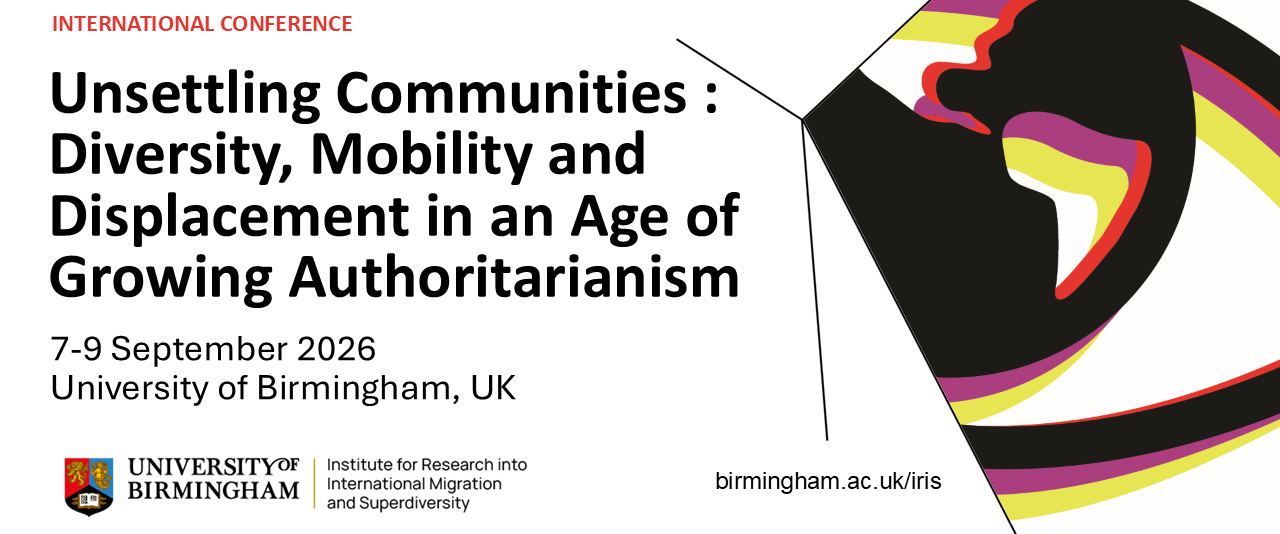 8. September 2026 | The Exchange, Birmingham
Anna Amelina spricht im Rahmen des ersten Plenums „Coloniality and the Politics of Mobility and Difference“ auf der Konferenz Unsettling Communities: Diversity, Mobility and Displacement in an Age of Growing Authoritarianism.
Die Tagung wird vom Institute for Research into International Migration and Superdiversity (IRIS) der University of Birmingham ausgerichtet. Die Sitzung wird von Dr. Kamran Khan (University of Birmingham) moderiert. Weitere Redner sind Professor Adrian Favell (University College Cork) und Professorin Ipek Demir (University of Leeds).
Keynote auf der 9. Jahrestagung zur Migrationsforschung in Österreich
14. September 2026 | Universität Wien
Anna Amelina nimmt an der 9. Jahrestagung zur Migrationsforschung in Österreich teil, die vom 14. bis 16. September 2026 unter dem Motto „Zur Relevanz der Migrationsforschung“ an der Universität Wien stattfindet.
Im Keynote Panel I „Rethinking Knowledge Production and Relevance“ spricht sie zum Thema „After Methodological Innocence: The Politics of Relevance in Migration Studies“. Ihr Beitrag befasst sich mit der Frage, wie gesellschaftliche Relevanz in der Migrationsforschung hergestellt wird und welche Rolle Reflexivität, Machtverhältnisse und institutionelle Selbstkritik dabei spielen.
Weitere Informationen und Programm: https://www.oeaw.ac.at/isr/9-jahrestagung-zur-migrationsforschung-in-oesterreich/plenarsitzungen
Informationen zum Start ins Wintersemester 2026/27
Wir bedanken uns ganz herzlich bei Dr. Giovanni Tidona, der im Sommersemester die Lehrveranstaltungen von Prof. Anna Amelina übernommen hat.
Außerdem freuen wir uns darauf, die neuen Erstsemester im Bachelor Interkulturelle Kommunikation und Master Interkulturelle Kommunikation bald begrüßen zu dürfen und mit all unseren Studierenden gemeinsam ins neue Wintersemester zu starten.
Neue Veröffentlichung zum vierten Jahrestag des Kriegs in der Ukraine
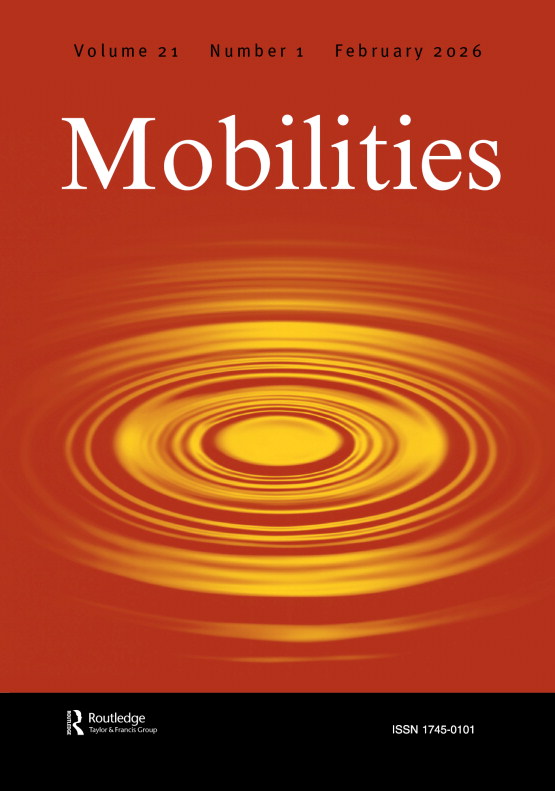 Special Issue: Vulnerable (im)mobilities between imperial legacies and colonial logics of war
Vier Jahre nach dem 24. Februar 2022 bietet die Special Issue der Zeitschrift Mobilities (Vol. 21 (1), 2026) aktuelle Einblicke wie imperiale Vermächtnisse und koloniale Logiken weiterhin Vertreibung, Gewalt und alltägliche Formen von (Im-)Mobilität in der und über die Ukraine hinaus prägen. Eine unverzichtbare Lektüre für alle, die die Folgen des Krieges verstehen wollen.
Anna Amelina, Verena Molitor, Jana Schäfer, Andreas Vasilache & Tatiana Zimenkova,
Editorial Introduction: “Vulnerable (im)mobilities between imperial legacies and colonial logics of war”
Marta Jaroszewicz, Dovilė Jakniūnaitė & Peter Adey,
“Seeing like a train: the viapolitics of emergency mobilities during Russia’s war against Ukraine”
Maria Mayerchyk, Olga Plakhotnik & Mariana Yaremchyshyn,
“New mobilities, old vulnerabilities: European Far East and coloniality of Ukrainian gendered labor”
Iryna Lapshyna,
“Forced migration, uncertainty and transnationalism of Ukrainians in Germany”
Nonna Kushnirovich, Irina Kuznetsova & Oksana Mikheieva,
“Forced or voluntary migrants? Daily and labour market challenges for new Israeli citizens from Ukraine since 2014”
Monika I. Szewczyk, Ignacy Jóźwiak, Elżbieta Mirga-Wójtowicz & Kamila Fiałkowska,
“The claim to have rights, and the right to have claims – transnational solidarity of Roma in the face of the war in Ukraine”
Tetiana Havlin,
“War-induced (im)mobilities and immobilizing effects in the context of the Russo-Ukrainian war”
Jana Schäfer & Anna Amelina,
“Gendered and sexualized violence on the move: unravelling collective (im)mobilization in the name of post-Soviet imperial membership”
Guzel Yusupova,
“The mechanisms of forced military enlistment amid the intersections of ethnicity, rurality and spatial mobility in Russia”
Neue Veröffentlichung
Friese, Heidrun; Nolden, Marcus; Schreiter, Miriam (2026): Handbuch Soziale Praktiken und digitale Alltagswelten. 2. Auflage. Wiesbaden: Springer. https://link.springer.com/referencework/10.1007/978-3-658-44521-8
 Mit der Entwicklung des Web 2.0 sind digitale Medien und Netzwerke Teil unseres täglichen Lebens geworden. Von Instagram und TikTok bis hin zu YouTube, Telegram und Spotify: Soziale, kulturelle, religiöse, wirtschaftliche und politische Räume entwickeln sich heute im globalen Netz, ermöglichen die Verhandlung aktueller Situationen und machen die frühere Unterscheidung zwischen 'Online- und Offline-Welten', dem 'virtuellen' und dem 'realen, physischen' Raum obsolet. Diese digitalen Räume werden nicht mehr als getrennt betrachtet, sondern als ein Kontinuum machtgeladener und asymmetrischer sozialer und ökonomischer Felder, die durch unterschiedliche Praktiken und transnationale Kommunikation gekennzeichnet sind. Ebenso bringen die rasanten Entwicklungen im Bereich Künstlicher Intelligenz global weitere gesellschaftliche Veränderungen und Dynamiken hervor, die einer kritischen Auseinandersetzung bedürfen.
Just Published
Amelina, A., Molitor, V., Schäfer, J., Vasilache, A. & Zimenkova, T. (Eds.) (2026). Vulnerable (im)mobilities between imperial legacies and colonial logics of war. [Special Issue]. Mobilities (21)1. https://www.tandfonline.com/toc/rmob20/21/1
Friese. H., Nolden, M, & Schreiter. M. (Eds.) (2026): Handbuch Soziale Praktiken und digitale Alltagswelten. 2. Aufl. Wiesbaden: Springer.
Amelina, A. and K. Barglowski (2025). Towards the polysemic fabrication of integration: Relating hegemony-critical theories ‘from above’ and actor-centred approaches ‘from below’, Migration Studies, Volume 13, Issue 3, September 2025, https://academic.oup.com/migration/article-abstract/13/3/mnaf034/8240093?redirectedFrom=PDF&login=false
Schäfer, J. & A. Amelina (2025). Gendered and sexualized violence on the move: unravelling collective (im)mobilization in the name of post-Soviet imperial membership, Mobilities,
https://www.tandfonline.com/doi/full/10.1080/17450101.2025.2532393
Stierl, M., Stielike, L., Schäfer, P., Bartels, I., Amelina, A., Dodevska, I. & Olarinde-Olomola, O. S. (2025). Reflexivity as Critique? A Conversation on the Politics of Knowledge Production in Migration Studies. Zeitschrift für Migrationsforschung. Https://journals.ub.uni-osnabrueck.de/index.php/zmf/article/view/334
Amelina, A., Barglowski, K., & Bonfert, L. (2025). Transnational inequalities. In Elgar Encyclopedia of Global Migration (pp. 555-557). Edward Elgar Publishing.