Machine Learning and its applications in natural sciences
Maschinelles Lernen und seine Anwendungen in den Naturwissenschaften
OPAL-Kurs
Dr. Björn Brauer (E-Mail: bjorn.brauer@…)
Content:
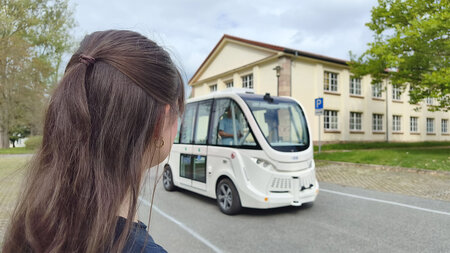
We start with an application-oriented introduction to machine learning, discussing use cases like exploration of new materials and their properties, ChatGPT, diffusion models, deep fakes, neural art, forecasting, autonomous driving and others. The respective underlying algorithms will be covered in detail during the course for which students pursue the following goals:
- Gain knowledge about a variety of machine learning algorithms
- Independently apply machine learning models to different problems
- Work with scientific literature in this field
To accelerate the learning process, the lecture is accompanied by exercise sessions in which the students will learn how to solve machine learning problems through either a drag and drop (unplugged) user interface, an open source web application, or an integrated development environment according to the student’s skill set. Reading assignments, theoretical problems, and a small course project help to further deepen the understanding.
The lecture will cover the following topics:
- Supervised learning: regression and classification-based learning algorithms such as linear and logistic regression, nearest neighbor, discriminant analysis and support vector machines
- Unsupervised learning: kMeans and hierarchical clustering
- Algorithm performance evaluation
- Dimensionality reduction and regularization
- Non-linear models and time series analysis
- Resampling methods
- Decision trees
- Neural networks
- Image processing
- Convolutional neural networks
- Deep generative models including diffusion and transformer models
Organizational:
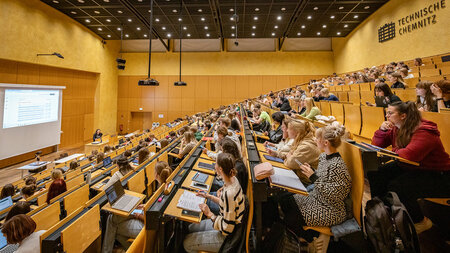
Lectures and exercise classes are offered in an online format. The first week’s meeting, however, will take place in person. If there is the need to have this first session in a presence/online hybrid mode, then please inform me via E-mail.
The following time slots and rooms are always reserved:
• Lecture: Every Wednesday 13:45 - 15:15 in room 2/W044 (C25.044)
• Exercise class: Every other week on Wednesday 15:30 - 17:00 in room 2/P205 (C60.205)
More information about the content and the format of this class will be announced in our first session on April 5th.
All online sessions can be joined virtually through the BBB-Link in OPAL (it is outlined just below the lecture title).
Any material for the respective lecture and exercise sessions can be accessed through OPAL.
| Date | Topic | Comments |
|---|---|---|
| 04/05/23 |
Introduction to Machine Learning |
Introduction to Machine Learning tools |
| 04/12/23 | Linear Regression | |
| 04/19/23 | Logistic Regression | Homework 1 due |
| 04/26/23 | Dimensionality Reduction and Regularization | |
| 05/03/23 | Algorithm performance evaluation | Homework 2 due |
| 05/10/23 | Unsupervised learning | |
| 05/17/23 | Non-linear models; Resampling | Homework 3 due |
| 05/24/23 | Decision Trees | |
| 05/31/23 | Neural Networks I | Homework 4 due |
| 06/07/23 | Neural Networks II | |
| 06/14/23 | Image processing | Homework 5 due |
| 06/21/23 | Convolutional Neural Networks I | |
| 06/28/23 | Convolutional Neural Networks II | Homework 6 due |
| 07/05/23 | Generative models | |
| 07/12/23 | Hot topics in ML | Project presentation and exam preparation |