Natural language processing with large language models
In recent years, large language models (LLMs) have achieved remarkable breakthroughs in natural language understanding and generation. LLMs are deep neural networks incorporating dynamic attention mechanisms which are trained on vast amounts of textual data. By predicting the next word in a sequence, they learn useful representations of language that can be fine‐tuned for specialized applications. Advances such as retrieval augmented generation (RAG) and multimodal integration have enabled LLMs to tackle increasingly complex tasks across diverse domains.
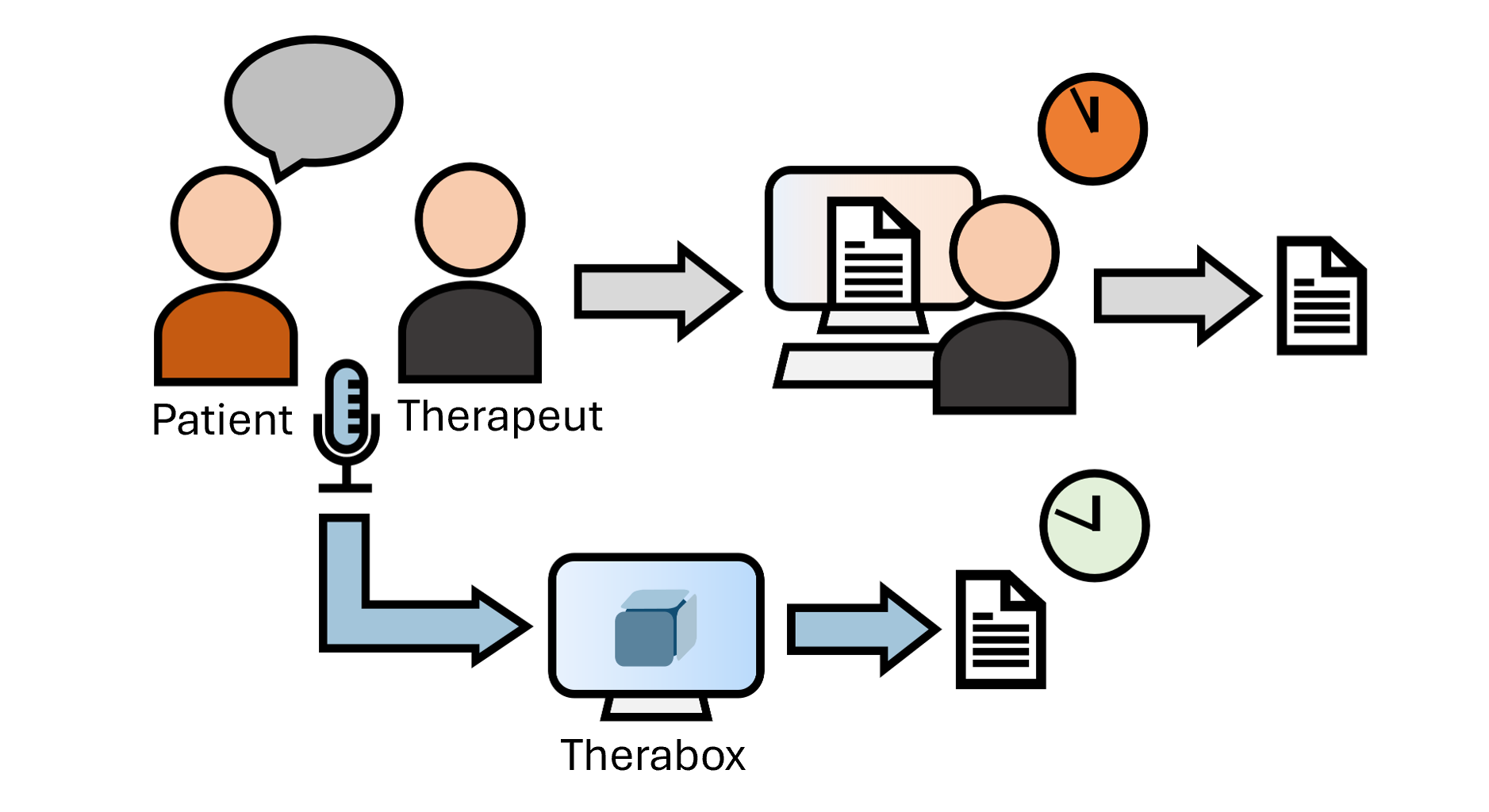
We are using LLMs to develope an AI system that automatically transcribes and summarizes therapeutic sessions, addressing the significant documentation burden faced by mental health professionals. Our system produces structured therapy notes while ensuring complete patient confidentiality. Besides saving time spent on documentation, our system will improve documentation quality, treatment planning, and ultimately patient care.
Research challenges:
- Clinical relevance: How can we optimize the model to capture therapeutically significant information while filtering out irrelevant content?
- Domain adaptation: What approaches are most effective for adapting general‐purpose language models to the specialized vocabulary and conceptual framework of psychotherapy?
- Factual accuracy: How can we minimize hallucinations and ensure faithful representation of session content?
- Resource constraints: What techniques can maximize LLM performance under resource constraints?
- Evaluation metrics: What are appropriate standards for assessing the quality and clinical utility of AI‐generated therapy documentation?
Associated projects
Validation Funding: Therabox ‐ AI‐assisted Automated Psychotherapy Documentation (EFRE2021‐27 No 100770553 ‐ European Fonds for Regional Development).
Contact
For any inquiries, please contact: valentin.forch@informatik.tu-chemnitz.de