News


ISIMON In-Person Project Meeting at RISE, Sweden
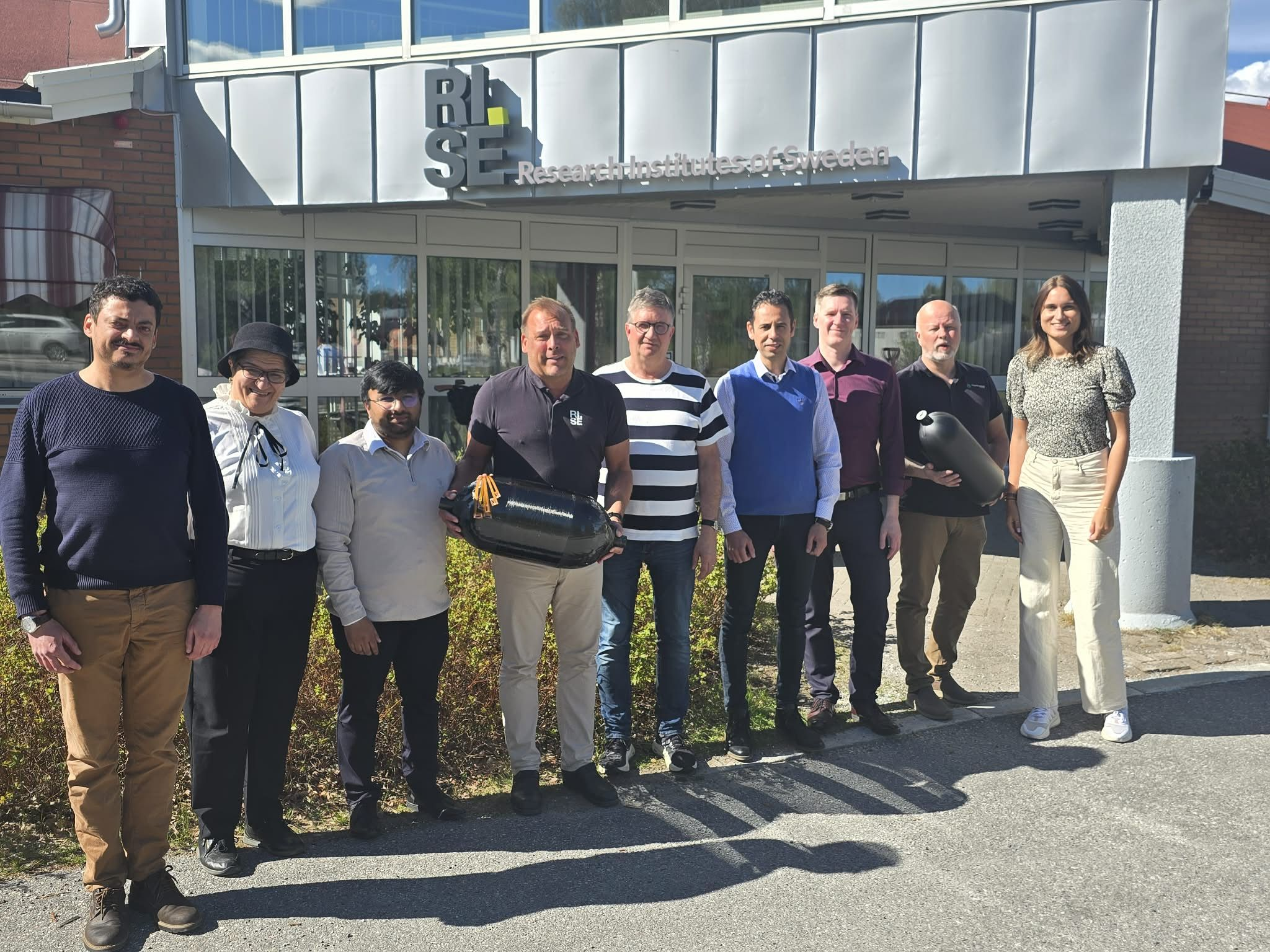
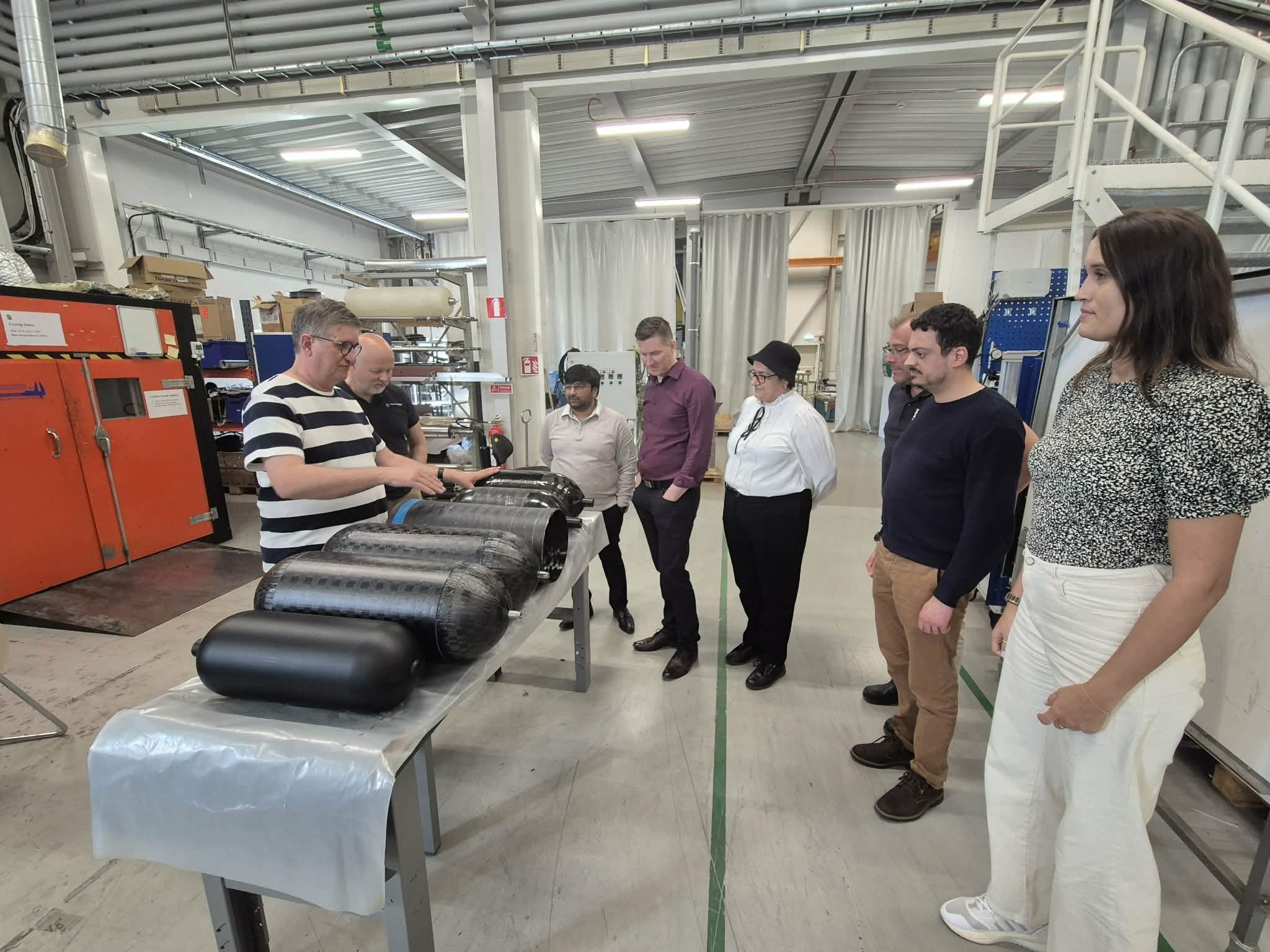
The ISIMON consortium held an in-person project meeting at RISE in Piteå, Sweden, on May 18, 2026. The meeting brought together the project partners to review technical progress, milestone and deliverable status, and the next steps toward sensor integration and validation in fibre-reinforced composite structures.
TU Chemnitz presented the latest developments in carbon-nanomaterial-based strain sensors and conductive carbon-based inks. The optimised MWCNT/epoxy sensor system demonstrated improved linearity, stability and reproducibility, with gauge factors of approximately 10 in initial mechanical testing.
The consortium discussed the next stage of sensor integration, including adhesion and encapsulation strategies, interface optimisation and the possible use of thin glass-fibre layers between the sensors and carbon-fibre plies.
Vacuum infusion was selected as the principal integration route for sensor-integrated composite laminates. The partners agreed that validation on flat composite laminates should be completed before progressing toward cylindrical and pressure-vessel structures.
Mechanical, pressure and thermal validation activities were also coordinated. Digital Image Correlation (DIC) was discussed as an optical reference technique for comparing strain fields with the electrical response of the integrated sensors.
The visit to the RISE facilities also provided the consortium with an opportunity to discuss composite manufacturing, pressure-vessel structures and upcoming experimental validation activities directly around relevant specimens and demonstrators.
Mid-Term Meeting of the ISIMON Project
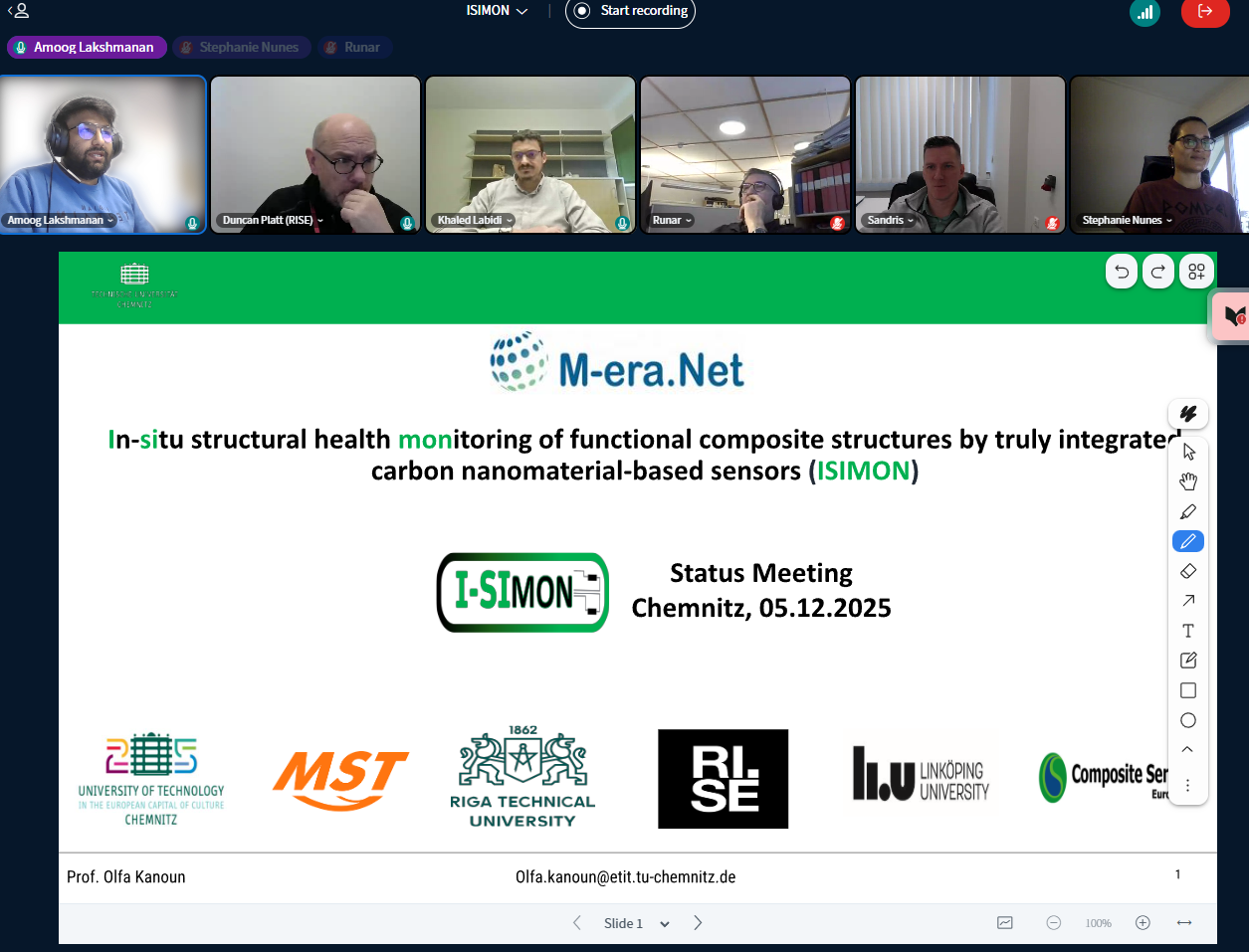
The ISIMON consortium held its mid-term project meeting online on December 5, 2025. The meeting focused on reviewing technical progress, assessing milestone and deliverable status, identifying technical challenges and coordinating the next phase of the project.
TU Chemnitz presented progress in CNT-based strain sensors using epoxy-based nanocomposites. Improved CNT dispersion resulted in enhanced and more linear sensor performance, with gauge factors of approximately 7–10.
In parallel, carbon-based conductive inks containing CNT/graphene materials were developed as alternatives to conventional PCB or silver electrodes, providing increased manufacturing flexibility for future sensor integration.
Riga Technical University reported further optimisation and validation of finite-element models for composite pressure vessels. The modelling activities demonstrated the capability to distinguish damage mechanisms and support the generation of data for machine-learning-based structural health monitoring.
RISE presented experimental results from sensor-integrated composite laminates. Cyclic four-point bending tests showed clear relationships between mechanical loading, strain and electrical resistance, while damage-related events such as cracking and delamination were reflected in the sensor response.
The consortium confirmed solid technical progress and agreed on the next steps, including fabrication and shipment of updated sensors, further mechanical testing, validation of simulation models and preparation of upcoming technical and milestone reports.
Ninth Project Status Meeting of the EU Project ISIMON
The ninth ISIMON online meeting on October 29th, 2025, confirmed key milestones in nanocomposite sensor development and highlighted upcoming tasks in sensor testing at RISE and RTU, including embedded strain measurements in composite laminates. The consortium also discussed finalising the validated FE model and...
Read more »Eighth Project Status Meeting of the EU Project ISIMON
The eighth online ISIMON status meeting on August 27th, 2025, presented improved finite-element analyses for FRP hydrogen vessels, validated against RISE tank designs, showing stress and failure predictions for the dome and cylinder regions. Updates also highlighted new progress in high-gauge-factor nanocomposite...
Read more »Seventh Project Status Meeting of the EU Project ISIMON
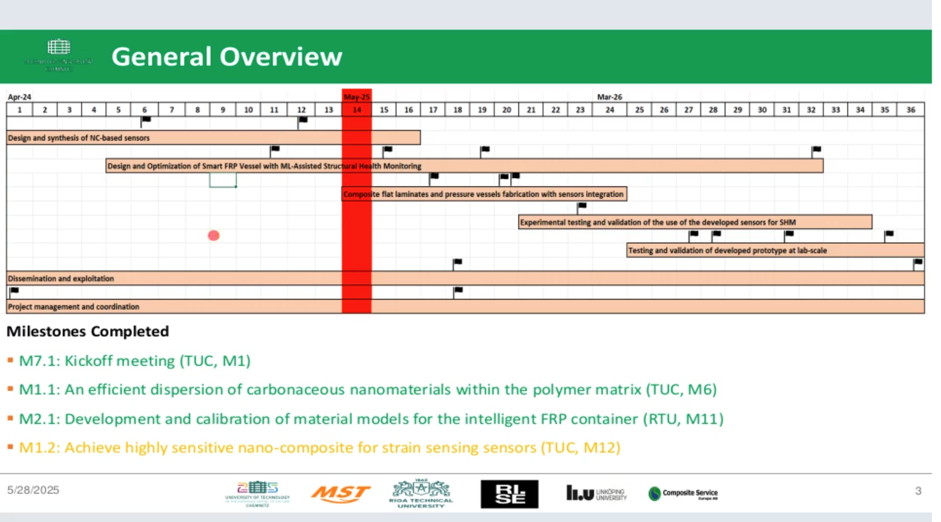
The seventh ISIMON online meeting on May 28th, 2025, highlighted ongoing optimisation of CNT-epoxy strain sensors and temperature-stable conductive inks, moving toward the first printed sensor prototypes for vessel testing. RTU presented updates on finite-element models for pressure vessels, including failure...
Read more »Sixth Project Status Meeting of the EU Project ISIMON
Fifth Project Status Meeting of the EU Project ISIMON
Fourth Project Status Meeting of the EU Project ISIMON
An online ISIMON project meeting was held on February 26th, 2025, highlighting progress in nanocomposite strain sensors with improved gauge factor and stable dispersion, as well as advances in automated FRP vessel modelling and filament-winding simulation for structural health monitoring. The partners agreed to move...
Read more »Third Project Status Meeting of the EU Project ISIMON
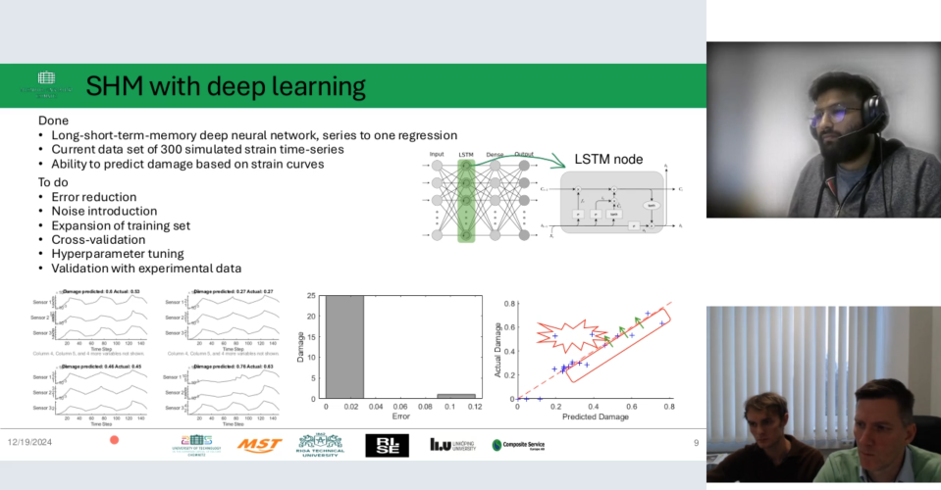
An online project status meeting for ISIMON was held on December 19th, 2024, during which all partners presented recent technical progress. The updates included advances in carbon nanomaterial-based strain sensors, showing reproducible electrical properties suitable for SHM, and significant results in finite-element...
Read more »Second Project Status Meeting of the EU Project ISIMON
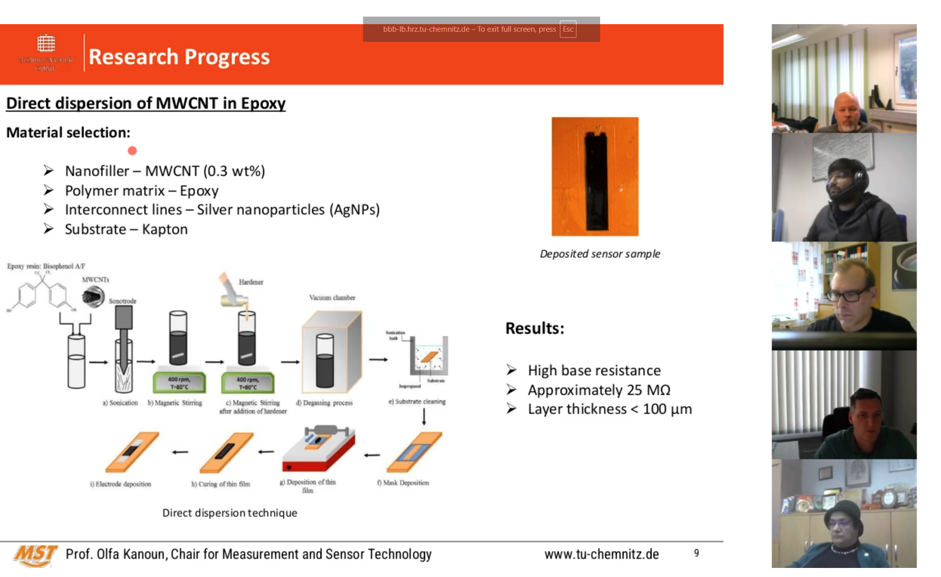
A virtual second project status meeting for the ISIMON project was held on October 7th, 2024, bringing together all partners to share their latest progress and define the upcoming steps. The consortium presented advances in the fabrication of carbon nanomaterial-based sensing layers and multiphysical modelling for...
Read more »Digital Kickoff of EU Project ISIMON
A virtual kickoff meeting for the ISIMON project took place on June 12th, 2024, bringing together all consortium partners to officially start the development of a truly self-sensing high-pressure composite vessel. The project is led by Chemnitz University of Technology, represented by the Chair of Measurement and...
Read more »